SCDF Commercial Fire Pump Requirements Guide
SCDF Fire Pump Requirements for Commercial Projects
When I look at a commercial building, I do not just see steel, glass, and a lobby that tries very hard to look expensive. I see risk, access, pressure, and the quiet work of systems that do not get applause until the day they save the building. That is where SCDF commercial fire pump requirements come in. They shape how water moves when every second matters, and they help protect commercial and industrial facilities, plus major property buildings, from fire spread and downtime. In this article, I will walk through the key points in plain language, with enough detail to be useful and just enough wit to keep it from feeling like a code book trying to host a dinner party.
What SCDF Expects From a Commercial Fire Pump System
I always start with the basics: the system must supply the right water flow and pressure to the sprinkler or hydrant network, even under real fire conditions. In practice, that means the pump cannot just look strong on paper and then panic like a side character in a disaster movie. It must meet the design demand set by the project, the building height, and the fire protection layout.
For SCDF commercial projects, I focus on three things first. The pump must serve the full protected area, it must deliver pressure at the most remote point, and it must work with the water source without losing performance. If the building uses multiple zones, I also check whether the pump arrangement supports those zones properly. So, yes, the pump room matters. A lot.
How I Check Pump Capacity and Pressure
Capacity and pressure are where many projects either stay smooth or start a long relationship with rework. I check the required flow rate based on the system type, then I confirm the pump curve can meet that demand at the needed pressure. If the pump only performs well at one point and falls apart the moment demand rises, that is not a win. That is a plot twist nobody asked for.
In commercial buildings, I also pay close attention to friction loss, elevation, and pipe size. These details shape the real pressure at the outlet, not the fantasy version sitting in a spreadsheet. Therefore, I always review the full hydraulic picture before I treat the pump as approved. If the building includes high rise sections or long pipe runs, the margin for error gets even smaller.
SCDF Commercial Fire Pump Room Setup That Passes Review
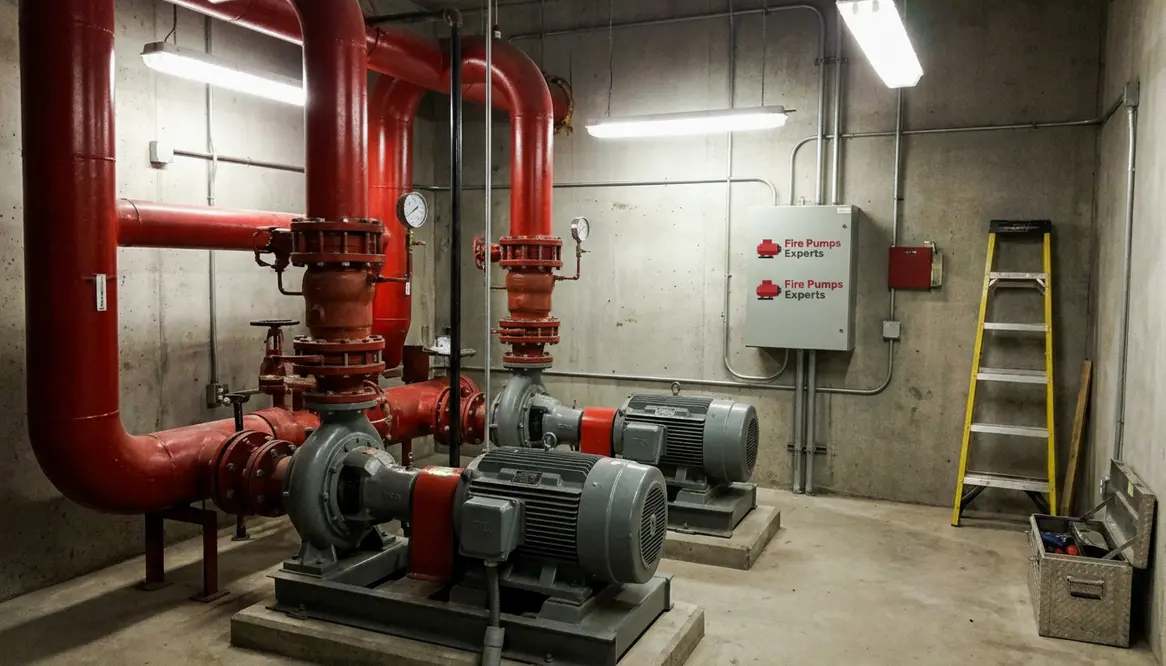
The pump room does more than hold equipment. It supports reliability, access, and safe operation. I look at room size, ventilation, drainage, lighting, access route, and protection against flooding. If the room turns into a sauna or a puddle, the pump will not enjoy that setup, and neither will the inspector.
Here is the kind of setup I expect for a solid commercial project:
Dual Column View
Technical need
- Clear access for maintenance and emergency use
- Adequate ventilation to control heat buildup
- Drainage to remove water and prevent damage
- Space for duty and standby pumps where needed
Why it matters
- Keeps the system service ready
- Protects pump life and performance
- Reduces failure risk during fire events
- Supports reliable operation for large properties
Also, I make sure the room layout allows easy testing and inspection. That sounds simple, but simple is often what keeps big systems from acting dramatic later.
Why Pump Redundancy Matters in Major Properties
For larger commercial and industrial facilities, I never treat the pump as a solo performer. I look for redundancy because real life does not care about your budget spreadsheet. A duty pump and standby pump setup gives the building a backup if one unit fails. In some projects, the design also includes a jockey pump to hold pressure and reduce unnecessary starts.
This matters because pressure loss, wear, or electrical issues can happen at the worst possible time. With redundancy, the system can stay ready even if one part needs service. That is not luxury. That is smart fire protection design. And yes, it is also the difference between calm confidence and a very awkward emergency meeting.
SCDF Commercial Approval Steps I Pay Attention To
Approval work gets easier when I treat it like a full process instead of a last minute scramble. First, I review the fire protection design against the project scope. Then, I confirm the pump selection, the water supply, the control method, and the room layout. After that, I check that the drawings, calculations, and equipment details all tell the same story. If one document says one thing and another document says something else, the review turns into a detective show.
I also make sure the testing plan is clear. Flow test, pressure test, alarm checks, and pump start verification all matter. Therefore, I never leave these items vague. Clear documentation helps the submission move faster and keeps the project team from guessing, which is always a lovely thing to avoid.
When I Bring In a Specialist for SCDF Fire Pump Work
In many commercial and industrial projects, I bring in a specialist when the building becomes complex, the pump room layout gets tight, or the hydraulic demand rises across several zones. I also do that when the project team needs help with design coordination, submissions, or site checks. A good specialist helps align the pump system with the building’s real needs, not just the drawing set that everyone hopes will behave.
For reference and deeper support on commercial and industrial fire pump needs, I also look at trusted resources like https://firepumps.org/. That kind of guidance can help keep a project grounded in the real world, where water pressure, space, and compliance all like to show up at once.
Across these topics, the thread is the same: SCDF commercial expectations are not just paperwork. They are a practical filter to keep systems honest, resilient, and ready for the worst day a building might see.
Key SCDF Commercial Design Reminders
- Confirm that fire pump capacity and pressure match the most demanding SCDF commercial design case for the project.
- Ensure the pump room layout supports access, cooling, and drainage without turning every maintenance visit into a maze run.
- Plan redundancy for larger properties so a single failure does not compromise life safety.
- Align drawings, calculations, and equipment data so the approval trail looks like one project, not three different plot lines.
FAQ
Conclusion
If I want a commercial project to pass smoothly and perform when it counts, I treat the fire pump system as a core life safety asset, not a box to tick. The right SCDF commercial setup depends on capacity, pressure, room design, redundancy, and clean documentation. So, if you are planning a major property or industrial facility, take the next step now. Review your design, check your compliance path, and bring in expert support before small issues grow teeth.