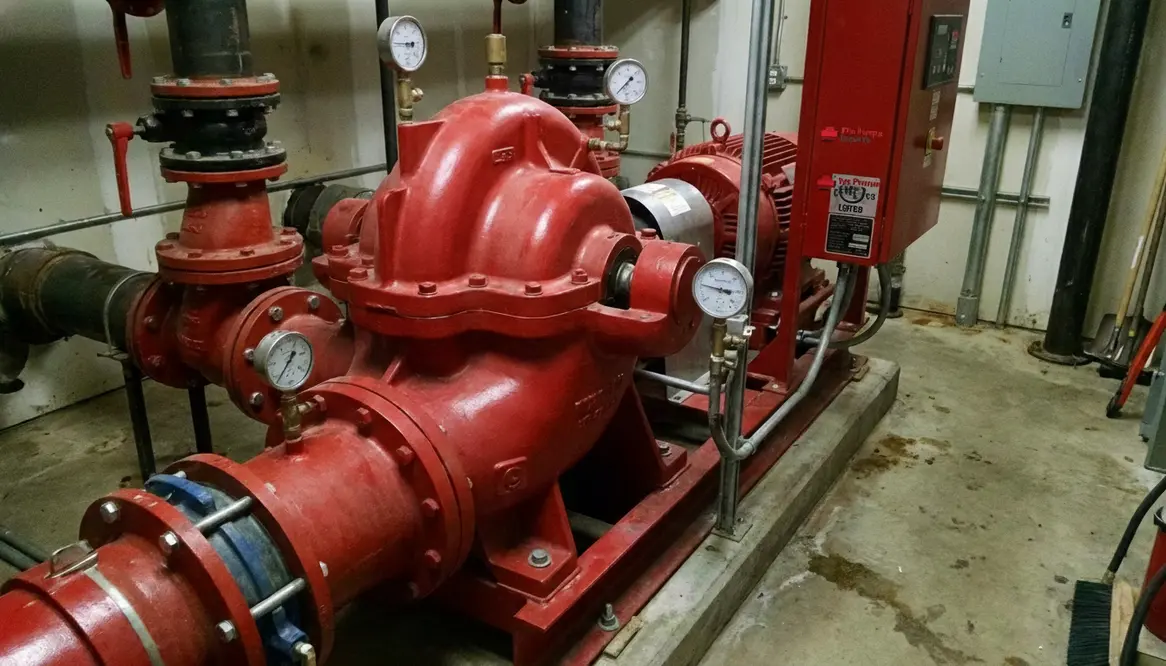
UL Listed Fire Pump Selection Guide for Commercial and Industrial Buildings
When I look at a UL listed fire pump, I do not see just a piece of equipment. I see the muscle behind a building’s fire protection plan. For commercial and industrial facilities, and for major properties where uptime matters, the wrong pump can turn a small emergency into a very expensive lesson. So I take selection seriously, because the stakes are not exactly a sitcom plot twist. In this guide, I will walk through the key choices I use when selecting a UL listed fire pump, and I will keep it practical, clear, and focused on real facility needs.
What I look at first when choosing a UL listed fire pump
I start with the building’s fire protection demand. That means I check the sprinkler system, the standpipe system, the water supply, and the required pressure and flow. A UL listed fire pump must match the system, not just look good on paper. If the pump is too small, it will struggle when the system calls for action. If it is too large, it can create wasted cost and poor performance. Nobody wants a hero that arrives late or one that kicks down the door for no reason.
I also review the facility type. A warehouse, refinery, manufacturing plant, and high rise all bring different risk levels and water needs. Because of that, I look at occupancy, hazard class, and the size of the protected area. Then I compare those needs with the pump curve, available suction supply, and required discharge pressure. This step matters because the pump must work with the system’s real conditions, not a wish list from a meeting that should have been an email.
How I match pump type to the site
Next, I decide which pump type fits the property. In most cases, I work with horizontal split case, end suction, or vertical turbine fire pumps. Each one has a place, and each one has tradeoffs.
Here is the simple version: horizontal split case pumps work well where space and maintenance access support a larger unit. End suction pumps can fit smaller mechanical rooms and simpler layouts. Vertical turbine pumps help when the water source sits below grade or when suction conditions need special handling. I choose based on the site, not on fashion. A fire pump should never be selected like a new phone model.
Quick comparison for selection
Horizontal split case: good for higher flow, easier service access, common in large commercial and industrial sites.
End suction: useful when space is tighter and system demand is moderate.
Vertical turbine: ideal when the water source is from a tank, reservoir, or deep supply.
Also, I always check whether the pump and controller package carries the right UL listing for the application. That part is not decoration. It tells me the equipment has been tested for fire service use and fits the compliance path that commercial and industrial facilities need. Careful UL selection here prevents ugly surprises during inspections and upgrades later.
Why water supply and pressure decide the whole project
In my experience, water supply makes or breaks the selection. A strong pump cannot fix a weak source. So I test the available static pressure, residual pressure, and flow rate. Then I compare those numbers with the fire pump curve. If the supply drops too much during demand, I may need a different pump size, a storage tank, or a vertical turbine setup.
I also pay close attention to pressure losses in the system. Long pipe runs, valves, fittings, elevation changes, and backflow devices all affect final performance. These details may seem small, but they add up fast. And in fire protection, “close enough” is not a strategy. It is a very expensive gamble.
When I review a facility, I also think about future expansion. Many major properties grow over time. Therefore, I like to choose a pump solution that can support planned changes without forcing a full redesign later. That saves time, money, and a few headaches no one asked for. Smart UL selection at this stage often keeps future projects from turning into demolition exercises.
How I check controls, power, and reliability
A UL listed fire pump is only as reliable as the system around it. So I look at the controller, power source, transfer switch, and backup arrangement. If the pump uses electric power, I confirm that the supply stays stable under load. If the site depends on diesel, I review fuel storage, ventilation, engine room layout, and starting reliability. In both cases, I want the system to start fast and keep running.
I also think about maintenance access. A pump that nobody can inspect without turning the room into an obstacle course will not help anyone. Good design gives technicians room to test, inspect, and service the unit with less drama. That means safer testing, faster repairs, and better long term performance.
And yes, I check the alarm and supervision features too. These help the team spot trouble before a small issue turns into a headline. Not the kind of headline a facility manager wants to explain on a Monday morning.
Selection factor
- Pump size
- Water source
- Controller
- Power source
- Installation space
What I verify
- Flow and pressure match the hazard demand
- Supply stays steady under fire flow
- Starts the pump reliably and meets fire service needs
- Electric or diesel support fits the site
- Room for service, testing, and safe access
UL listed fire pump selection checklist for commercial sites
When I narrow down a final choice, I use a checklist. It keeps the project clean and helps me avoid missed details. Using a structured approach also makes UL selection transparent when you have to explain decisions to owners, insurers, or authorities.
My selection checklist
- Confirm the building’s fire protection demand
- Review the water supply test results
- Match pump type to site conditions
- Verify UL listing and system compatibility
- Check controller and power setup
- Plan for maintenance access and future growth
- Review installation space and layout limits
I also like to look at outside guidance when I need a broader industry view. For that, I would use a trusted resource like UL listed fire pump standards and selection guidance to support the technical review. It helps keep the process grounded in real fire protection practice, which is always better than guessing and hoping for the best. Hope is nice. Compliance is nicer.
If you are comparing manufacturers, controller packages, or configurations, making UL selection a documented step in your workflow keeps decisions repeatable. It also gives your maintenance team a cleaner starting point when they inherit the system years later.
Using external guidance and tools
For more complex campuses or industrial facilities, I sometimes layer in hydraulic calculations, manufacturer software, and external references. A quick UL selection checklist is great, but on higher risk sites I pair it with:
- Hydraulic models for sprinkler and standpipe demand
- Pump curve comparisons across several duty points
- Power system studies when large motors are involved
- Water storage and refill time analysis for tank-fed systems
The goal is not to overcomplicate the project. The goal is to prove that the UL listed fire pump and its support systems will deliver under real fire conditions, not just in a design spreadsheet.
Common pitfalls I avoid during UL selection
Over time, I have seen the same mistakes repeat themselves in commercial and industrial projects. When I work through UL selection, I specifically watch for:
- Assuming city water pressure instead of testing and documenting it
- Ignoring future building additions and mezzanines
- Underestimating voltage drop or diesel start reliability
- Placing controllers where access or cooling is poor
- Skipping conversations with the AHJ about unusual layouts
Avoiding those issues keeps the focus on a reliable, code-compliant system instead of last-minute redesigns when equipment is already on order.
FAQ
Final thoughts and next step
If I want a fire pump that performs when it matters, I start with the building, the water supply, and the right UL listing. Then I match the pump type, controls, and power system to the facility’s real needs. That is how I reduce risk and support code compliant protection for commercial and industrial properties. If you are planning a new system or reviewing an older one, now is the time to take the next step and choose with confidence.
Treat UL selection as a design decision, not just a procurement checkbox. The time spent aligning pump curves, power supply, water source, and layout usually costs far less than one avoidable failure, one missed inspection, or one unplanned retrofit. That is a trade most facility teams are happy to make.