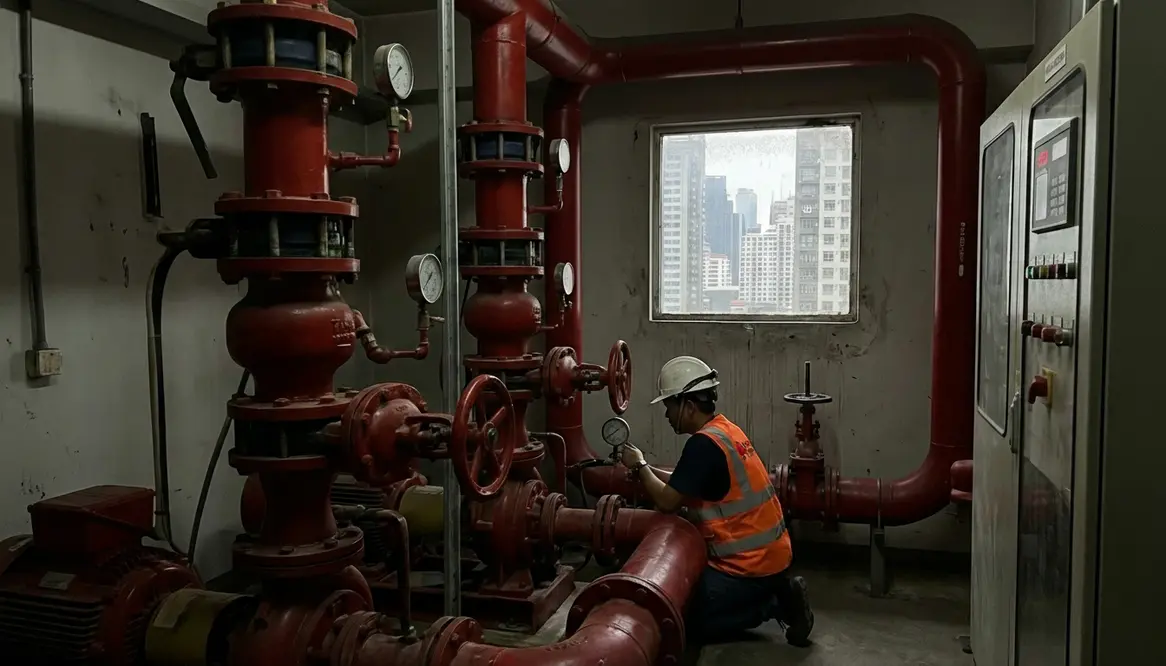
Urban Fire Pump Compliance and Local Code Rules
Urban cores run on pressure, timing, and systems that cannot afford to hesitate. Your fire pump is one of those systems, and local code is the language it speaks.
I have spent years around mechanical rooms that hum like a quiet bass line under a city’s rhythm. And if there is one thing I have learned while working alongside teams handling Las Vegas fire pump maintenance, it is this: local code is not a suggestion. It is the rulebook, the referee, and occasionally the bouncer that throws your building out of compliance if you try to cut corners.
Urban core buildings are a different beast. They stretch higher, pack tighter, and depend on precision. So while fire pumps may sit quietly in the background, they are the unsung heroes when things heat up. Literally.
Urban risk in one sentence
In a city core, everything is stacked: people, systems, and risk. Your fire pump is the thin line between “contained incident” and “headlines.”
Why Urban Fire Pump Compliance Is Not Optional
In dense city centers, response time is everything. However, fire departments cannot always rely on municipal pressure alone. That is where your system steps in. I have seen buildings pass inspection on paper but fail in real conditions. And trust me, paper does not put out fires.
Local codes exist because urban environments create unique risks. Older infrastructure, vertical construction, and mixed use occupancy all demand stricter oversight. Therefore, compliance is not about avoiding fines. It is about ensuring your building performs when it matters most.
Besides, ignoring code is like ignoring a check engine light. It might run fine today, but tomorrow it could cost you a lot more than you planned.
Urban reality check
In a crowded downtown block, your building is not an island. A noncompliant fire pump is not just your problem; it is a neighborhood problem. That is why local officials treat code as nonnegotiable and why teams serious about Las Vegas fire pump maintenance tend to sleep better at night.
What Do Local Codes Actually Require for Fire Pumps?
I get this question a lot, and the answer is both simple and layered. At the core, local codes dictate installation standards, testing frequency, and performance benchmarks. However, the details can shift depending on the city.
In urban cores, I often see requirements that go beyond national standards. For example, weekly churn tests, annual flow testing, and detailed record keeping are not optional. They are expected.
Additionally, authorities want proof. Not just that the system exists, but that it works under pressure. That means calibrated gauges, reliable controllers, and pumps that respond instantly. Because in a real emergency, there is no time for a system to “warm up.”
And yes, inspectors notice everything. They are like detectives, only instead of solving crimes, they are preventing disasters.
Typical code expectations
- Approved fire pump installation following local and NFPA standards
- Documented weekly churn tests and annual flow tests
- Verified power supply, transfer switches, and controllers
- Accurate, calibrated gauges and relief valves
- Accessible layout for safe testing and maintenance
Why records matter so much
From the inspector’s standpoint, your test reports are the only way to prove that your fire pump is not just installed, but alive and performing. If the story in your logbooks does not match the story in your mechanical room, expect questions.
If you want a benchmark for what strong documentation and testing support look like, study how dedicated fire pump service providers structure their records. A solid example is the fire pump service overview at this fire pump systems service page.
Las Vegas Fire Pump Maintenance and Urban Code Pressure
Working in environments tied to Las Vegas fire pump maintenance, I have seen how regional expectations shape compliance. The desert climate, high rise density, and tourism driven occupancy all influence how systems are maintained.
For example, heat alone can affect equipment longevity. Therefore, maintenance schedules often need tighter intervals. Moreover, high occupancy buildings demand systems that can handle peak load without hesitation.
Because of this, local code enforcement tends to be precise. Inspectors expect documentation, consistency, and performance data that tells a clear story. If your records look like a mystery novel, you are already in trouble.
What inspectors look for
- Consistent test logs
- Pressure stability during operation
- Proper alarm integration
- Accessible equipment layout
Common compliance gaps
- Skipped weekly testing
- Outdated calibration
- Incomplete documentation
- Delayed repairs
And here is the thing. None of these gaps are dramatic on their own. However, together, they create a system that cannot be trusted when it counts.
Why Las Vegas fire pump maintenance feels stricter
Take the heat, the 24/7 occupancy cycles, and the high profile nature of some properties, and you get a code environment that is not interested in excuses. Las Vegas fire pump maintenance is ultimately about proving that your system can deliver, under load, on the hottest day of the year with every room booked and every elevator moving.
How I Approach Fire Pump Compliance in Major Buildings
I take a straightforward approach. First, I align everything with local code, not just national guidelines. Then, I build a maintenance rhythm that keeps the system active and predictable.
Consistency is key. While it may sound repetitive, routine testing reveals small issues before they grow. A slight pressure drop today can become a full system failure tomorrow.
Moreover, I focus on documentation as much as performance. Because if it is not recorded, it might as well not exist in the eyes of an inspector.
Think of it like this. Your fire pump system is the drummer in a band. If it misses a beat, everything falls apart. And nobody wants to be the building where the music stops.
A practical compliance rhythm
- Anchor everything to the strictest applicable code in your jurisdiction.
- Build and follow a calendar that covers weekly churns, monthly checks, and annual full flow tests.
- Standardize how data is recorded, stored, and shared with inspectors.
- Train on site teams so they understand not just what to do, but why it matters.
- Periodically review your program against examples from strong markets like Las Vegas fire pump maintenance teams and update as needed.
Technology, Monitoring, and Smarter Compliance
Modern systems have changed the game. Today, remote monitoring allows teams to track performance in real time. As a result, issues can be flagged before they escalate.
However, technology does not replace responsibility. It supports it. I have seen buildings rely too heavily on automation, assuming alerts will handle everything. Spoiler alert. They do not.
Instead, the best approach combines smart systems with hands on expertise. That balance ensures compliance is not just reactive, but proactive.
And honestly, there is something satisfying about knowing your system is ready without waiting for an alarm to tell you otherwise.
Where tech really helps
- Trend analysis of pressure and flow to catch subtle degradation
- Alarm history that pairs with physical inspections
- Remote visibility for multi building portfolios
- Digital storage of logs aligned to inspection cycles
But here is the catch
Remote data does not spin a wrench, reset a valve, or replace a worn coupling. It simply tells you when those things need attention. The work still lives with trained people, clear procedures, and a culture that treats compliance as operations, not paperwork.
FAQ: Fire Pump Compliance in Urban Buildings
How often should fire pumps be tested?
Weekly churn tests and annual flow tests are standard, though local codes may require more frequent checks.
Why do local codes differ from national standards?
Urban density, building height, and infrastructure limitations create unique risks that require stricter rules.
What happens if a building fails inspection?
You may face fines, required repairs, or operational restrictions until compliance is restored.
Can remote monitoring replace manual inspections?
No. It supports maintenance but does not replace physical testing and verification.
Who is responsible for compliance?
Building owners and facility managers share responsibility for ensuring systems meet local code.
Stay Ready, Stay Compliant
In the end, fire pump compliance is not about checking boxes. It is about readiness. When I work with teams managing large scale properties, I remind them that every test, every log, and every adjustment builds confidence in the system. So if your building operates in a demanding urban core, now is the time to act. Partner with experts who understand the rhythm of compliance and keep your system performing at its peak every single day.
Treat your pump room like the heartbeat of the building. Keep your records sharp, your tests regular, and your standards at least as high as the skyline around you. That is how you transform “passable on paper” into “proven when it matters” for every piece of your fire protection system, from Las Vegas fire pump maintenance routines to the last sprinkler head on the top floor.