Common NFPA 25 Fire Pump Violations in Inspections
I have walked through a lot of pump rooms in my career. Some look sharp enough to pass a white glove test. Others look like a scene from a disaster movie where the hero says, “We should have checked this sooner.” Somewhere in between sits the reality of most commercial and industrial facilities. And during routine inspections, a pattern always appears. The same nfpa 25 fire pump violations show up again and again.
Now, NFPA 25 exists for a simple reason. Fire protection systems must work when the moment comes. A fire pump is not a decoration. It is the heart that pushes water through a building when everything else is going wrong. Yet during inspections across large facilities, I still see overlooked maintenance, missing records, and equipment that quietly drifts out of compliance. So today, I want to walk you through the most common problems I see and why they matter.
Common NFPA 25 Fire Pump Violations I See During Commercial Facility Inspections
When I enter a pump room in a large property or industrial site, I already expect a few usual suspects. Not because people are careless. Often it is because daily operations get busy and fire protection systems quietly sit in the background.
However, NFPA 25 inspections bring those quiet issues into the spotlight.
Here are the most common problems I encounter.
Missing or incomplete weekly churn tests
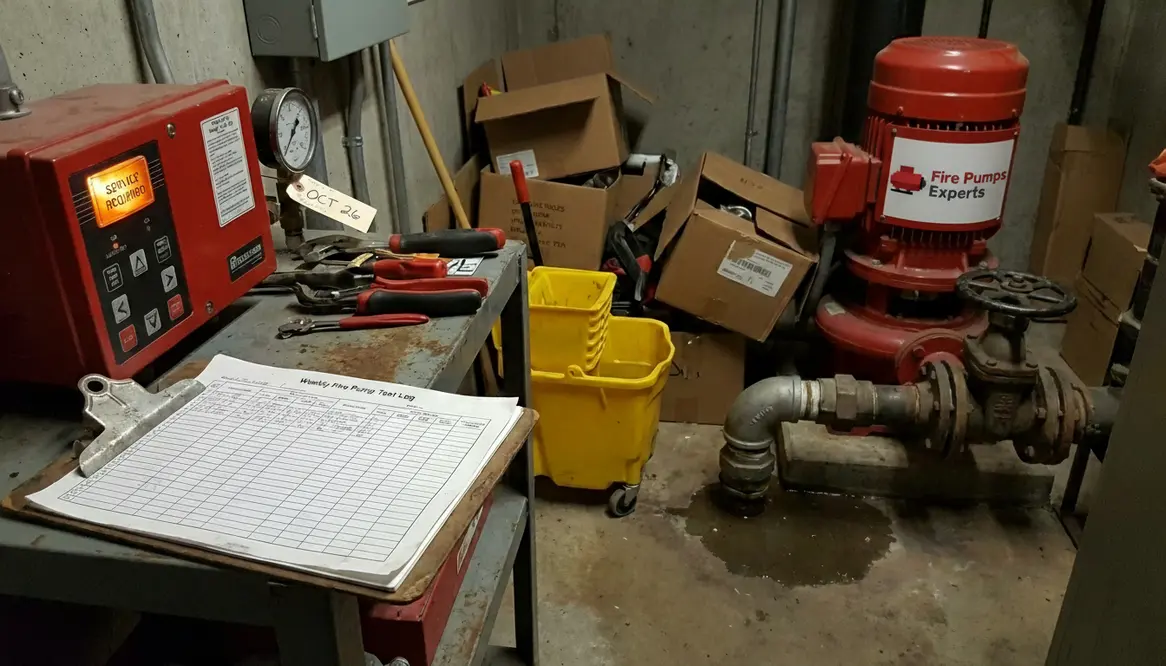
NFPA 25 requires regular testing to confirm the pump starts and runs properly. Yet inspection logs often tell a different story. Sometimes weeks go missing. Other times someone checks a box without recording pressure readings or run time.
Consequently, inspectors cannot confirm the system operates within proper limits. And without those numbers, the pump may have performance problems hiding in plain sight.
Controller alarms left unresolved
Fire pump controllers love to communicate. They flash lights. They beep. They log events. Yet many facilities leave alarms sitting for months without investigation.
That little blinking light might seem harmless. In reality, it could mean a failed sensor, voltage issue, or pressure switch problem. In other words, the pump may not start when needed.
Improper suction or discharge valve positions
I cannot count how many times I have seen partially closed valves. Sometimes someone adjusted a valve during maintenance. Sometimes it was bumped during unrelated work.
Either way, restricted valves can choke the pump’s performance. And when a building fire demands full water flow, the pump simply cannot deliver.
Blocked pump room access
This one always amazes me. Pump rooms slowly become storage closets. I have seen pallets, boxes, spare ceiling tiles, and once a riding floor scrubber parked right beside a pump controller.
NFPA 25 requires clear access. During an emergency, technicians need immediate room access. Not a round of warehouse Tetris.
Why Do Fire Pump Compliance Issues Keep Appearing in Large Buildings
If these requirements are clear, why do problems keep repeating?
The answer is simple. In large commercial and industrial properties, building systems compete for attention. HVAC breaks. Production equipment fails. Elevators demand service. Meanwhile the fire pump sits quietly doing nothing most of the year.
Ironically, that silence becomes the problem.
Because when equipment appears reliable, it becomes easy to assume everything is fine. However, fire protection systems demand routine verification. They rely on consistent testing, documentation, and trained eyes that know what to look for.
Furthermore, many facilities rely on multiple vendors. One group services sprinklers. Another maintains electrical systems. Meanwhile no one oversees the fire pump as a complete system. That gap creates conditions where small compliance issues grow into larger fire pump inspection deficiencies.
And as I often tell facility managers, fire pumps do not fail dramatically overnight like an action movie explosion. They drift slowly out of specification. Quietly. Patiently. Like a villain planning the long game.
The Inspection Details That Often Reveal Hidden Problems
When I inspect fire pumps in major buildings, I focus on the small signals that hint at bigger trouble. These details rarely stand out during casual walkthroughs. Yet they speak volumes during a formal inspection.
Mechanical warning signs
Leaking packing glands, unusual vibration, and worn couplings often appear before performance drops. Therefore, careful observation during pump operation tells me whether internal components are beginning to struggle.
Similarly, suction pressure readings can reveal hidden supply problems long before they affect system performance.
Documentation gaps
Inspection reports often expose compliance issues faster than the equipment itself. Missing weekly test logs, skipped annual flow tests, or incomplete maintenance records all raise red flags.
And while paperwork may sound boring, it forms the proof that a system receives proper care.
Because in large commercial buildings, documentation acts as the memory of the fire protection system. Without it, nobody truly knows what the pump has experienced over the past year.
NFPA 25 Fire Pump Violations That Signal Bigger System Risks
Some violations look small at first glance. However, during inspections I treat certain findings as early warnings for larger system failures. These are the kinds of nfpa 25 fire pump violations that hint the entire system needs a closer look.
Battery failures in diesel pumps
Diesel fire pumps depend entirely on battery power to start. Yet many facilities neglect routine battery testing. Corrosion, low voltage, or weak charging systems often go unnoticed until the pump refuses to start.
Consequently, what appears to be a simple maintenance task becomes a critical reliability issue.
Pressure sensing line blockages
Small sensing lines connect the fire pump controller to system pressure. Over time, debris or corrosion can clog these lines.
When that happens, the controller receives incorrect pressure readings. As a result, the pump may fail to start during an actual demand.
Improper relief valve settings
Relief valves protect piping from excessive pressure during pump operation. However, I frequently find valves set incorrectly or never tested.
In high rise and large industrial systems, improper pressure control can damage piping, sprinkler components, or valves throughout the building.
So while these issues may appear small, they often represent deeper fire pump compliance deficiencies that deserve immediate attention.
How I Help Facilities Prevent Repeat Inspection Failures
After years of working with large properties, I have learned that preventing inspection problems requires structure. Not heroics.
- Establish a consistent testing rhythm. Weekly churn tests, monthly checks, and annual flow testing should follow a predictable schedule. When the routine becomes habit, compliance improves naturally.
- Protect your documentation. Detailed logs create accountability and allow technicians to track system performance over time, reducing the risk of missed nfpa 25 fire pump violations.
- Evaluate the complete system. Pumps, controllers, drivers, valves, and power supplies all interact. Proper inspection looks at the entire chain of operation.
When facilities approach maintenance this way, those recurring nfpa 25 fire pump violations begin to disappear.
And the pump room returns to its proper role. Quiet. Ready. Waiting for the one day it may truly matter.
FAQ About Fire Pump Inspection Violations
Keep Your Fire Pump Ready Before the Inspector Arrives
Fire pumps protect some of the largest and most complex buildings in the world. Yet even the best systems fail without proper care. If your facility wants to avoid repeat inspection issues and the costly nfpa 25 fire pump violations that follow, now is the time to act. Work with experienced specialists who understand commercial systems, detailed inspections, and long term reliability. Because when the moment comes, your fire pump should perform flawlessly.