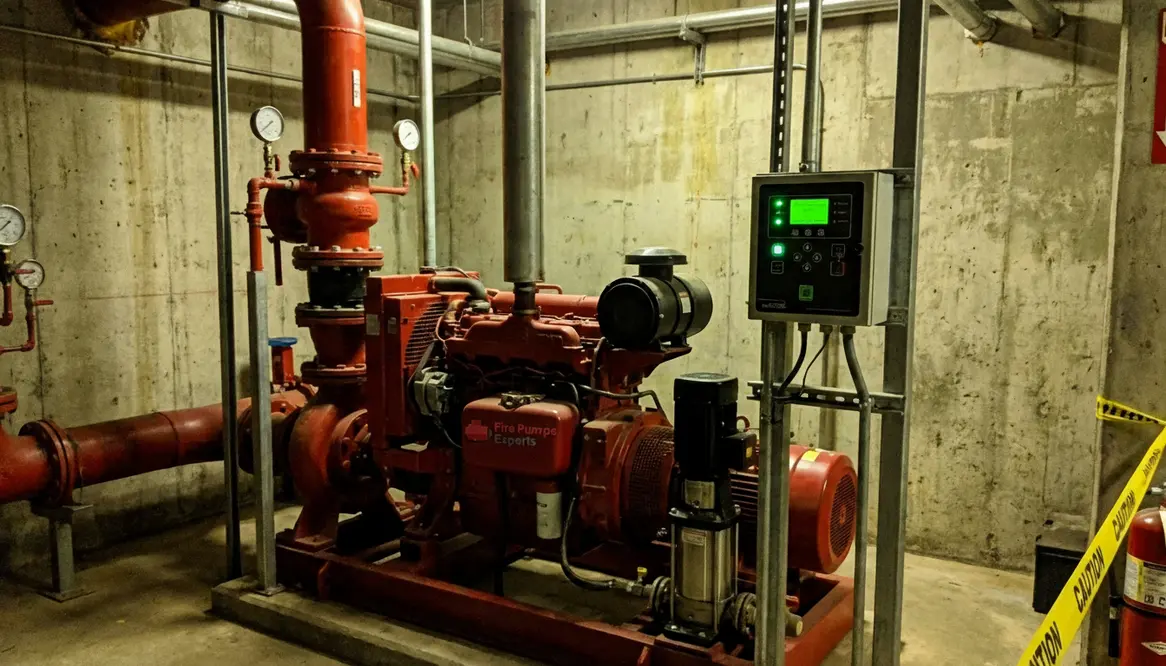
Why Fire Pumps Start Automatically During Emergencies
Inside the quiet pump room where fast decisions, hard mechanics, and split-second pressure changes protect people long before anyone smells smoke.
In large commercial and industrial buildings, seconds matter. When a fire breaks out, nobody has time to run down to the pump room, flip a switch, and hope for the best. That is where automatic fire pump activation steps in. The system senses trouble and starts moving water through your fire protection network before panic has time to settle in.
I have spent years around pump rooms that hum quietly behind concrete walls, doing their job without applause. And honestly, that quiet reliability is exactly the point. When pressure drops inside a sprinkler system, the pump does not wait for a meeting, a memo, or a motivational speech. It starts. Immediately. Think of it as the calm professional in the room while everyone else is still figuring out where the fire extinguisher went.
However, there is a lot more happening behind the scenes than a simple on switch. Understanding how this process works helps facility managers protect people, property, and operations without gambling on luck.
How Automatic Fire Pump Activation Actually Works
The entire process begins with water pressure. In a properly designed fire protection system, the sprinkler and standpipe network stays pressurized at all times. That pressure acts like a silent security guard, and it is the backbone of automatic fire pump activation whether you are protecting a mid-rise office or a sprawling distribution center.
When a fire sprinkler opens because heat activates it, water begins to flow. Naturally, that flow causes the system pressure to drop. The moment that pressure dips below a preset level, the fire pump controller recognizes the change and starts the pump automatically.
This is not guesswork. It is mechanical logic.
From Sprinkler Activation to Full Pump Operation
The sequence usually unfolds like this:
- The sprinkler head activates due to heat
- Water flows through the piping network
- System pressure drops
- A pressure sensor signals the controller
- The pump starts and restores pressure
Because of this design, the pump responds to real demand rather than waiting for a human to intervene. Meanwhile, the system maintains the water volume needed to feed sprinklers across multiple floors or large industrial areas.
In a warehouse the size of several football fields, that immediate response can mean the difference between a contained fire and a very expensive headline.
What Triggers Automatic Fire Pump Activation in a Building?
The short answer is pressure loss. The longer answer is a network of sensors, controllers, and mechanical safeguards designed to react faster than any building engineer could during a crisis. Together, they turn automatic fire pump activation into a predictable, repeatable response instead of a hope-and-prayer moment.
Pressure Switches and the Fire Pump Controller
Most commercial systems rely on pressure switches connected to a fire pump controller. When the pressure falls below the programmed threshold, the controller starts the pump motor.
Supporting Roles: Jockey Pump, Controller, and Main Pump
First comes the jockey pump. This smaller pump maintains system pressure during minor fluctuations. Without it, the main fire pump would start every time someone sneezed near a valve.
Then comes the controller. This device acts like the brain of the operation. It monitors pressure levels and determines when the main pump must run.
Finally, the main pump delivers the heavy lifting. Diesel or electric driven units push large volumes of water through the system, ensuring sprinklers receive the pressure required to control the fire.
And yes, the system keeps running until someone shuts it down manually. That design prevents accidental stops during an active emergency. In other words, once the pump wakes up, it stays on the job.
Inside the Pump Room: Key Components Working Together
Mechanical Components
- Main fire pump
- Electric or diesel driver
- Jockey pump
- Backflow preventer
- Relief valves
Control and Monitoring Equipment
- Fire pump controller
- Pressure sensors
- Flow switches
- Alarm connections
- Emergency power supply
Each component serves a specific purpose. Together, they create a system that reacts instantly when a fire begins to grow.
I like to think of the pump room as the backstage crew of a Broadway show. The audience never sees them, but if they disappear, the entire performance falls apart.
Similarly, if any component fails or falls out of calibration, response time suffers. That is why testing and inspection remain critical for large properties such as manufacturing plants, distribution centers, hospitals, and high rise office towers.
Why Commercial Buildings Cannot Rely on Manual Pump Operation
A Nighttime Scenario You Do Not Want to Test in Real Life
Let me paint a quick picture.
A fire starts on the sixth floor of a corporate tower at 2:17 in the morning. The building is mostly empty except for a few overnight staff and a cleaning crew. Smoke begins to rise, sprinklers activate, and water starts flowing.
If the fire pump required manual startup, someone would have to notice the fire, reach the pump room, and activate the equipment. By that time, several minutes could pass. In fire behavior terms, that delay might as well be a lifetime.
Why Automatic Operation Is Non‑Negotiable
Automatic operation removes that risk.
The system reacts instantly whether the building is fully staffed or nearly empty. Moreover, it ensures consistent water pressure across large sprinkler networks. Massive commercial facilities often require thousands of gallons per minute to control a fire.
Without the pump running automatically, upper floors and distant zones might never receive adequate pressure.
And trust me, gravity is not exactly known for being cooperative in high rise buildings.
Why Reliable Fire Pump Performance Matters for Industrial Facilities
Industrial environments present unique fire protection challenges. Manufacturing equipment, combustible materials, high ceilings, and large open spaces can allow fires to grow quickly.
Therefore, a strong and dependable pump system becomes essential.
High-Demand Systems That Depend on Instant Water Flow
In many industrial sites, the fire pump must supply water to:
- High density storage sprinkler systems
- Foam suppression equipment
- Large diameter standpipes
- Exterior hydrant networks
- Deluge protection systems
Each of these demands substantial water flow. Automatic startup ensures the system delivers that flow immediately once conditions require it. In other words, automatic fire pump activation is the quiet partner supporting every other suppression strategy in the facility.
Tying Pump Operation Into Alarms and Monitoring
Furthermore, modern controllers often integrate with building alarm systems and monitoring platforms. When the pump starts, alarms notify operators and fire departments at the same time.
So while the pump works silently in the background, an entire chain of response begins moving into action.
It is a bit like the Avengers assembling, except instead of capes and shields, we have valves, pressure gauges, and a very determined motor.
Automatic Fire Pump Activation and Flooding Concerns
One common worry sounds like this: “If the pump starts by itself, can it flood the building?” The answer is that properly designed and maintained systems are built to deliver high pressure and volume without turning corridors into rivers. Valves, relief devices, and correct sizing all work together to manage that power so automatic fire pump activation helps control fire growth instead of creating a new problem.
If you would like a closer look at how pump performance and building safety connect, this breakdown on fire pumps and flooding risk offers a helpful perspective anchored in real-world service experience.
FAQ: Fire Pump Automatic Operation
Below are some straightforward answers to questions that come up whenever people first learn how much work automatic fire pump activation does behind the scenes.
Protecting Your Facility Starts in the Pump Room
Behind every reliable fire protection system sits a pump ready to respond the moment pressure drops. That automatic response protects lives, operations, and millions of dollars in infrastructure. In practical terms, automatic fire pump activation is the reason sprinklers on a distant mezzanine can get the same fighting chance as sprinklers near the riser room.
If you manage a commercial tower, manufacturing facility, or large industrial property, your fire pump deserves expert attention. Your testing program, maintenance schedule, and controller settings all shape how confidently you can rely on automatic fire pump activation when something goes wrong at 2:17 in the morning and nobody is standing in front of the panel.
Our specialists help ensure your system performs exactly when it matters most, from the jockey pump and valves to the main driver and controller logic. Reach out today and make sure your pump room is prepared for the moment it is needed, so your next emergency feels controlled, contained, and backed by a system that quietly went to work before anyone had time to panic.