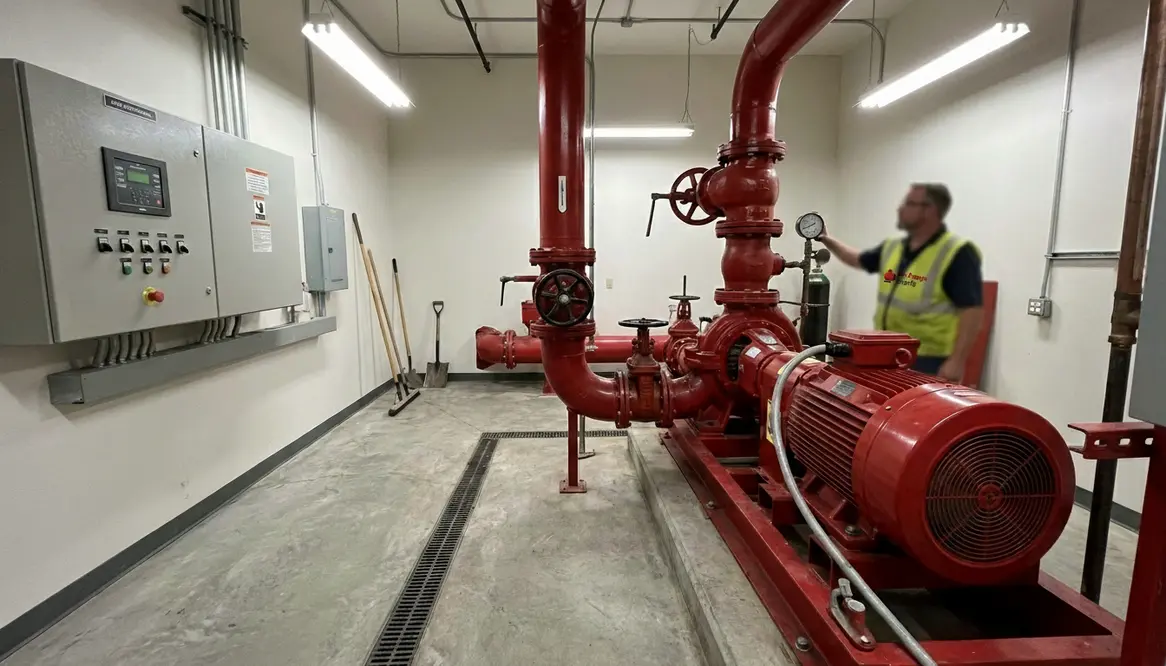
Fire Pump Room Requirements for Commercial Buildings
I have spent a lot of time inside mechanical spaces that most people never think about. Boiler rooms, electrical vaults, and of course the heart of a building’s fire protection system. When people ask me about fire pump room requirements commercial building projects must follow, I usually tell them this. The pump room is not just another mechanical closet. It is the last line of defense when a fire tries to turn a property into the next disaster headline.
In large commercial and industrial buildings, the fire pump is the muscle that pushes water through the sprinkler system with enough force to stop a growing blaze. However, that muscle only works when the room around it is designed properly. Codes, layout, access, ventilation, and maintenance space all matter. So today I will walk you through what actually makes a fire pump room compliant, reliable, and ready for the worst day a building may face.
Why a Fire Pump Room Is the Backbone of a Building’s Fire Protection System
First, let me set the stage. A fire pump increases water pressure in sprinkler and standpipe systems. Without it, many large properties simply cannot deliver enough water to upper floors, warehouses, or industrial spaces.
However, installing a pump alone is like buying a race car and parking it in a cramped garage with no door. It looks impressive, but it will not perform when it matters.
Because of that, codes such as NFPA 20 require a dedicated room built specifically to support the fire pump. This space protects the equipment, ensures easy access for maintenance teams, and guarantees the pump can operate under emergency conditions.
Additionally, building owners of major commercial properties should remember something important. During a fire event, systems fail in layers. Power may drop. Smoke spreads. Temperatures rise. A properly designed pump room keeps the equipment functioning while everything else around it becomes chaotic.
Think of it as the command center of the water supply system. And yes, if buildings had superheroes, the fire pump would absolutely wear a cape.
Fire Pump Room Requirements Commercial Building Designers Must Plan Early
One mistake I see far too often is treating the pump room like an afterthought. Someone finishes the building design, then tries to squeeze a pump into whatever leftover corner remains.
That approach rarely ends well.
Instead, architects and engineers must plan the pump room during the earliest design stages. Doing so allows them to meet several critical requirements that commercial fire protection codes demand.
Location and separation
The room must sit in a protected area of the building. Typically, this means a two hour fire rated enclosure that shields the equipment from surrounding hazards. After all, placing life safety equipment in a vulnerable space would be like storing your parachute next to a bonfire.
Direct exterior access
Many jurisdictions require direct access from outside the building. This allows fire crews and service technicians to reach the pump room quickly without navigating a maze of hallways.
Drainage and water control
Because fire pumps move large volumes of water, drainage becomes critical. Floor drains and proper slope prevent flooding that could damage motors and controllers.
Structural support
Fire pumps are heavy pieces of equipment. Concrete housekeeping pads and proper anchoring keep the pump stable during operation.
When designers address these factors early, the entire fire protection system performs better. And maintenance teams will silently thank you every time they walk into the room.
How Much Space Does a Fire Pump Room Actually Need
This is one of the most common questions I hear from property developers. And honestly, the answer surprises many people.
A fire pump room must be large enough for installation, inspection, testing, and repair. In other words, technicians need space to move, remove components, and work safely.
Therefore, clearance requirements typically include the following:
Equipment clearances
- Minimum working space around pump and motor
- Access to valves and controllers
- Room for removing large components
- Space for pump testing connections
Operational access
- Clear path to the controller
- Room for inspection teams
- Area for maintenance tools
- Safe walkways around equipment
Additionally, ceiling height matters. Technicians may need to remove motors or vertical components using lifting equipment. Without enough clearance, simple maintenance can turn into a logistical nightmare.
I once saw a pump room where replacing the motor required partially dismantling a wall. That is the kind of plot twist no facility manager wants.
Proper space planning prevents those problems while keeping the system serviceable for decades.
Environmental Conditions That Keep Fire Pumps Running During Emergencies
Fire pumps operate under intense conditions. Therefore, the room environment must support reliable operation even during extreme events.
Temperature control stands at the top of that list.
NFPA guidelines typically require the room to remain above 40°F or about 4°C. Cold environments can freeze water lines or damage components. Conversely, extreme heat can affect motor performance and electrical equipment.
Ventilation also plays a key role. Electric motors and diesel engines generate heat during operation. Without proper airflow, temperatures rise quickly inside the room.
Diesel driven fire pumps require even more attention. These systems produce exhaust gases that must be safely vented outside the building. In addition, combustion air must enter the room to support engine operation.
Then there is lighting. And yes, it matters more than people think.
Emergency lighting ensures technicians and firefighters can operate the system even if the building loses power. When alarms sound and smoke fills corridors, nobody wants to fumble around a dark pump room like they are searching for the light switch in a horror movie.
Reliable environmental conditions protect the equipment and keep the system operational when the building needs it most.
Inspection, Testing, and Maintenance Access for Large Facilities
Commercial and industrial properties do not install fire pumps and forget about them. These systems require regular testing and inspection to verify performance.
Because of that, fire pump room design must support ongoing maintenance.
Weekly and monthly checks often include controller inspections, pressure readings, and visual equipment reviews. Additionally, annual flow tests measure the pump’s ability to deliver required water pressure.
All of this requires room for technicians, gauges, hoses, and testing equipment.
Furthermore, water discharge during testing must be handled properly. Test headers and drainage systems safely direct large water flows outside the building.
Large commercial properties such as warehouses, hospitals, manufacturing plants, and high rise complexes depend on these procedures to maintain system reliability. Without proper access, routine testing becomes difficult or even impossible.
And when maintenance gets skipped, systems fail quietly until the worst possible moment. That is not drama. That is reality.
Fire Pump Room Requirements Commercial Building Owners Cannot Ignore
For property owners managing major facilities, compliance is only part of the picture. A well designed pump room also protects long term investment.
Modern commercial buildings contain millions of dollars in equipment, inventory, and infrastructure. Fire protection systems guard those assets every hour of every day.
When the pump room meets professional standards, several benefits follow:
- Reliable water pressure during fire emergencies
- Safer conditions for firefighters and occupants
- Lower risk of system failure
- Efficient maintenance and inspections
- Better compliance with insurance and code requirements
Additionally, facility teams gain peace of mind. They know the system protecting their building was designed correctly from the ground up.
And honestly, that peace of mind is worth a lot. Fires are unpredictable enough without adding preventable design problems into the mix.
If you are working through the practical side of fire pump room requirements commercial building owners face, partnering with a service provider that understands design, inspection, and testing is one of the best ways to protect your investment.
FAQ: Fire Pump Rooms in Commercial and Industrial Buildings
What is the purpose of a fire pump room?
It houses the fire pump, controller, and related equipment that supply high pressure water to a building’s sprinkler and standpipe systems.
Does a fire pump need a dedicated room?
Yes. Most commercial buildings require a dedicated fire rated room to protect the pump and allow safe operation during a fire event.
How big should a fire pump room be?
The room must provide enough clearance for equipment installation, inspection, maintenance, and component removal according to NFPA guidelines.
Do fire pump rooms need exterior access?
Many codes recommend or require direct exterior access so firefighters and technicians can reach the equipment quickly.
Why does a fire pump room need ventilation?
Ventilation removes heat from motors or diesel engines and ensures proper airflow for safe operation.
Protecting Your Facility Starts With the Right Fire Pump Room
Designing a fire pump room is not just another box on a construction checklist. It is a critical decision that protects the entire building. When commercial and industrial facilities follow proven standards, the fire protection system performs exactly when it is needed.
If your team is sorting through the practical details of fire pump room requirements commercial building facilities must satisfy, expert guidance can save both time and rework. A qualified fire protection partner can help verify that your layout, sizing, environmental controls, and testing provisions line up with current codes and your insurer’s expectations.
For owners and managers who want a hands-on partner for fire pump design, inspection, and service, the fire pump specialists at Kord Fire Protection’s fire pump services provide code compliant support tailored to complex commercial and industrial properties.
When your building faces a real emergency, you want more than a pump sitting in a dark corner. You want a purpose built, well maintained fire pump room that has been designed from day one to keep water moving, people safe, and your investment protected.