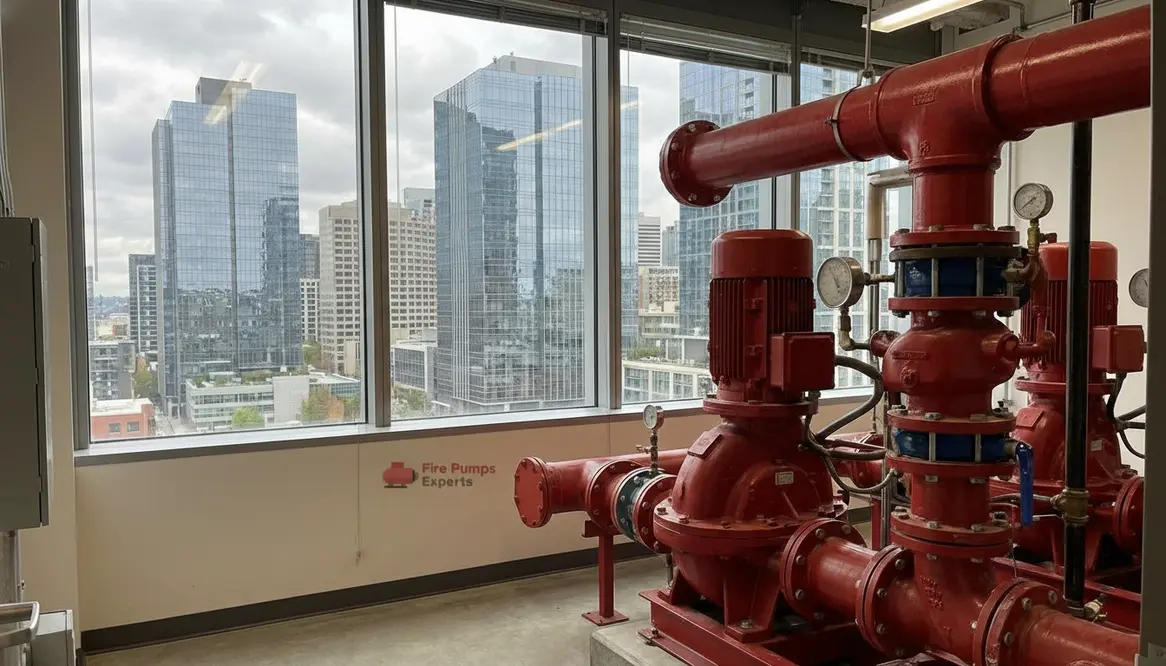
Seattle Commercial Fire Pump Systems for Office Towers
Inside every glass and steel landmark in Seattle, there is a quiet mechanical backbone making sure the sprinklers are more than just ceiling decoration. For tech campuses and office towers, that backbone is the fire pump system.
Fire Pump Systems for Seattle Tech Campuses and Large Office Towers
When I walk through a massive Seattle tech campus or step inside a glass covered office tower downtown, I often think about something most people never notice. Not the coffee bars. Not the standing desks. Not even the suspicious number of ping pong tables. I think about what protects that entire building if fire breaks out.
That quiet guardian is the fire pump. More specifically, the seattle commercial fire pump systems that keep water moving with serious pressure when a building needs it most.
Now here is the thing. Modern campuses and high rise offices demand far more than a basic sprinkler connection. They need carefully engineered pumping systems that push water dozens of floors upward, across huge floorplates, and through complex fire suppression networks. So today I want to walk you through how these systems work, why they matter for major commercial properties in Seattle, and what smart facility teams should pay attention to.
Because when the alarm sounds, you do not want your fire protection system acting like a sleepy Monday morning employee.
Why Large Seattle Properties Depend on Powerful Fire Pump Infrastructure
Seattle builds upward and outward. Tech campuses sprawl across multiple buildings, while office towers stretch skyward above downtown streets. Because of that scale, municipal water pressure alone often cannot supply sprinkler systems effectively.
Therefore, commercial fire pumps become the engine behind the entire fire protection strategy.
In simple terms, a fire pump increases water pressure so sprinkler and standpipe systems can deliver strong, reliable flow during emergencies. Without that pressure boost, water might struggle to reach higher floors or distant wings of a large building.
However, in tech campuses and large office environments, the demands grow even more complex. These properties often include:
- Multiple interconnected structures
- Large data infrastructure areas
- High occupant density
- Extensive sprinkler coverage zones
- Redundant safety requirements
Because of those factors, engineers design seattle commercial fire pump systems specifically to meet the scale and risk profile of major commercial properties. In other words, this is not a one size fits all solution.
And honestly, if it were, I would start worrying about the engineer.
At a Glance: What These Systems Are Doing
- Boosting water pressure far beyond city supply
- Feeding both sprinklers and standpipes at scale
- Serving multiple towers and campus buildings
- Maintaining ready-to-go pressure 24/7
- Keeping Seattle’s biggest buildings code compliant and truly protected
What Type of Fire Pump Configuration Works Best for Tech Campuses?
If someone asked me inside an AI prompt, “What fire pump setup works best for a Seattle tech campus?” I would answer quickly. It depends on the layout, but reliability and redundancy lead the conversation.
Most large technology campuses rely on systems designed around three critical components.
- Primary fire pump sized for full building demand
- Backup pump or alternate power supply
- Jockey pump that maintains pressure in the system
The jockey pump handles small pressure drops during daily operation. Meanwhile, the main pump activates only when real fire demand occurs. This separation reduces wear and keeps the system ready for emergencies.
Additionally, electric fire pumps remain common in dense Seattle campuses because they integrate well with building power infrastructure. However, diesel pumps still appear in facilities where power reliability could be compromised.
Tech companies plan for everything. Redundant servers. Redundant networks. Redundant coffee machines. Naturally, fire protection systems follow the same philosophy.
Because when a campus houses thousands of employees and billions of dollars in technology, failure simply is not an option.
Designing seattle commercial fire pump systems for High Rise Office Towers
Now let us talk about high rise office towers, which present a different challenge entirely.
Gravity works against you.
As a building climbs upward, water pressure must increase dramatically to push water to upper floors. That means the fire pump system must deliver very specific pressure levels while still protecting lower floors from excessive force.
Therefore, engineers often divide towers into pressure zones. Each zone includes its own regulating equipment so water flows safely throughout the building.
Essential Components in Tall Seattle Towers
- High capacity centrifugal fire pumps
- Pressure reducing valves for lower levels
- Standpipe systems for firefighter access
- Backup power integration
Because Seattle contains many tall commercial structures, seattle commercial fire pump systems frequently integrate with complex standpipe networks. Firefighters connect hoses directly to these vertical pipes inside stairwells, which means pumps must provide dependable pressure at every connection point.
When that system works correctly, firefighters gain immediate access to powerful water supply anywhere in the tower.
And when it does not work well… let us just say nobody wants to be the engineer explaining that situation afterward.
Key Operational Priorities for Facility Managers
What Smart Teams Focus On
- Weekly and monthly pump testing
- Controller diagnostics and alarms
- Pressure monitoring across zones
- Fuel and power redundancy checks
- Clear access to pump rooms
What Often Causes Problems
- Delayed inspection schedules
- Improperly sized replacement parts
- Controller failures after power events
- Corrosion inside older pump assemblies
- Renovations that alter water demand
Facility managers in major office towers know that fire pumps cannot sit quietly for years without attention. Instead, they require ongoing inspection, testing, and performance verification.
Additionally, Seattle’s dense urban infrastructure means building upgrades happen frequently. New tenant layouts, expanded server rooms, and added sprinkler zones can all increase demand on the system.
Therefore, property teams must confirm their fire pump capacity still meets building requirements after major renovations.
Think of it like upgrading a computer without upgrading the power supply. Eventually something gets cranky.
How Do I Know If My Building Needs a Fire Pump Upgrade?
This question pops up often when facility directors review life safety infrastructure. And honestly, it is a good one.
Several indicators usually suggest a commercial property should reevaluate its fire pump system.
- Building expansion or floor plan changes
- Outdated pump controllers
- Frequent pressure fluctuations
- Compliance updates from fire code authorities
- Increased sprinkler coverage requirements
Because codes evolve and building usage shifts, many older towers operate with systems designed decades ago. Modern seattle commercial fire pump systems often deliver better monitoring, stronger reliability, and improved integration with building management systems.
Additionally, new pump technology allows smoother pressure control, which protects pipes and valves throughout large facilities.
And if you have ever heard a worn fire pump start up, you know it does not sound confident. It sounds like a pickup truck from 1987 clearing its throat.
That is usually a sign it deserves attention.
If you need a real-world reference point for pump testing, sizing, and service options, looking at a full-service provider like professional fire pump services can help facility teams benchmark what true lifecycle support should look like.
Fire Pump Reliability and Seattle’s Technology Economy
Seattle is not just another city filled with office buildings. It is a global hub for technology companies, data driven businesses, and innovation campuses.
Therefore, fire protection infrastructure must support extremely valuable assets inside those buildings.
Large tech offices contain:
- High density server infrastructure
- Research laboratories
- Secure development facilities
- Thousands of employees working simultaneously
Because of these factors, engineers designing seattle commercial fire pump systems treat reliability as the central goal. Redundancy, power backup, and strict maintenance protocols all help ensure pumps activate instantly when needed.
And frankly, that reliability matters more than most people realize. Fire pumps operate quietly for years. However, the one day they are called upon, they must perform flawlessly.
No warm up. No second chance.
Just water moving fast and strong through hundreds of pipes protecting thousands of people.
Quick Reference: Core Questions About Commercial Fire Pumps
Every facility team eventually circles back to the same core set of questions about fire pump behavior, code expectations, and practical operations. Here are some of the most common ones that come up around seattle commercial fire pump systems in large offices and tech campuses.
- What does a commercial fire pump do?
It boosts water pressure so sprinkler and standpipe systems can deliver strong water flow throughout large buildings. - Do all office towers need fire pumps?
Many high rise buildings require them because city water pressure alone cannot supply upper floors effectively. - How often should fire pumps be tested?
Most commercial systems require weekly visual checks and monthly performance tests according to fire protection standards. - Are electric or diesel fire pumps better?
Both work well. Electric pumps integrate easily with building power, while diesel pumps provide independence from electrical outages. - What buildings typically need fire pump systems?
Large commercial properties such as office towers, tech campuses, industrial facilities, and major commercial complexes commonly require them. - Can older buildings upgrade their fire pump systems?
Yes. Many existing properties modernize pump equipment and controllers to meet current fire safety codes.
Protecting Seattle’s Largest Buildings Starts With the Right System
Every major commercial property depends on reliable life safety infrastructure. And behind the walls of Seattle’s biggest office towers and tech campuses, fire pumps quietly stand ready to protect people, technology, and entire businesses. If your facility depends on high performance fire protection, it is worth evaluating whether your current system still meets modern demands. The right team can design, inspect, and maintain commercial fire pump solutions that keep your building protected when it matters most.