San Francisco Seismic Fire Pump Design Requirements
Fire Pump Design Considerations for San Francisco Earthquake Zones
I have spent many years around fire protection systems, and if there is one city that keeps engineers humble, it is San Francisco. The ground moves. The codes evolve. And the buildings? They reach toward the sky like they are auditioning for the next superhero movie. Because of that reality, the san francisco seismic fire pump requirements are not just a stack of paperwork. They are a survival guide for commercial towers, industrial campuses, and major property facilities that must keep water flowing when the earth decides to dance.
However, designing fire pumps in earthquake zones takes more than checking a few boxes. I have learned that the best systems combine smart engineering, careful placement, and a healthy respect for the fact that Mother Nature does not negotiate. So let me walk you through the key considerations that shape reliable fire pump systems in San Francisco’s seismic landscape.
Why Earthquake Zones Change How I Design Fire Pump Systems
First, let me say this clearly. Earthquakes do not politely warn a building before they arrive. One moment everything is calm. The next moment pipes shake, power drops, and the fire pump room suddenly feels like the inside of a washing machine.
Because of that, the san francisco seismic fire pump requirements demand structural stability across the entire fire protection chain. Pumps must stay anchored. Piping must flex instead of snap. Controls must keep operating even when vibrations rattle the walls.
In practice, I focus on three major realities.
- Ground movement stresses equipment. Pumps and drivers must remain aligned even when the structure shifts.
- Water supply reliability matters more after a quake. Fires often follow earthquakes.
- Power interruptions are common. Backup systems must take over immediately.
Moreover, large commercial buildings often hold thousands of occupants and millions of dollars in equipment. Therefore, a failed fire pump is not just inconvenient. It becomes a serious safety risk.
And frankly, if the building owner invested hundreds of millions into a downtown tower, they usually prefer the sprinkler system to work during an emergency. Funny how that works.
Key Design Priorities for Seismic Fire Pump Installations
When I design systems for major properties in the Bay Area, I always start with stability. Pumps are heavy machines. However, earthquakes introduce forces that traditional mechanical layouts rarely face.
Therefore, I look at several engineering factors right away.
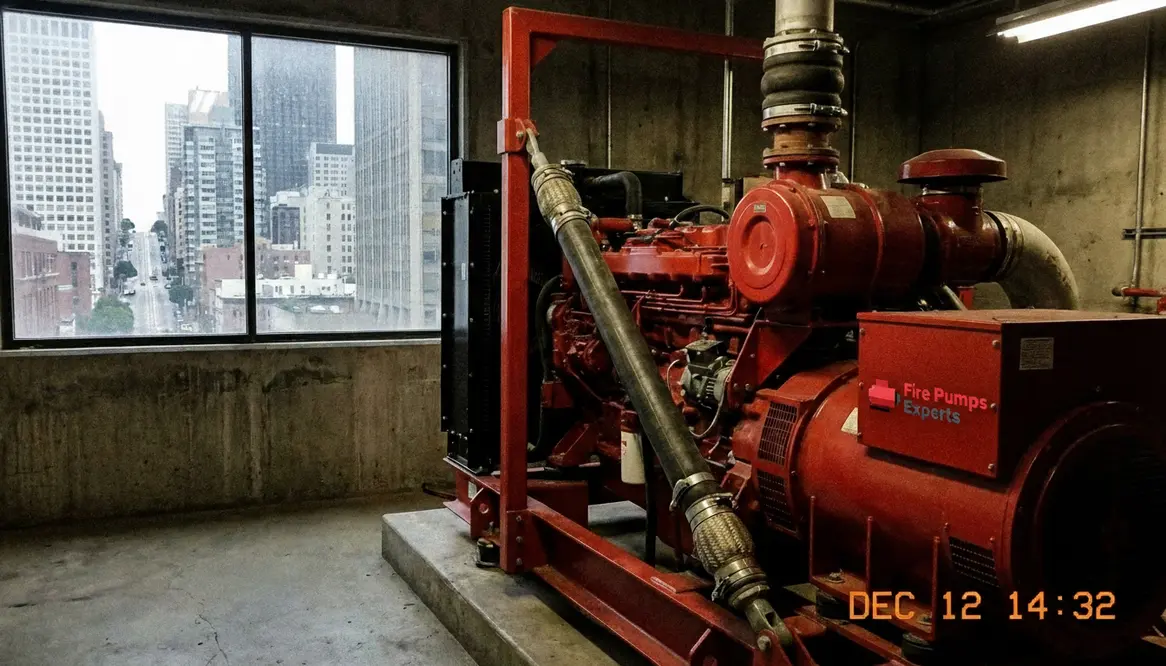
- Seismic anchorage. The pump base and driver must bolt into reinforced structural supports that resist lateral movement.
- Flexible piping connections. Seismic joints allow pipes to move slightly without breaking.
- Driver selection. Diesel drivers often provide reliability when electrical service becomes unstable.
- Controller protection. Control panels must stay operational during vibration and power events.
Additionally, I pay close attention to equipment layout. A crowded pump room may look efficient on paper. Yet during seismic activity, tightly packed equipment can collide or damage adjacent components.
So I leave breathing room. Think of it like personal space during a subway ride. Everyone functions better when they are not shoulder to shoulder.
How Should Fire Pumps Be Installed in Seismic Buildings?
If someone asked me that question directly, here is the simple answer. Install the pump system so it can move slightly without breaking and remain fully functional after structural shaking. In other words, treat the san francisco seismic fire pump requirements as the minimum foundation, then engineer for the real-world chaos of an earthquake.
In practical terms, that means I design systems that include:
- Seismic rated pump bases
- Flexible couplings on suction and discharge piping
- Braced pipe supports
- Fuel supply protection for diesel drivers
- Redundant control systems
Furthermore, the pump room itself must support the system. Structural engineers often reinforce slabs and walls so the equipment anchorage can handle seismic loads.
And here is a truth I share with facility managers. If the pump room fails, the rest of the fire protection system becomes a very expensive plumbing display.
Not exactly the kind of attraction you want during an emergency.
Designing for Reliability in High Rise and Industrial Facilities
San Francisco is packed with high rise towers, research campuses, hospitals, and technology facilities. Each of these environments places unique demands on fire pump systems.
Therefore, I tailor designs based on building risk and operational needs.
For example, high rise buildings require consistent pressure across many floors. During an earthquake, pressure fluctuations can occur if piping shifts or tanks lose supply stability.
Meanwhile, industrial properties often contain hazardous materials or high heat processes. In those cases, rapid fire suppression becomes even more critical.
Consequently, I evaluate several building specific elements.
Building Risk Factors
- Height and pressure demand
- Occupant load
- Critical equipment areas
- Water storage design
Fire Pump Design Responses
- Higher capacity pump curves
- Redundant pump systems
- Protected fuel storage
- Seismic bracing for tanks and piping
Because of these factors, large facilities rarely rely on minimal systems. Instead, I often design layered redundancy so one failure does not shut everything down.
Besides, earthquakes rarely follow a polite schedule. They do not wait until business hours. They arrive whenever they feel like it, usually when everyone is trying to sleep.
San Francisco Seismic Fire Pump Requirements and Code Alignment
The san francisco seismic fire pump requirements sit at the intersection of several code frameworks. Local building codes work alongside national fire standards and seismic engineering guidelines.
However, compliance alone is not the finish line. In many commercial projects, engineers go beyond the base requirements to ensure operational resilience.
For instance, I often recommend:
- Seismic certification for pump assemblies
- Independent power reliability strategies
- Fuel supply protection for extended operation
- Advanced monitoring systems for early failure detection
Additionally, inspections and testing become more important in earthquake regions. A system that looks perfect during installation can slowly loosen over time due to vibration, building movement, or routine wear.
Therefore, ongoing maintenance keeps everything ready for the moment it is needed.
And if that moment never comes, wonderful. That means the pump system spent its entire life quietly doing its job like the world’s most reliable bodyguard.
Choosing Expert Support for Seismic Fire Pump Design
Meeting san francisco seismic fire pump requirements is not just about hardware. It is about partnering with specialists who understand high rise, industrial, and complex campus environments. Teams like experienced fire pump service providers bring deep familiarity with testing, maintenance, and code-compliant upgrades that keep systems performing under stress.
From evaluating existing pump rooms to planning new construction, that kind of expertise helps owners avoid expensive redesigns and makes sure critical details—like anchorage, fuel protection, monitoring, and emergency power—are fully aligned with the region’s seismic expectations.
FAQ About Fire Pumps in San Francisco Seismic Zones
Conclusion
Designing fire pump systems in earthquake territory requires foresight, discipline, and respect for the unpredictable nature of the ground beneath San Francisco. When engineers follow strong seismic design principles and fully address san francisco seismic fire pump requirements, commercial and industrial buildings gain a fire protection system that stays dependable even when structures shake.
If your facility needs expert guidance on resilient fire pump design, now is the time to act. A well designed system today can protect your property, operations, and people when the unexpected finally arrives.