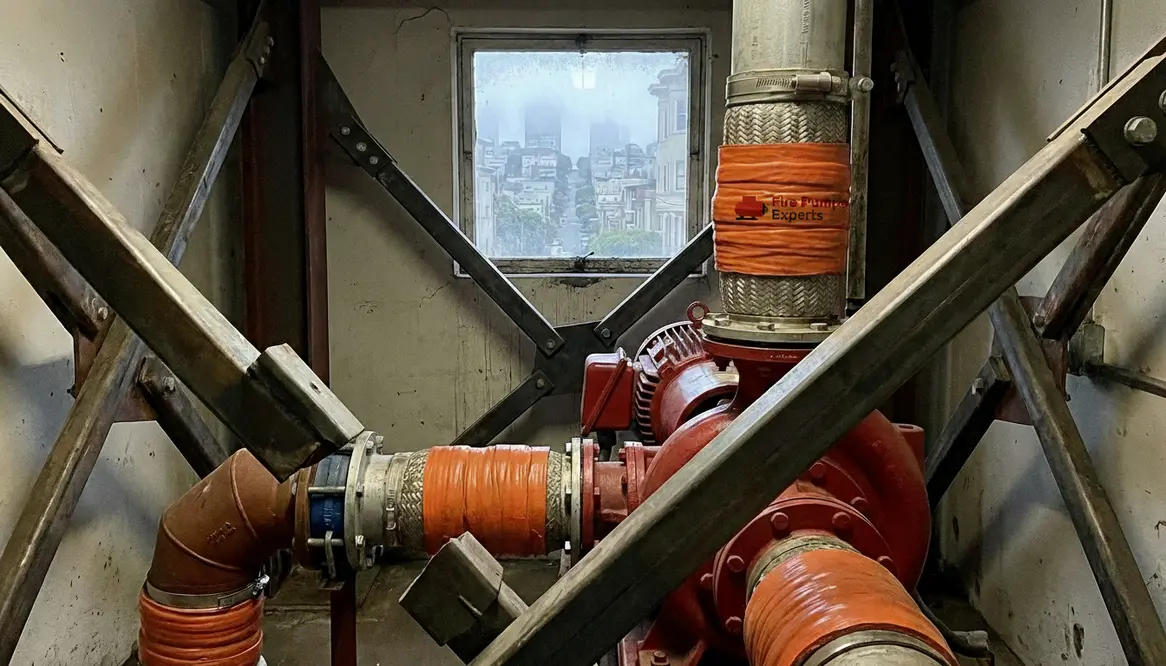
San Francisco Seismic Fire Pump Design Requirements
Fire Pump Design Considerations for San Francisco Earthquake Zones
I have worked around fire protection systems long enough to know one thing for sure. Buildings in San Francisco do not get the luxury of simple design decisions. Between steep hills, dense urban construction, and the occasional tectonic reminder from the San Andreas Fault, every system must prepare for a rough day at the office.
That is exactly where san francisco seismic fire pump requirements come into play. These guidelines shape how engineers design fire pump rooms, anchor equipment, protect piping, and keep water moving when the ground decides to dance. Moreover, for commercial and industrial facilities, the stakes are enormous. Hospitals, data centers, high rise offices, and large industrial properties cannot afford system failure during an earthquake.
So today I will walk through the real design thinking behind seismic ready fire pump systems. Think of it less like reading a dry code book and more like sitting down with a seasoned engineer who has seen a few things and learned a few lessons along the way.
Why Earthquake Resilience Matters in Fire Pump Design
Let me paint a picture.
An earthquake hits downtown San Francisco. The building structure survives. The sprinklers are ready. The alarms work. However, the fire pump shifted six inches off its base and snapped a suction line. Suddenly the entire suppression system becomes about as useful as a screen door on a submarine.
That scenario is exactly what modern seismic fire pump standards aim to prevent.
Fire pumps serve as the heartbeat of large commercial suppression systems. Without them, water pressure drops and sprinklers lose effectiveness. Therefore, in earthquake zones, engineers design these systems so they stay operational during and after seismic movement.
Core Principles Behind Seismic-Ready Fire Pumps
- Equipment must remain anchored to structural elements
- Piping must allow movement without breaking
- Fuel and power sources must stay protected
- Control panels must remain functional after shaking
In other words, the goal is simple. When the shaking stops, the pump still runs.
And frankly, that is not just engineering discipline. It is survival planning for critical infrastructure.
San Francisco Seismic Fire Pump Requirements for Commercial Buildings
Commercial properties in San Francisco operate under strict seismic provisions. These rules combine national fire codes with California seismic standards and local enforcement practices.
Because of that, designing a compliant system requires more than dropping a pump on a concrete pad and calling it a day.
Anchorage, Piping, and Room Design
First, anchorage is critical. Fire pumps must attach to foundations using seismic rated anchor bolts designed to resist lateral and vertical movement. Engineers calculate loads based on equipment weight, expected ground acceleration, and building classification.
Next comes piping flexibility. Rigid piping systems fail quickly when structures shift. Therefore, designers include flexible couplings and seismic sway bracing to absorb movement.
Additionally, the pump room itself must support seismic performance. Structural supports, clear access paths, and vibration isolation all help maintain system integrity.
Power Reliability Under Seismic Stress
Power reliability is another layer. Electric fire pumps require protected feeders and backup power planning. Diesel pumps, on the other hand, must secure fuel tanks and exhaust systems against movement.
And yes, inspectors look closely at these details. They treat fire pumps the way movie directors treat the lead actor. If the star fails, the whole show collapses.
Design Choices That Keep Pumps Running After the Ground Moves
Over the years, I have seen certain design strategies consistently outperform others in seismic regions. While codes establish the baseline, thoughtful engineering pushes reliability even further.
For example, equipment layout plays a larger role than many people expect. A well organized pump room reduces stress on piping runs and simplifies seismic bracing.
Structural Stability
- Heavy duty base plates tied to reinforced foundations
- Seismic rated anchor bolts
- Equipment clearance that allows controlled movement
- Rigid structural supports for controllers
System Flexibility
- Flexible couplings on suction and discharge piping
- Seismic sway bracing for vertical risers
- Expansion loops for long pipe runs
- Vibration isolation pads under pumps
Together, these strategies create a balance between strength and flexibility. Think of it like martial arts instead of bodybuilding. The system bends where it should and stays firm where it must.
Moreover, designers must consider equipment access. After an earthquake, maintenance teams need clear room to inspect pumps and piping. Crowded mechanical rooms make that task much harder.
And trust me, nobody wants to troubleshoot a 500 horsepower pump while squeezed between pipes like a subway passenger at rush hour.
San Francisco Seismic Fire Pump Requirements During System Installation
Design is only half the battle. Installation determines whether the system actually performs the way engineers intended.
Even the best design fails if contractors skip seismic restraints or misplace anchor bolts. Therefore, installation teams must follow precise procedures.
From Foundations to Commissioning
First, contractors verify that foundations meet structural load calculations. Concrete strength, embed depth, and anchor placement all matter.
Next, installers mount pumps and controllers according to manufacturer instructions and seismic engineering documents. Inspectors often check torque values for anchors and verify bracing locations.
Then comes piping alignment. Proper alignment reduces stress at pump connections and prevents premature failure during movement.
Finally, commissioning verifies performance. Technicians run acceptance tests to confirm pressure, flow rate, and controller operation.
When installation teams respect these steps, systems meet san francisco seismic fire pump requirements and perform reliably under extreme conditions.
And yes, the testing phase sometimes feels like directing a Hollywood action scene. Water roaring through pipes, gauges bouncing, technicians shouting readings across the room. The difference is that this production protects real buildings and real people.
What Should Engineers Prioritize When Designing Fire Pumps for Earthquake Zones?
I get this question often from facility owners planning new construction.
The short answer is this. Focus on survivability, not just compliance.
Codes define the minimum. Smart engineering aims higher.
Five Priorities for Resilient Fire Pump Design
- Protect the pump foundation and anchorage above all else
- Design flexible piping connections to absorb seismic motion
- Separate critical components so a single failure does not disable the system
- Secure electrical or diesel power sources
- Plan maintenance access for post event inspection
When these priorities align with san francisco seismic fire pump requirements, the resulting system becomes far more resilient.
And resilience matters. Because when the ground shakes, nobody in a high rise office tower wants to hear the fire pump say, “I am taking the day off.”
Common Mistakes I See in Seismic Fire Pump Projects
Even experienced teams occasionally miss details.
Where Seismic Fire Pump Designs Often Go Wrong
One frequent issue involves improper bracing of vertical piping. Tall risers act like pendulums during earthquakes. Without sway bracing, they place enormous stress on pump connections.
Another mistake involves equipment spacing. When pumps sit too close to walls or other equipment, seismic movement can cause impact damage.
Additionally, some projects overlook controller anchoring. While the pump receives attention, the electrical controller quietly sits unsecured. Yet if the controller shifts, the pump may never start.
Finally, documentation often becomes an afterthought. However, inspectors reviewing san francisco seismic fire pump requirements expect detailed calculations, bracing diagrams, and installation verification.
Skipping that paperwork is a bit like showing up to the airport without a passport. You are not getting very far.
Building on Seismic Bracing and Fire Pump Best Practices
If you want to go deeper on how bracing, anchorage, and inspection strategies support san francisco seismic fire pump requirements, it is worth studying how experts handle seismic bracing and routine fire pump inspections. Resources like Kord Fire’s overview of NFPA 20 fire pump installation and performance show how disciplined design and testing keep pumps reliable when everything else is shaking.
FAQ: San Francisco Seismic Fire Pump Requirements
The most common questions about san francisco seismic fire pump requirements usually come from owners and design teams who are trying to balance code language with real world constraints. A few themes come up again and again.
Conclusion
Designing fire pump systems for earthquake zones demands precision, experience, and respect for the unpredictable forces beneath San Francisco. When engineers follow san francisco seismic fire pump requirements while prioritizing resilient design, commercial and industrial buildings gain a critical layer of protection. If your facility needs expert guidance on seismic ready fire pump systems, the specialists at FirePumps.org can help evaluate, design, and implement solutions that keep water flowing when it matters most.