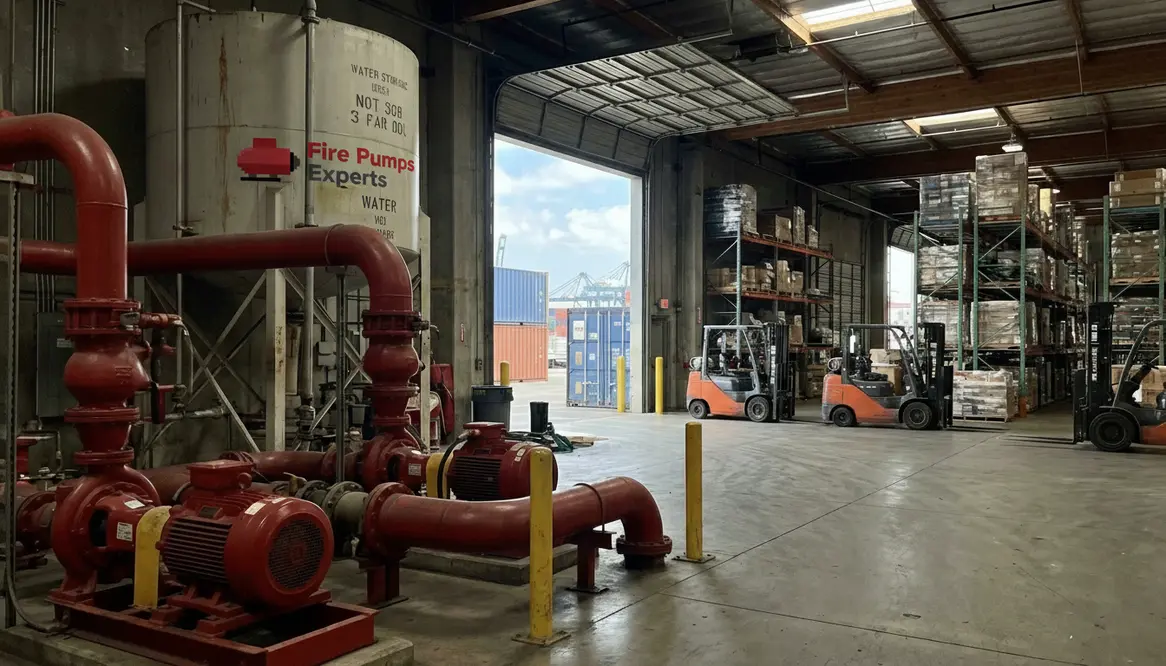
Fire Protection Supply Port of Los Angeles Warehouses
I have spent many hours walking warehouse floors near the docks of Southern California, listening to forklifts hum and container doors slam shut like the closing scene of a gritty port movie. Yet beneath all that motion sits something quieter but far more important. Water. Specifically, the systems that move it fast when fire shows up uninvited. When we talk about fire protection water supply port of los angeles warehouses, we are talking about the backbone of safety for one of the busiest logistics hubs on Earth. Millions of square feet of storage depend on reliable water delivery systems that activate in seconds. And trust me, when flames appear, nobody wants a system that behaves like a WiFi router during a storm.
So today I am walking you through how these systems work, why they matter for industrial properties near the harbor, and what makes the Port of Los Angeles a very specific challenge. Because protecting a massive warehouse filled with imported goods requires more than a hose and a hopeful attitude.
Why Industrial Warehouses Near the Port Need Specialized Fire Water Infrastructure
First, let us acknowledge the obvious. Port warehouses are not ordinary buildings. These facilities often stretch hundreds of thousands of square feet and hold everything from electronics to textiles to automotive parts. In other words, plenty of fuel if a fire starts.
Because of that scale, fire protection systems must deliver large volumes of water quickly. Municipal lines alone rarely handle the demand. Therefore engineers design layered systems that combine city supply, fire pumps, storage tanks, and high capacity sprinkler networks.
Additionally, the Port of Los Angeles sits in a dense industrial environment. Multiple facilities share infrastructure, trucking routes stay busy day and night, and shipping schedules never sleep. Consequently, water supply systems must remain reliable even during peak usage.
I like to say designing these systems is a little like preparing for a superhero movie battle scene. Everything must work instantly, dramatically, and without rehearsal.
Port Warehouses vs. Ordinary Industrial Buildings
The combination of high rack storage, changing inventory, and nonstop operations makes fire protection water supply port of los angeles warehouses a category all its own. These are not quiet suburban boxes with predictable loads; they are constantly changing logistical machines.
That complexity demands higher water demand calculations, more robust fire pumps, and smarter monitoring than many landlocked warehouses ever need.
How Fire Protection Water Supply Port of Los Angeles Warehouses Is Engineered
Designing fire protection water supply port of los angeles warehouses involves more than connecting pipes and hoping for the best. Engineers begin with detailed hydraulic calculations that measure how much water the system must deliver at specific pressures.
Large warehouses usually rely on three core components.
Municipal Water Connection
First comes the city water supply. Large diameter underground mains connect the facility to local infrastructure. However, city pressure alone rarely satisfies industrial sprinkler demand.
Fire Pump Systems
Therefore engineers install powerful fire pumps that boost water pressure dramatically. These pumps activate automatically when the system detects pressure loss. The result is a surge of water capable of feeding hundreds of sprinkler heads simultaneously. For complex facilities, that often means partnering with specialists experienced in pump selection, testing, and performance verification, such as the fire pump team at Kord Fire Protection’s fire pump services.
On Site Water Storage
Finally, many facilities include dedicated water storage tanks. These tanks provide a guaranteed supply even if municipal flow drops during emergencies.
Altogether these elements form a layered defense. If one component weakens, another supports it. Think of it as the Avengers of fire protection infrastructure. Each member has a role, and together they handle the crisis.
What Are the Biggest Fire Protection Challenges at Port Warehouses?
When people imagine fire safety, they often picture a simple sprinkler system quietly waiting in the ceiling. In reality, port warehouses create unique obstacles that demand smarter design.
Massive Storage Heights
Modern logistics facilities stack goods higher than ever. Some racks stretch 40 feet or more. Consequently sprinkler systems must push water deep into storage arrays where flames can hide.
Commodity Variability
One week the building stores electronics. The next week it holds plastic packaging or fabrics. Because fire behavior changes with each commodity type, systems must handle worst case scenarios.
High Value Inventory
A single warehouse might contain millions of dollars in cargo. Therefore suppression must activate fast enough to control fire before it spreads across entire storage zones.
Operational Continuity
Ports operate around the clock. As a result, maintenance and inspections must happen without disrupting logistics operations.
In short, protecting these properties requires careful coordination between engineers, facility managers, and fire protection specialists.
Key Components That Keep Industrial Fire Water Systems Reliable
Now let us talk about the parts that quietly carry the weight of the entire system. When they work well, nobody notices them. When they fail, everyone notices very quickly.
Fire Pumps
These machines act as the heart of the system. Electric or diesel driven pumps raise pressure so water reaches distant sprinklers quickly.
Backflow Prevention
Backflow devices protect municipal drinking water from contamination. In industrial systems, they also maintain correct pressure direction.
Control Valves
Control valves regulate water flow through zones of the sprinkler network.
Water Storage Tanks
Large steel tanks store emergency reserves of water. Many industrial facilities size tanks to support several hours of continuous flow.
Monitoring Systems
Modern facilities integrate sensors and alarms that track pressure levels and valve positions.
Underground Piping Networks
Heavy duty underground mains connect pumps, tanks, hydrants, and sprinkler risers throughout the facility.
Together these components form an ecosystem. Remove one, and the entire balance shifts.
Why System Reliability Matters So Much at the Port
The fire protection water supply port of los angeles warehouses is not just a code requirement; it is a business continuity tool. A single failure can close buildings, reroute cargo, and choke off supply chains that stretch across continents.
Reliable pumps, tanks, and piping protect contracts, customer relationships, and reputations just as much as they protect walls and roofs.
Design Standards That Shape Water Systems in Port Warehouses
Designing water infrastructure for major logistics facilities means following strict standards. Otherwise the system simply will not receive approval.
First, engineers rely heavily on NFPA fire protection codes. These standards define how much water a sprinkler system must deliver based on storage type and building size.
Next, local authorities in Los Angeles enforce additional requirements tied to seismic safety and industrial zoning. After all, California earthquakes add another layer of engineering considerations.
Furthermore, insurance carriers often demand higher performance levels for large distribution facilities. They understand that cargo fires spread quickly through palletized goods.
Therefore modern systems include redundant pumps, oversized water mains, and advanced monitoring technology. The goal remains simple. Deliver water immediately, consistently, and in the quantities needed to stop a growing fire.
If that sounds like over preparation, consider the alternative. Nobody wants a warehouse scene that looks like the finale of an action movie. Explosions belong on streaming platforms, not in logistics centers.
Maintaining Fire Protection Water Supply Port of Los Angeles Warehouses for Long Term Reliability
Even the best designed system will fail without regular care. Maintenance keeps the entire network ready for the moment it matters.
Routine inspections check pump performance, valve positions, and tank levels. Technicians also perform flow tests that simulate real emergency conditions. These tests verify that pressure and volume still meet design requirements.
Additionally, corrosion monitoring protects underground piping from gradual damage. Salt air near the harbor can accelerate wear on metal components.
Facility managers also review warehouse storage layouts regularly. Changes in commodity types or rack height may require updated sprinkler design or pump capacity.
Ultimately, reliable fire protection water infrastructure comes from consistency. Small inspections today prevent major failures tomorrow.
FAQ: Fire Protection Water Systems for Port Warehouses
Conclusion
Strong fire protection begins long before the first sprinkler activates. It starts with smart engineering, dependable pumps, and carefully designed water supply systems built for massive industrial environments. For warehouse operators at the Port of Los Angeles, reliable fire protection infrastructure protects cargo, operations, and lives. If your facility depends on high performance fire water systems, partnering with specialists who understand large scale industrial properties ensures your protection works exactly when it matters most.