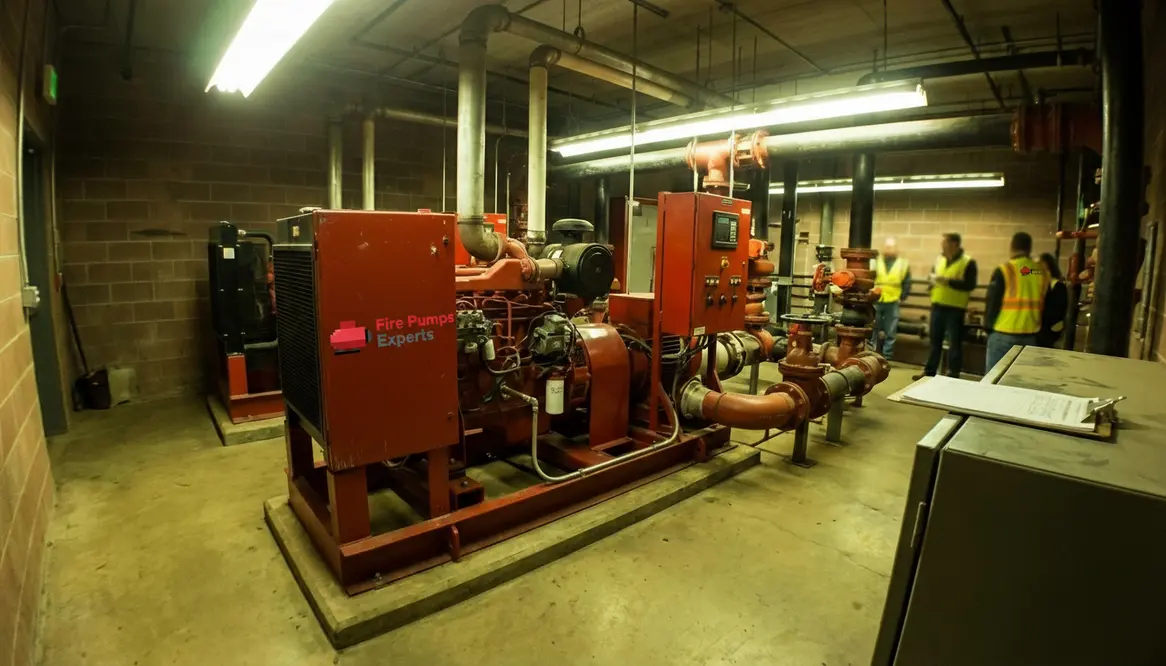
Commercial Fire Pump Basics for Large Facilities
Fire pumps are the quiet guardians of your building, sitting in the background, patient and ready. In large commercial and industrial facilities, these systems are not optional. They are essential. This walkthrough shows how they work, why they matter, and what you should actually care about when lives and property are on the line. Fire safety does not have to feel like watching paint dry.
I like to think of commercial fire pump basics as the quiet guardians of a building. They sit in the background, patient and ready, narrating a suspense scene where nothing has gone wrong yet. In large commercial and industrial facilities, these systems are not optional. They are essential. So today, I am going to walk you through how they work, why they matter, and what you should actually care about when lives and property are on the line. And yes, I promise to keep it engaging. Fire safety does not have to feel like watching paint dry.
What Are Commercial Fire Pump Basics and Why Should I Care?
Let me answer this the way most facility managers wish someone had done earlier. A fire pump is the muscle behind your fire protection system. When city water pressure is not enough, the pump steps in and delivers the force needed to move water where it matters most.
Now, here is the thing. In a high rise or a sprawling industrial complex, gravity alone will not cut it. Without proper fire pump fundamentals, your sprinklers become expensive decorations. And nobody wants their emergency system to perform like a Wi Fi signal in a basement.
So yes, you should care. Because when seconds count, pressure is everything. Getting the commercial fire pump basics right is the difference between a system that looks impressive on paper and one that actually protects people when alarms sound.
How Do Fire Pump Systems Actually Work in Large Facilities?
The basic sequence
I like to picture the system as a coordinated team. First, a drop in pressure triggers the pump controller. Then, the pump activates and pulls water from a reliable source like a tank or a municipal line. From there, it pushes water through the piping network with enough force to reach every corner of the building.
However, it is not just about turning on and off. The system includes controllers, drivers, and backup power. Electric motors are common, but diesel engines often take the lead when reliability must survive a power outage. Think of it as having a backup actor who knows all the lines and never misses a cue.
And while this all sounds simple, the engineering behind it is anything but casual. Every component must meet strict standards, because close enough does not count when fire is involved. That is why commercial fire pump basics always start with understanding the full chain: detection, control, pumping, and delivery.
Key Components That Keep Everything Running Smoothly
Your fire pump team, position by position
Primary Pump
This is the main workhorse. It delivers the required flow and pressure when the system activates.
Controller
The brain of the operation. It monitors pressure and tells the pump when to start.
Driver
Either electric or diesel. It powers the pump and ensures consistent performance.
Jockey Pump
A smaller pump that maintains system pressure. It prevents unnecessary starts of the main pump.
Water Supply
This can be a tank or municipal feed. Without a reliable source, the system is just a fancy paperweight.
Valves and Piping
They direct and control flow. Precision here matters more than you might think.
Each of these elements plays a role in the broader commercial fire pump basics. Remove one, and the system starts to look like a band missing its drummer. Technically still music, but not something you want to rely on in a crisis.
Design Considerations for Commercial and Industrial Properties
Why one-size-fits-all design does not work
Designing a system for a large facility is not a one size fits all situation. Instead, I look at building height, occupancy type, hazard classification, and water supply reliability. These factors shape everything from pump size to layout.
For example, a warehouse storing high hazard materials demands more aggressive fire protection than a standard office building. Likewise, a hospital cannot tolerate system downtime, so redundancy becomes critical.
Codes, standards, and real-world risk
Moreover, compliance with codes such as NFPA standards is non negotiable. Skipping steps here is like ignoring the rules of gravity. Eventually, reality catches up.
So when I talk about fire pump system fundamentals, I am really talking about tailoring solutions that match the scale and risk of the property. Precision is not optional. It is expected. That is where understanding commercial fire pump basics becomes a practical design tool instead of just another compliance buzzword.
If you want to go deeper into how standards shape these decisions, resources like the NFPA 20 overview from specialists such as Kord Fire Protection’s fire pump system guidance are a solid next step for design teams.
Maintenance and Testing That Actually Prevent Failure
Treat your fire pump like a classic car
Here is where things often go sideways. A beautifully installed system can still fail if it is neglected. And trust me, fire pumps do not respond well to being ignored. They are more like classic cars than modern appliances. They need regular attention.
- Weekly churn tests confirm the pump starts correctly and responds to changes in pressure.
- Monthly inspections verify valves, gauges, controllers, and alarms are in the right condition and position.
- Annual performance testing proves the pump can still deliver the required flow and pressure across different demand points.
Additionally, diesel engines need fuel checks and battery inspections. Electric systems require power reliability verification. It is a bit like keeping a superhero in shape. You cannot expect peak performance without consistent training.
By staying proactive, you ensure your commercial fire pump basics are not just theoretical. They are dependable when it counts, instead of becoming an exciting plot twist in an incident report.
Common Mistakes I See and How to Avoid Them
The usual suspects
- Undersized pumps chosen to save money upfront, which fail to deliver when demand spikes.
- Poor maintenance habits that treat inspections as optional instead of essential.
- Ignoring system updates when buildings expand, change use, or shift occupancy type.
Mindset problems
However, the biggest mistake is treating fire protection like a checkbox. It is not. It is a living system that evolves with your facility. When you understand the commercial fire pump basics, you start to see the pump as part of a long-term risk strategy, not just a piece of mechanical equipment hiding in a room.
Avoid these pitfalls, and your fire pump system basics will stand strong instead of becoming a cautionary tale told over coffee after a near miss.
FAQ
Facility teams ask many of the same questions when they first step into the world of commercial fire pump basics. Here are clear, straightforward answers to the most common ones.
Ready to Strengthen Your Fire Protection Strategy?
If you manage a commercial or industrial property, now is the time to take your system seriously. I encourage you to evaluate your setup, review your maintenance plan, and consult experts who specialize in large scale fire protection. At firepumps.org, the focus stays on performance, compliance, and reliability. When the unexpected happens, you want more than confidence. You want certainty. Let us help you build a system that delivers exactly that.
Start by reviewing your own commercial fire pump basics: is the pump correctly sized, regularly tested, and supported by a reliable water supply and power source? If the honest answer is anything less than a confident yes, that is your cue to act before the next alarm rings.