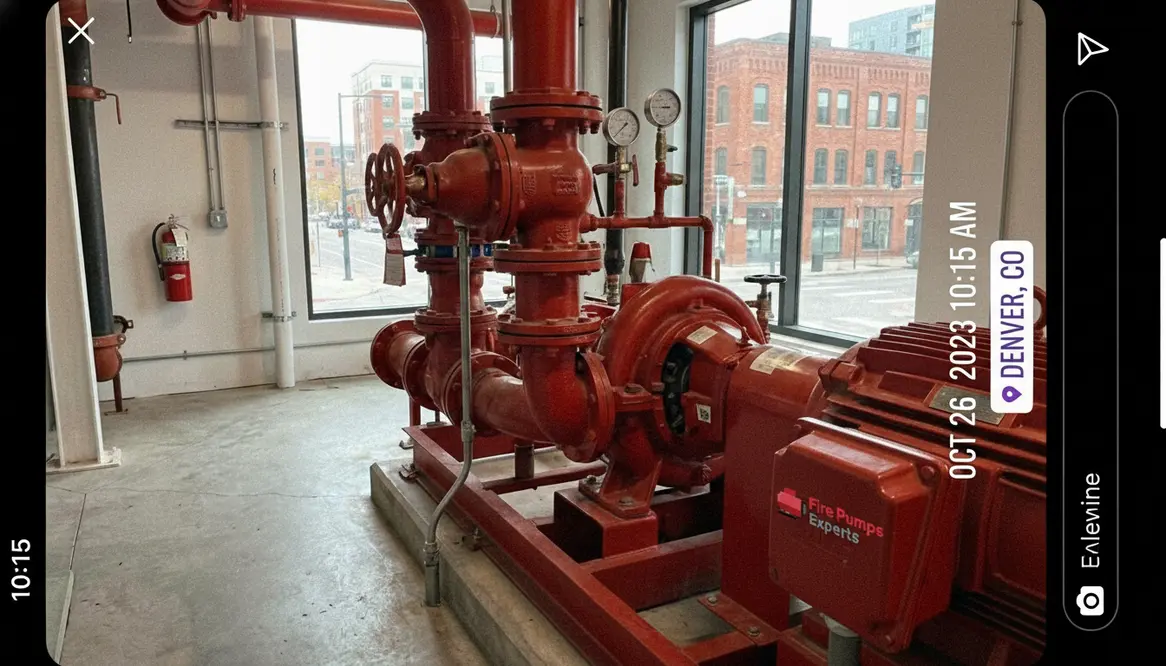
Denver Fire Pump Regulations for Commercial Buildings
I have spent enough time around commercial buildings in Denver to know this simple truth. When water needs to move fast, it had better have help. That is where Denver fire pump regulations come into play. Within the first moments of an emergency, pressure matters, flow matters, and compliance matters even more. In a city where elevation already plays tricks on water systems, these requirements are not just paperwork. They are the difference between a controlled incident and a headline. So, let me walk you through what actually matters, without putting you to sleep.
Why Denver fire pumps are a different animal
Denver is not a flat, sea-level city where water pressure behaves nicely. Elevation and high-rise growth make systems work harder. That is why Denver fire pump regulations exist in the first place: to make sure water shows up with enough force to do its job in tall, complex, or high-risk buildings. Without a properly designed and maintained fire pump, you are trusting gravity in a city that is already a mile up.
If you manage or own a commercial or industrial building here, you do not need another code book thrown at you. You need clear, practical expectations: when a pump is required, how it should be designed, what Denver inspectors will drill into, and how to stay out of trouble. That is exactly what this breakdown of Denver fire pump regulations for commercial properties is meant to deliver.
Understanding Denver Fire Pump Regulations for Commercial Buildings
First, I like to think of these rules as a strict but fair referee. Denver fire pump regulations align closely with NFPA 20 standards, yet they carry local amendments that reflect Denver’s altitude and infrastructure realities. Because of this, commercial and industrial facilities must meet specific pressure and flow benchmarks that standard gravity systems often cannot achieve.
Additionally, authorities require proper sizing, dedicated power sources, and reliable backup systems. If your building is tall, large, or houses critical operations, a fire pump is not optional. It is expected. And yes, inspectors will notice if you tried to cut corners. They always do, like that one friend who spots typos in text messages.
What Denver inspectors really care about
- Does the system meet required pressure and flow at the most remote and demanding points?
- Is the fire pump sized correctly for the building’s actual risk and layout?
- Is there dependable power, including any required backup source?
- Can the pump and related components be safely accessed, tested, and maintained?
- Is all of this backed by clear, current, and accurate documentation?
What triggers the need for a fire pump in Denver buildings
I get this question a lot, and the answer is refreshingly direct. A fire pump becomes necessary when municipal water supply cannot meet the required pressure or flow for fire protection systems.
For example, high rise buildings, large warehouses, and industrial plants almost always need one. Likewise, facilities with extensive sprinkler systems or standpipes often require boosted pressure. In Denver, elevation plays a starring role here. Water pressure drops as you go higher, and unfortunately, gravity does not negotiate.
So, if your system cannot deliver adequate performance during peak demand, a pump steps in. Think of it as the gym trainer for your water system. It makes sure everything performs under pressure, literally.
Typical situations that trigger Denver fire pump requirements
- High rise and mid-rise commercial towers where upper floors sit far above street-level mains
- Large, open warehouses where sprinkler demand outpaces municipal supply
- Industrial plants with heavy hazard classifications and complex suppression systems
- Facilities with long horizontal runs, remote areas, or multiple standpipe zones
- Buildings undergoing upgrades that increase demand beyond what existing supply can support
Design and installation standards that actually matter
Now, this is where things get serious. I always tell clients that design is not the place for improvisation. Denver expects fire pumps to be installed according to strict engineering principles.
First, the pump must match the system demand curve. Oversizing can cause damage, while undersizing can render the system useless. Neither option wins you any favors during inspections.
Next, controllers and power supply must meet reliability standards. Electric pumps need dedicated feeders, while diesel pumps require proper ventilation and fuel storage. Moreover, installation must allow for safe access, maintenance, and testing.
And yes, everything must be documented. Because if it is not documented, it might as well not exist. Inspectors love paperwork almost as much as they love compliance.
Core design checkpoints
- Pump selection aligned with hydraulic calculations and hazard classification
- Controller type matched to power source and building risk profile
- Suction and discharge piping sized and configured to avoid harmful turbulence
- Valves, meters, and test connections located for safe operation
Installation details Denver will notice
- Clear working space around the pump, controller, and valves
- Proper separation from non-fire equipment in the pump room
- Anchoring and vibration control to protect piping and components
- Permanent signage, labeling, and flow test arrangements
Denver Fire Pump Regulations and ongoing compliance expectations
Installing a fire pump is only half the story. Keeping it ready is where the real responsibility begins. Denver requires routine inspection, testing, and maintenance, often abbreviated as ITM.
Weekly churn tests, monthly inspections, and annual performance tests are standard. Additionally, all results must be recorded and kept accessible. If something fails, it must be addressed immediately.
I have seen facilities treat maintenance like a New Year’s resolution. Strong start, quick fade. That approach does not work here. Fire pumps demand consistency. Because when an emergency happens, there is no time for a reboot.
If you want a deeper look at how detailed professional servicing can get, Kord Fire’s guide to fire pump servicing is a useful comparison point to what a strong ITM program should resemble.
Key compliance elements
- Accurate pump sizing and selection
- Reliable power or diesel backup
- Accessible installation layout
- Detailed documentation
Ongoing responsibilities
- Routine inspection schedules
- Performance testing
- Immediate repairs when needed
- Record keeping for audits
How I approach fire pump planning for large facilities
When I evaluate a commercial or industrial property, I start with risk and scale. A distribution center is not a hospital, and a manufacturing plant is not an office tower. Each one demands a tailored approach.
Then, I look at water supply data, building height, and system demand. From there, I coordinate with engineers and fire protection specialists to ensure everything aligns with local codes.
However, I also think about long term usability. Can the system be maintained easily. Can parts be replaced without shutting down operations. These details matter more than people expect. After all, the best system in the world is useless if no one can service it without a headache.
In practical terms, Denver fire pump regulations are not just a one-time design exercise. They shape long term operations, budgeting, staffing, and training. Getting the planning phase right saves you from expensive retrofits, surprise violations, and emergency outages later.
Common mistakes I see with Denver fire pump compliance
Even experienced teams can slip up. One of the most common issues is incorrect pump sizing. Another is neglecting backup power requirements. And then there is poor documentation, which tends to show up at the worst possible time.
Additionally, some facilities underestimate testing requirements. Skipping scheduled tests might save time today, but it creates risk tomorrow. It is a bit like ignoring a check engine light. Eventually, it will demand your attention.
Fortunately, all of these mistakes are avoidable with proper planning and expert guidance.
The usual suspects in Denver fire pump violations
- Fire pump capacity chosen without a complete hydraulic analysis
- Missing or undersized backup power for critical systems
- Inaccessible valves, controllers, or test headers
- Documentation that is outdated, incomplete, or scattered across departments
- Skipped or rushed weekly churn tests and annual flow tests
FAQ about fire pump requirements in Denver
When is a fire pump required in a commercial building
When water supply cannot meet required pressure or flow for fire protection systems.
Do Denver codes follow NFPA standards
Yes, with local amendments tailored to elevation and infrastructure.
How often must fire pumps be tested
Weekly, monthly, and annually depending on the type of test.
Can a building operate without a backup power source
No, reliable backup power is typically required for compliance.
Who enforces fire pump compliance in Denver
Local fire authorities and inspectors oversee compliance and approvals.
Bringing it all together
If you manage or own a commercial or industrial facility in Denver, fire pump compliance is not something to leave to chance. It demands expertise, precision, and ongoing attention. I help teams navigate these requirements with clarity and confidence, so systems work exactly when they are needed most. Reach out today, and let’s make sure your building is not just compliant, but prepared for whatever comes next. When you respect Denver fire pump regulations from day one, emergencies stop being guesswork and start becoming events your systems are genuinely ready to handle.
In the end, Denver fire pump regulations exist for one reason: to make sure that when everything else is going wrong, water still shows up where it is supposed to, at the pressure it needs, for as long as it is required. Build around that goal, and the codes, inspections, and paperwork begin to look less like obstacles and more like a checklist for keeping people, property, and operations safe.