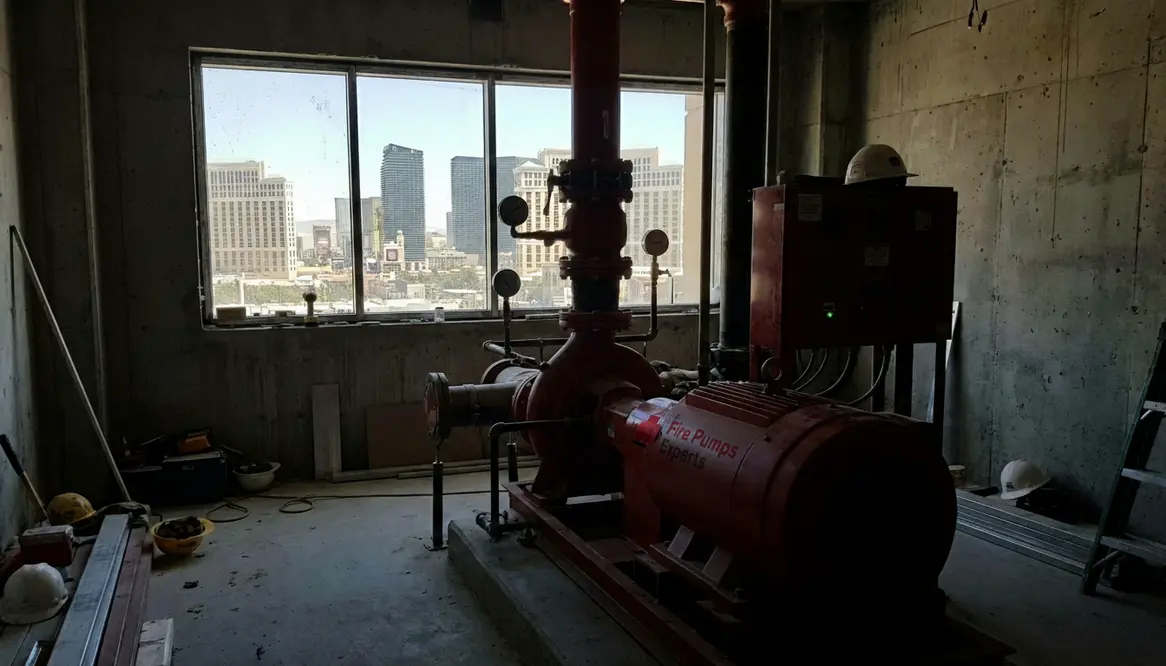
Las Vegas Fire Pump Installation for Developers
I have walked through enough mechanical rooms to know this truth right away. When a building rises, safety must rise with it. And in places like Las Vegas, where scale meets spectacle, the Las Vegas fire pump installation is not just another checkbox. It is the quiet backbone of a property that refuses to compromise. I have seen developers treat it as an afterthought. That usually ends with headaches, delays, and a fire marshal who does not share your sense of humor. So let us slow things down and get this right from the start.
What commercial developers need to know about fire pumps in major U.S. markets
First, I look at fire pumps as the heartbeat of a fire protection system. Without proper pressure, sprinklers are just decorative plumbing. In dense urban markets like New York, Chicago, and Los Angeles, municipal water pressure often falls short for high rise demands. Therefore, a properly sized pump becomes essential, not optional.
However, each market has its own personality. New York leans heavily on strict compliance and redundancy. Meanwhile, cities in the Southwest, including Las Vegas, demand systems that can handle both vertical scale and extreme heat. Consequently, I always plan for local code nuances early. Waiting until permit review is like showing up to a poker table without chips. You are technically present, but not playing.
Las Vegas fire pump installation and high demand vertical builds
In Las Vegas, I notice a unique mix of hospitality towers, mixed use developments, and massive commercial complexes. Because of that, fire pump systems must handle high occupant loads and long vertical runs. A standard setup will not cut it.
I prioritize:
- Redundant pump systems to avoid single points of failure
- Diesel backups for reliability during power loss
- Advanced controllers that integrate with building automation
Additionally, I always account for future expansion. Vegas properties evolve fast. What starts as a hotel can grow into a full scale entertainment hub. So, I build systems that can grow without tearing walls apart later. Trust me, no one enjoys reopening finished construction. Not even the guy getting paid to do it.
Choosing the right fire pump system for large scale properties
When I evaluate systems, I focus on performance over brand loyalty. Every building has its own story, and the pump must match that narrative. For complex projects and NFPA 20 driven requirements, I often reference resources like the NFPA 20 overview from Kord Fire Protection at this detailed fire pump standards guide to keep design and compliance tightly aligned.
Key considerations
- Flow demand and pressure requirements
- Building height and zoning
- Water supply consistency
- Local compliance standards
System types I commonly use
- Horizontal split case pumps for reliability
- Vertical turbine pumps where water supply is limited
- Inline pumps for space constrained builds
- Diesel driven systems for backup assurance
On the other hand, I never oversize without reason. Bigger is not always better. It is just more expensive and harder to maintain. Think of it like bringing a monster truck to a valet stand. Impressive, sure. Practical, not so much.
How do I navigate codes and compliance without delays
I start early. That is the whole secret.
Fire pump requirements are shaped by NFPA standards, local amendments, and authority having jurisdiction preferences. Therefore, I coordinate with fire protection engineers, contractors, and inspectors before final design. This avoids last minute redesigns that can stall projects for weeks.
Moreover, I build relationships with local officials. Not in a backroom handshake kind of way. Just clear communication and respect for their process. It turns out, when everyone is aligned, projects move faster. Who would have guessed.
Installation strategy that saves time and protects investment
Once design is locked, execution becomes everything. I approach installation like a staged performance. Every part must arrive on cue.
I ensure:
- Proper sequencing with other trades to avoid conflicts
- Factory tested equipment to reduce onsite surprises
- Clear access space for long term maintenance
Meanwhile, I keep a close eye on vibration control and alignment. These details might seem small, yet they determine whether a system runs smoothly for decades or starts complaining within months. And unlike a squeaky door, a failing pump does not politely wait for attention.
Las Vegas fire pump installation insights for long term performance
Over time, I have learned that installation is only half the story. Longevity depends on maintenance planning from day one. That is especially true for any Las Vegas fire pump installation supporting high rise hospitality or mixed use projects where downtime is not negotiable.
So I build in:
- Accessible testing connections
- Clear monitoring systems
- Routine inspection schedules
Additionally, I always recommend digital monitoring tools. These systems provide real time data, which means issues are caught early. It is like having a health tracker for your building. Except instead of counting steps, it keeps your property from becoming a headline.
FAQ: Fire pumps for commercial developers
What is the purpose of a fire pump?
It boosts water pressure so sprinkler systems can operate effectively in large or tall buildings.
When is a fire pump required?
When municipal water pressure cannot meet system demand for fire protection.
How long does installation take?
Typically several weeks, depending on system complexity and site conditions.
Are diesel fire pumps better than electric?
Diesel pumps provide backup during power loss, while electric pumps are easier to maintain.
What affects fire pump cost?
System size, building requirements, redundancy, and local code compliance all influence cost.
Closing thoughts and next steps
If I had to sum it up, I would say this. A well planned fire pump system is not just infrastructure. It is insurance you can see and trust. When you approach your next project, especially in high demand markets, take the time to get it right. If you are preparing for a major build or upgrading an existing system, now is the moment to act. Connect with experts who understand the stakes and can deliver with precision. Your building deserves nothing less.