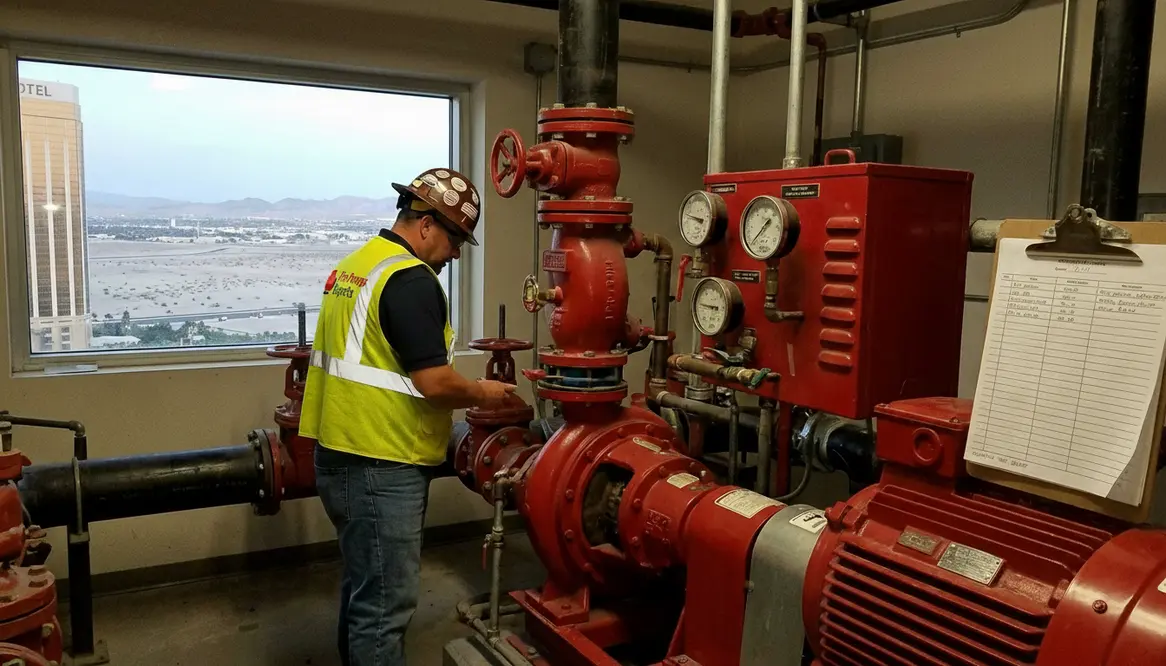
Las Vegas High Rise Fire Pump Compliance Guide
I have spent enough time around high rise mechanical rooms to know one truth. When a fire pump fails, it does not whisper. It announces itself like a bad sequel no one asked for. In Las Vegas, where vertical living meets desert extremes, fire pump reliability is not optional. It is survival. And while this article focuses on Las Vegas, I often draw parallels to Kern County fire pump compliance because the discipline, structure, and inspection mindset translate remarkably well across regions.
So let’s walk through what actually keeps a high rise compliant, functional, and ready when things heat up. Literally.
What do Las Vegas high rise owners need to stay compliant?
I like to keep things simple. Compliance is not about paperwork. It is about performance. However, the paperwork proves the performance.
First, I make sure every system aligns with NFPA 20 and NFPA 25. These are not just guidelines. They are the rulebook. Then, I ensure local Clark County amendments are followed because Vegas does not play copy paste with national codes.
Next, I prioritize routine testing. Weekly churn tests and annual flow tests are non negotiable. I have seen buildings treat testing like a dentist visit. Delayed, avoided, and regretted later. Meanwhile, inspectors will not be so forgiving.
Finally, documentation matters. I keep records clean, consistent, and easy to access. If an inspector walks in and you start digging through folders like it is a treasure hunt, you already lost.
Las Vegas, high rises, and your fire pump reality check
Las Vegas is not a “maybe later” environment. Heat, height, and occupancy push systems hard. A fire pump that only looks good on paper is not doing you any favors when a riser needs pressure and people need time to get out.
That is why I view NFPA 20, NFPA 25, and Clark County requirements as the floor, not the ceiling. The mindset I use is similar to Kern County fire pump compliance: assume someone is going to ask hard questions later and make sure your system can answer every one of them.
If your building is tall, busy, and packed with people and equipment, your fire pump is not just hardware. It is your time machine. It buys you minutes. And in a high rise event, minutes are everything.
Lessons I borrow from Kern County fire pump compliance
There is something refreshing about how Kern County fire pump compliance emphasizes accountability. It is structured, thorough, and frankly, a little unforgiving. I respect that.
In my work, I adopt a similar mindset. I treat every inspection like someone is double checking my work later. Because they are.
For example, Kern County frameworks often stress:
- Clear testing intervals with no ambiguity
- Immediate correction of deficiencies
- Transparent reporting systems
So I bring that same energy into Las Vegas buildings. Because a fire pump does not care what county it is in. It only cares if it works.
Whether I am dealing with Las Vegas high rises or explaining Kern County fire pump compliance to a facilities team, the through‑line is identical: disciplined testing, honest documentation, and zero tolerance for “we will fix it later.”
How I approach fire pump testing without cutting corners
Testing is where theory meets reality. And reality tends to expose shortcuts.
Weekly churn tests: the “still alive” check
I start with weekly churn tests. These confirm the pump starts and runs smoothly without load. Think of it like revving an engine. It tells me the basics are working.
Annual flow tests: where performance earns its paycheck
The real test comes with annual flow testing. This is where I measure performance under pressure. Literally. I verify flow rates, pressure levels, and overall system response.
And yes, it can feel like overkill. Until the day it is not.
Beyond the pump: controllers, valves, and power
Additionally, I always inspect controllers, valves, and power supply. A pump is only as reliable as its weakest component. Like a superhero team where one member forgot their powers.
If you want a deeper breakdown of what a thorough fire pump service looks like, resources like the fire pump service overview from Kord Fire Protection help illustrate why weekly, monthly, and annual inspections matter as much in Las Vegas as they do in jurisdictions that mirror Kern County fire pump compliance philosophies.
Common compliance mistakes I see in high rise buildings
Now here is where things get interesting. Because mistakes are rarely dramatic. They are quiet, slow, and expensive.
Operational issues
- Skipped weekly tests
- Improper valve positioning
- Neglected pump room conditions
- Inconsistent pressure readings
Administrative gaps
- Missing inspection records
- Outdated documentation
- Untrained personnel handling systems
- Delayed deficiency repairs
On the surface, these seem minor. However, together they create a system that looks compliant but fails under stress. Like a beautifully staged house with no foundation.
How I keep fire pump systems inspection ready year round
I do not believe in scrambling before inspections. That is like cramming for a test you were supposed to study for all year.
Rhythm over panic
Instead, I build a rhythm. Weekly checks. Monthly reviews. Annual deep dives. This way, inspections feel routine rather than intimidating.
People, not just equipment
Moreover, I train staff consistently. Even the best equipment fails in untrained hands. So I make sure everyone understands not just what to do, but why it matters.
Preventative maintenance as a mindset
I also invest in preventative maintenance. Seals, bearings, controllers. These components wear down quietly. Catching issues early saves money and headaches later.
And yes, I keep the pump room clean. Because nothing says “we care” like a space that does not look abandoned since 1997.
Why compliance is really about risk management
Let me be clear. Compliance is not about passing inspections. It is about reducing risk.
In a Las Vegas high rise, the stakes are high. Evacuation is complex. Fire spread is fast. And response time matters.
A properly maintained fire pump buys time. Time for sprinklers to control flames. Time for occupants to exit. Time for first responders to act.
Without it, everything accelerates in the wrong direction.
So when I think about compliance, I do not think about checklists. I think about outcomes. And outcomes depend on preparation.
That is true whether you are following Las Vegas codes to the letter or modeling your approach after strict frameworks like Kern County fire pump compliance. The goal is the same: fewer surprises, fewer failures, and far less chaos when alarms finally go off.
FAQ: Fire pump compliance for high rise buildings
Below are quick answers to the questions I hear most from high rise owners and managers. These line up closely with the disciplined approach you see in Kern County fire pump compliance and adapt well to the realities of Las Vegas high rises.
Conclusion
If you manage or own a high rise in Las Vegas, now is the time to take fire pump compliance seriously. I bring the same disciplined mindset found in Kern County fire pump compliance into every system I evaluate. Stay ahead of inspections, reduce risk, and protect your building with confidence. Reach out today and make sure your fire pump is not just installed, but ready to perform when it matters most.