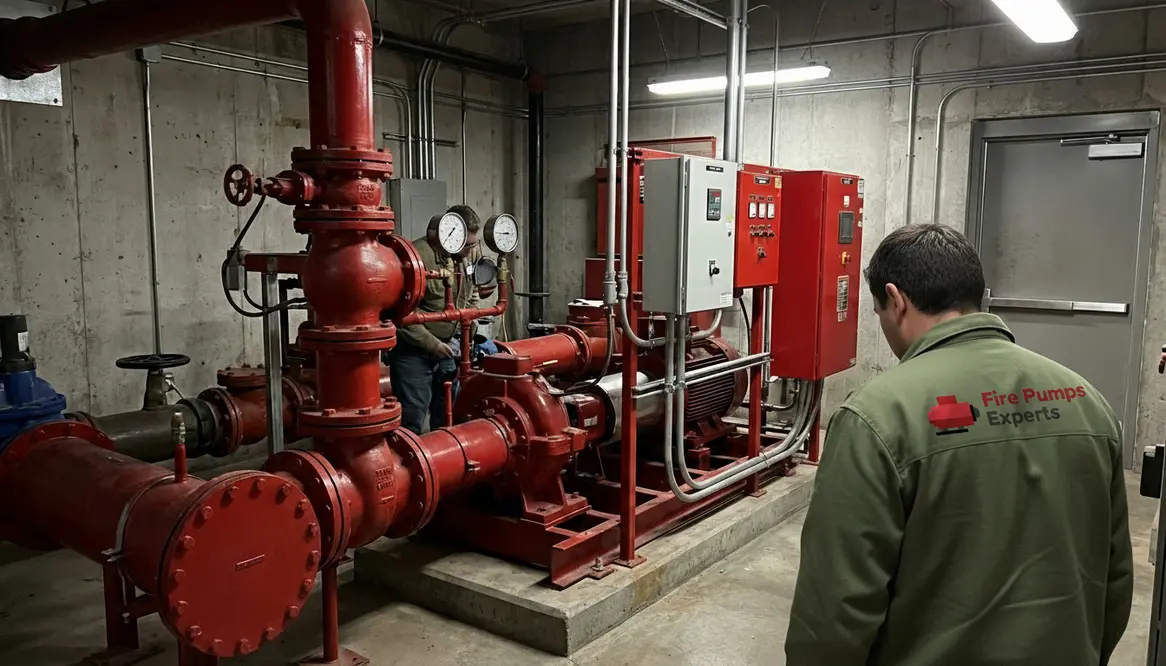
Fire Pumps for Las Vegas Commercial Properties
Why serious commercial operators – from Las Vegas resort owners to experienced Kern County property managers – put fire pumps at the center of their protection strategy.
I have spent enough time around commercial buildings to know one thing for certain. Fire does not negotiate. It does not care about square footage, tenant mix, or how impressive your lobby smells at 8 a.m. That is exactly why I often find myself in conversations with Kern County property managers who are looking beyond their region and asking a bigger question. How do we protect large scale properties in high risk environments like Las Vegas? The answer, more often than not, begins with fire pumps. And trust me, these are not just oversized plumbing accessories. They are the quiet heroes behind the walls.
What role do fire pumps play in protecting Las Vegas commercial properties
Let me answer this plainly. Fire pumps ensure that water moves with enough pressure to actually stop a fire. Without them, even the most advanced sprinkler system can turn into a polite suggestion rather than a real defense.
In Las Vegas, buildings rise tall and wide. Hotels, casinos, distribution centers, and industrial complexes all demand consistent, high pressure water flow. However, municipal water systems alone often cannot meet that demand. That is where fire pumps step in. They boost water pressure instantly, delivering force where it matters most.
Think of it like this. A sprinkler without pressure is like trying to put out a bonfire with a garden mist setting. It looks nice. It does nothing.
Why this matters to serious operators
For owners of large Las Vegas commercial properties – and for Kern County property managers who oversee sprawling portfolios – the question is not whether water exists. The question is whether that water arrives with enough pressure, at the right point, at the exact moment a fire starts to grow.
That is the difference between a contained incident and an evacuation that ends up in the news cycle.
If you want a deeper technical breakdown of how compliant systems are designed and installed, resources like the NFPA 20 overview at Kord Fire Protection are worth your time.
The unique fire risks of Las Vegas commercial buildings
Las Vegas is not your average city. The heat alone can push systems to their limits. Add in dense occupancy, large mechanical systems, and continuous operations, and you have a perfect storm.
Because of this, fire protection must be both aggressive and reliable. Large scale properties cannot afford hesitation. While a small delay might seem minor, in a commercial setting it can mean millions in damage.
Moreover, many facilities operate around the clock. Casinos never sleep. Warehouses move goods at all hours. Therefore, fire pumps must be ready at all times. No excuses. No second chances.
How I explain fire pump systems to Kern County property managers
When I speak with Kern County property managers, I like to keep things grounded. No jargon. Just clarity.
At its core, a fire pump system includes a pump, a driver, and a controller. However, the magic lies in how these components respond under pressure. When the system detects a drop in water pressure, the pump activates automatically. No human intervention required.
Additionally, these systems are designed with redundancy. In other words, backup measures exist because failure is not an option. It is a bit like having both Batman and Superman on call. You may only need one, but having both feels better.
From regional to destination properties
Many Kern County property managers supervise portfolios that include regional retail centers, logistics hubs, and industrial campuses. When they set their sights on high profile markets like Las Vegas, the expectations do not just rise; they multiply.
The good news is that the fundamentals of fire pump design and maintenance do not care about your ZIP code. What matters is pressure, reliability, testing, and documentation. Get those right and your systems will be respected on any strip, in any city.
Fire pump advantages for large properties
Performance benefits
- Delivers consistent high pressure water flow
- Supports multi story and expansive layouts
- Activates automatically during emergencies
- Enhances sprinkler system effectiveness
Operational advantages
- Reduces risk of catastrophic loss
- Supports code compliance requirements
- Increases tenant and occupant safety
- Protects long term asset value
Why compliance and maintenance are non negotiable
Here is where things get serious. Installing a fire pump is only half the story. Keeping it operational is where the real work begins.
Las Vegas regulations require regular testing and inspection. However, beyond compliance, there is simple logic. A system that sits idle without testing is a gamble. And in commercial real estate, gambling belongs on the casino floor, not in your safety systems.
Routine maintenance ensures that pumps start instantly, valves function correctly, and pressure levels remain consistent. Furthermore, documentation matters. Inspectors want proof, not promises.
Smart integration with modern building systems
Today’s commercial properties are smarter than ever. Fire pumps now integrate with building management systems, offering real time monitoring and alerts. As a result, property teams can detect issues before they become failures.
This level of visibility changes the game. Instead of reacting to emergencies, teams can act proactively. And let’s be honest, proactive always beats reactive. It is the difference between a calm phone call and a very expensive headline.
FAQ
Below are a few of the questions that come up most often when owners, operators, and Kern County property managers start planning serious upgrades to their Las Vegas fire protection strategy.
Conclusion
Protecting a commercial property in Las Vegas is not about luck. It is about preparation, precision, and the right systems working together. Fire pumps stand at the center of that strategy, delivering the pressure needed when every second counts. If you manage large scale facilities and want real protection, now is the time to act. Evaluate your systems, strengthen your defenses, and make sure your property is ready long before the first spark appears.