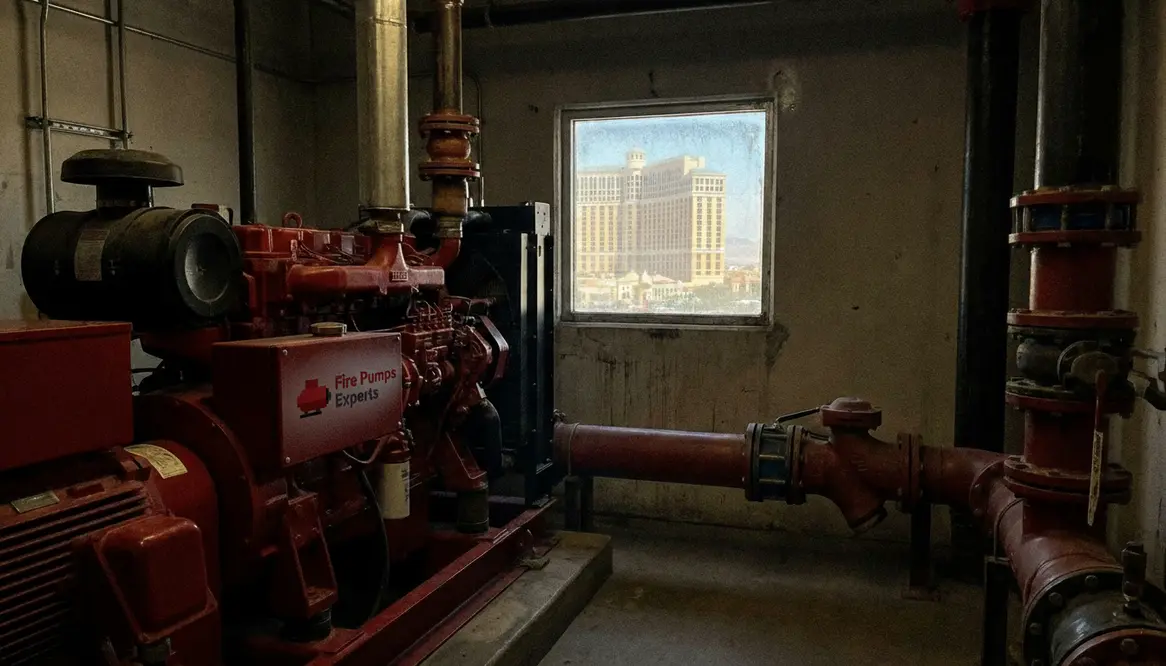
Fire Pump Reliability for Las Vegas Facilities
In a city where the lights never go out and downtime is not an option, your fire pump cannot afford an off day either.
I have seen what happens when a fire system works exactly as it should. Quiet confidence. No drama. Just results. And in a place like Las Vegas, where commercial towers hum day and night and industrial sites do not get second chances, fire pump reliability is not a luxury. It is the backbone of your protection strategy. So today, I am going to walk you through how I approach choosing the right fire pump for a Las Vegas facility, with a steady hand, a clear head, and just enough humor to keep us awake.
Why Reliability Matters More in Las Vegas
Extreme heat, dense occupancy, and 24/7 operations stack the odds against your equipment. A reliable pump is the quiet hero that keeps your risk profile in check while everyone else focuses on guests, production lines, or logistics.
What Makes a Fire Pump Right for a Las Vegas Facility?
Let us start simple. The right pump is not the biggest one. It is not the most expensive one. It is the one that performs under pressure, literally and figuratively. In Las Vegas, I deal with unique conditions. High temperatures, fluctuating water supply, and facilities that range from sprawling resorts to high demand industrial plants.
Defining the Real Demand
So first, I look at demand. How much water flow does the system need? Then I consider pressure requirements. A high rise hotel demands something very different from a distribution warehouse. And finally, I factor in environmental stress. Heat affects equipment more than most people realize. A pump that thrives in cooler climates might struggle here like a tourist in August.
Engineered, Not Assumed
Because of that, strong system performance is not optional. It is engineered. When you take fire pump reliability seriously up front, you avoid last minute changes, awkward retrofits, and uncomfortable questions after an incident.
If you want a deeper breakdown of design and code details, resources like NFPA 20 fire pump design guidance are a solid technical reference point.
Understanding Fire Pump Reliability in High Demand Environments
Now, here is where things get serious. When I talk about fire pump reliability, I am talking about consistency over time. Not just during the first inspection, but five years down the line when no one is thinking about it.
Electric pumps are common in large facilities, especially where power supply is stable. However, I always weigh diesel driven pumps for backup strength. Why? Because when power fails, diesel does not ask questions. It just shows up and does the job. Like that one friend who owns a truck.
Maintenance also plays a role. Even the best pump will fail if ignored. So I always recommend systems that are easy to test, inspect, and maintain. Because if it is complicated, someone will eventually skip a step. And that is when trouble walks in uninvited.
Electric vs Diesel at a Glance
Electric Pumps
- Lower operating cost
- Cleaner operation
- Reliable with stable power
- Ideal for urban facilities
Diesel Pumps
- Independent power source
- Stronger backup capability
- Better during outages
- Requires fuel management
In short, fire pump reliability is built on redundancy, realistic risk planning, and the discipline to keep inspections and testing on schedule.
Matching Pump Type to Facility Scale and Risk
Every building tells a story. A casino operates around the clock. A manufacturing plant carries higher hazard levels. So I match the pump to the risk, not just the size.
For high rise properties, vertical turbine pumps often make sense, especially when water supply comes from underground sources. On the other hand, split case pumps are the workhorses of large commercial systems. They are efficient, durable, and built for long term use.
Choosing the Right Role for Each Pump Type
- Vertical turbine pumps excel when water is drawn from wells, tanks, or underground sources serving tall structures.
- Split case pumps handle large volumes and high pressures, making them ideal for major resorts and industrial campuses.
- End suction pumps can serve smaller commercial properties, but let us be honest, they are not always the hero in high demand environments. They are more like the side character who tries their best.
Choosing correctly here ensures dependable fire system operation when the stakes are high and keeps your overall fire pump reliability where it needs to be.
How Local Codes Shape Your Fire Pump Selection
Las Vegas does not play around with fire safety, and neither should you. Local codes and NFPA standards guide everything I choose. These regulations are not suggestions. They are the blueprint.
I always review Clark County requirements alongside NFPA 20. This ensures the system meets both legal expectations and real world demands. Because passing inspection is one thing. Performing during an emergency is another.
Also, I pay close attention to water supply data. City pressure can vary, and if you assume too much, your system may underperform. That is not a gamble worth taking, even in a city built on risk.
Codes, Compliance, and Reliability
- NFPA 20 defines how pumps are designed and installed.
- NFPA 25 covers inspection, testing, and maintenance.
- Local amendments adapt these to Las Vegas realities.
Follow the blueprint, and your fire pump reliability is not left to chance; it is baked into the system from day one.
Planning for Longevity and System Performance
Here is a truth people do not like to hear. Installation is only the beginning. Long term performance depends on planning ahead.
I always think about access. Can technicians reach the pump easily? Is there room for repairs? Because if maintenance becomes difficult, it often gets delayed. And delayed maintenance is just a polite way of saying future failure.
Monitoring, Maintenance, and Quiet Confidence
I also look at monitoring systems. Modern controllers can alert teams before something goes wrong. That early warning can make all the difference between a minor fix and a major incident.
And yes, this is where reliability comes full circle. Because a system that is easy to maintain is a system that stays dependable. If your inspections, testing, and servicing are well organized, you are stacking the deck in favor of long term fire pump reliability.
FAQ: Fire Pump Selection for Las Vegas Facilities
What type of fire pump is best for large commercial buildings?
Split case or vertical turbine pumps are typically best due to their durability and high capacity.
Do Las Vegas facilities need diesel fire pumps?
Not always, but diesel pumps provide critical backup when electrical power is unreliable.
How do I know the right pump size?
A fire protection engineer calculates flow and pressure based on your building’s hazard level and layout.
How often should fire pumps be tested?
Weekly or monthly testing is standard, with annual performance testing required.
What impacts fire pump reliability the most?
Proper installation, regular maintenance, and choosing the correct pump type for the environment.
Conclusion
Choosing the right fire pump is not about checking a box. It is about protecting people, property, and operations without compromise. If you are managing a commercial or industrial facility in Las Vegas, I encourage you to take a closer look at your system. Work with experts who understand performance, compliance, and long term dependability. Because when the moment comes, your fire pump should not hesitate. And neither should you.
When you treat fire pump reliability as a core part of your risk strategy instead of an afterthought, you give your building the quiet confidence it deserves, day and night.