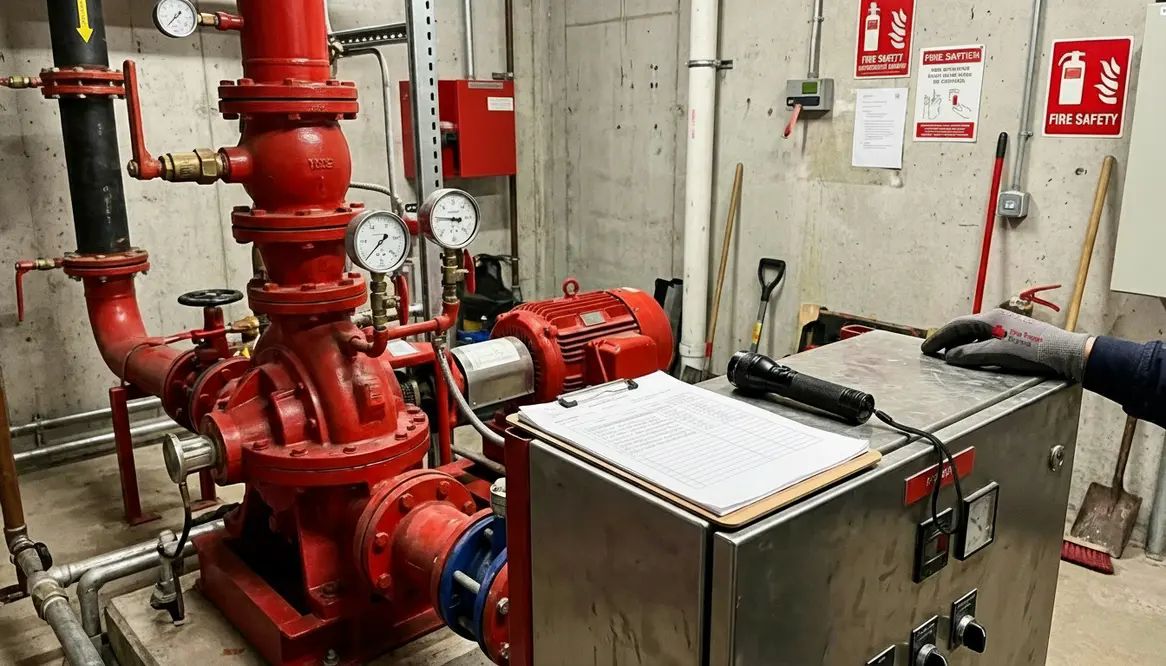
Kern County Fire Pump Inspection Prep Guide
I have spent years around fire protection systems, and I can tell you this with a calm certainty that only comes from experience: when inspection day arrives, your fire pump does not rise to the occasion. It performs exactly as it was prepared. In Kern County, where commercial and industrial properties must align with the Bakersfield high-rise fire code, that preparation is not optional. It is expected. And frankly, it is the difference between a clean report and an uncomfortable conversation with an inspector who has seen everything, including the things you hoped they would miss.
So let me walk you through how I prepare a fire pump for inspection, step by step, with a little clarity, a little humor, and just enough gravity to keep us honest.
Why Kern County inspections feel different
In Kern County, inspectors are used to large, complex facilities: refineries, distribution centers, manufacturing, and high-rises shaped by Bakersfield high-rise fire code expectations. They are not impressed by last-minute scrambling. They are impressed by systems that look like someone cares about them year-round.
Your quick mindset reset
Treat every pre-inspection like a dress rehearsal for an emergency, not for the inspector. If it would not protect people effectively at 3 a.m. on a Sunday, it is not ready for 10 a.m. on inspection day.
What do inspectors actually look for in a Kern County fire pump inspection?
I always start here because understanding the goal shapes everything else. Inspectors are not trying to trip you up like a pop quiz in high school. They are verifying reliability. They want proof that your system will perform under pressure, literally and figuratively.
First, they check documentation. Then, they move into physical condition, followed by operational testing. Finally, they evaluate compliance with local expectations, including the Bakersfield high-rise fire code.
So, I make sure every piece of paperwork is ready before anyone steps foot in the pump room. That includes test records, maintenance logs, and prior inspection reports. If those documents are scattered like socks in a dryer, you are already behind.
Then, I shift my focus to the pump itself. Clean, accessible, and clearly labeled equipment tells an inspector one thing immediately: someone is paying attention.
The four pillars of a solid inspection
- Accurate, complete documentation
- Good physical condition and housekeeping
- Confident operational performance under test
- Alignment with Kern County and Bakersfield high-rise fire code expectations
Start with a visual inspection that actually means something
I walk into the pump room like I am seeing it for the first time. Because honestly, familiarity breeds blind spots.
My visual checklist before anyone arrives
- Look for leaks, corrosion, or loose fittings. Even small drips tell a story about neglect.
- Confirm valves are in the correct position and properly tagged. A closed valve that should be open is how a fire pump becomes an expensive paperweight.
- Verify clearance around the pump and controller. Inspectors and emergency personnel need safe, unobstructed access.
- Make sure the pump room is not a storage closet for forgotten holiday decorations or spare equipment.
- Check the controller: lights, alarms, indicators. If it is blinking like a spaceship in a sci fi movie, I find out why before the inspector does.
Prepare your fire pump system like an operator, not an observer
Now we get into the part where many people hesitate. Running the system. But here is the truth: if you are not regularly operating your fire pump, inspection day is not the time for a debut performance.
I conduct a churn test to confirm the pump starts and runs without issue. Then, I move into a flow test if required for the facility. During this process, I watch pressure readings closely. Consistency matters more than perfection.
Moreover, I listen. Pumps talk, in their own mechanical way. Unusual vibrations or sounds often hint at problems long before gauges confirm them. If it sounds like it is auditioning for a heavy metal band, something is off.
What I check during operation
- Start sequence timing
- Pressure stability across the test
- Controller response to normal and abnormal conditions
- Fuel or power supply reliability from start to shutdown
What I correct before inspection
- Delayed or failed starts
- Noticeable pressure drops or unstable readings
- Alarm faults or unexplained controller messages
- Irregular noise, vibration, or overheating
When to bring in outside help
If your team is not comfortable running full operational tests or interpreting results, that is a good moment to involve certified specialists. Partnering with a dedicated fire pump service provider, such as the team at Kord Fire Protection’s fire pump service, can turn vague concerns into clear action items and keep your Bakersfield high-rise fire code responsibilities on track.
Documentation that satisfies both code and common sense
If paperwork had a personality, it would be the quiet overachiever in the room. It does not draw attention, but it determines your outcome.
I organize all inspection, testing, and maintenance records in a clear, chronological order. Inspectors appreciate efficiency, and frankly, so do I. Each document should show consistency. Gaps in records raise questions, and those questions rarely lead anywhere pleasant.
Records I always have ready
- Weekly and monthly churn test logs
- Annual flow test results and curve comparisons
- Repair and maintenance records with dates and descriptions
- Controller event histories if available
- Any correspondence related to prior inspection deficiencies and how they were corrected
Additionally, I verify that all reports align with Kern County expectations for commercial and industrial facilities. Large properties are held to a higher standard, and rightly so. When hundreds or thousands of occupants rely on a system, precision is non negotiable.
Aligning your system with Bakersfield high-rise fire code requirements
This is where preparation meets regulation. The Bakersfield high-rise fire code is not just a checklist. It is a framework designed to ensure performance under real conditions.
I review system design, ensuring the pump meets required flow and pressure demands for the building. Then, I confirm that backup power systems are operational. In high rise and large scale facilities, redundancy is not a luxury. It is survival.
Furthermore, I ensure that fire department connections are accessible and clearly marked. Because when firefighters arrive, they should not need a treasure map to find critical components.
Little details that prove big compliance
- Accurate signage on control valves, isolation valves, and test headers
- Legible pump nameplate and data plate information
- Clear identification of normal power and emergency power sources
- Up-to-date diagrams that reflect any system modifications
And yes, signage matters. Clear labeling reduces confusion, especially during emergencies. It is not glamorous, but it is effective, and it is one of the simplest ways to show you respect both the inspector and the Bakersfield high-rise fire code that governs your building.
Final walkthrough before inspection day
The day before inspection, I perform one last walkthrough. This is not the time for major repairs. It is a final polish.
- I check lighting in the pump room. Inspectors should not need a flashlight app to see critical components.
- I confirm that all access paths are clear to the pump, controller, valves, and test connections.
- I verify that nothing has changed since my last review: no surprise valve positions, no new storage piles, no “temporary” items that became permanent.
- I quickly recheck documentation is printed, organized, and easy to hand over.
Then, I take a breath and trust the process. Preparation, when done right, removes surprises. And in this line of work, surprises are rarely the good kind.
FAQ: Kern County Fire Pump Inspections
There are a few questions I hear over and over from building owners and facility teams trying to stay ahead of Kern County requirements and the Bakersfield high-rise fire code. Here are the essentials.
Ready for inspection or still guessing
If you want your next inspection to feel routine instead of nerve wracking, preparation is everything. I approach every fire pump with the same mindset: operate it, understand it, and document it like lives depend on it, because they do. If your facility needs expert support, now is the time to act. Connect with professionals who specialize in commercial and industrial systems and make your next inspection feel less like a test and more like a formality.