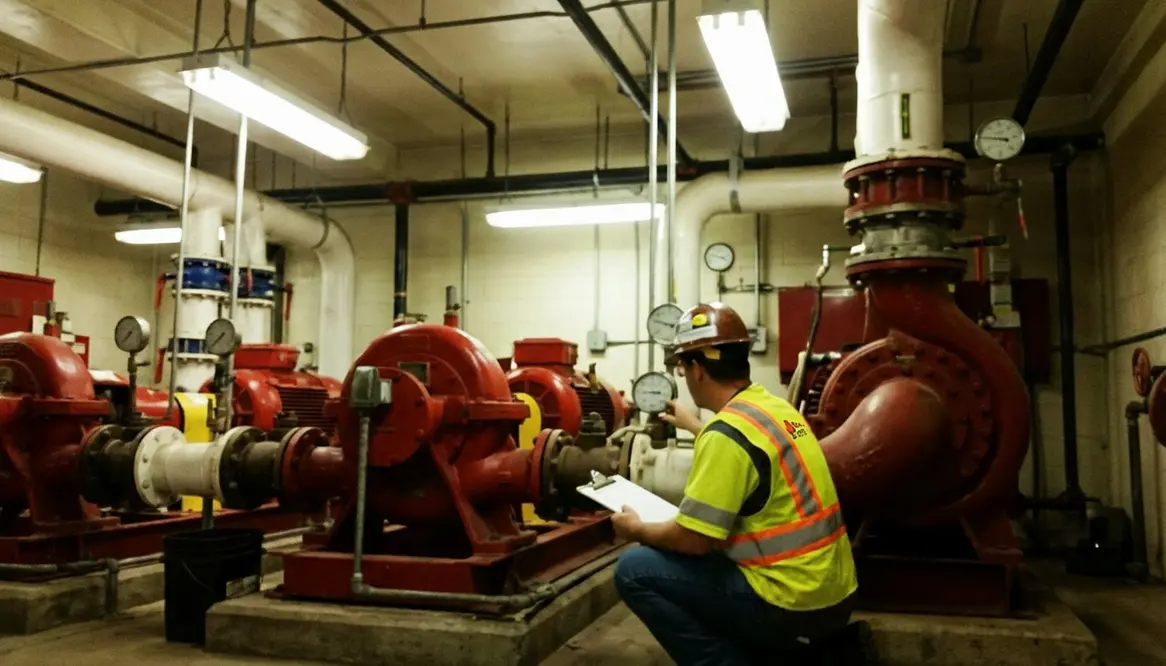
New Jersey Fire Pump Inspections for Business Continuity
I have spent enough time around commercial boiler rooms and pump houses to know this truth: when a fire pump fails, it never does so politely. It does it loudly, expensively, and usually at the worst possible moment. That is exactly why business continuity fire protection matters so much, especially across New Jersey’s dense network of commercial and industrial buildings. Here, inspections are not just a box to check. They are a frontline defense. So let me walk you through it, calmly and clearly, with just a touch of humor to keep us all awake.
What Do Fire Pump Inspections in New Jersey Actually Require?
Let’s answer the question I hear most often right away. In New Jersey, fire pump inspections follow NFPA 25 standards, with local enforcement adding its own firm handshake. Weekly churn tests, monthly checks, and annual full flow testing are expected. And yes, inspectors will notice if something is off. They always do.
Moreover, commercial and industrial facilities face tighter scrutiny because the stakes are higher. A failed pump in a high rise or manufacturing plant is not just inconvenient. It is a serious risk to life and operations. Therefore, inspections focus on performance, pressure consistency, controller function, and backup power reliability.
Think of it like a pit crew checking a race car. If one bolt is loose, you do not wait for lap 200 to fix it.
Understanding the Role of Business Continuity Fire Protection in Large Facilities
I like to think of business continuity fire protection as the quiet bodyguard of your building. It does not ask for attention, but it stands ready when everything else goes sideways.
In large commercial properties, fire pumps are not isolated systems. They connect to alarms, sprinklers, generators, and monitoring systems. Because of that, inspections must look at the entire ecosystem. A pump that works perfectly but fails to communicate with alarms is about as helpful as a smoke detector with stage fright.
Additionally, continuity planning ensures that even during maintenance or repairs, protection stays active. Redundancy, temporary systems, and proper scheduling all play a role. As a result, inspections become less about compliance and more about resilience.
How I Approach Fire Pump Testing Without Disrupting Operations
Now here is where things get interesting. No facility manager wants downtime. I have yet to meet one who says, “Sure, shut everything down during peak hours.” That person does not exist.
So I approach inspections with strategy. First, I coordinate testing during low demand periods. Then, I verify backup systems before touching the primary pump. After that, I run controlled tests that simulate real conditions without stressing the entire system unnecessarily.
Consequently, operations keep moving while compliance stays intact. It is a bit like changing a tire while the car is still rolling. Not recommended for amateurs, but entirely doable with the right planning.
Key Inspection Focus Areas
- Pressure output and stability
- Controller response times
- Fuel or power supply reliability
- Valve positioning and condition
- Alarm integration
Common Issues I Encounter
- Delayed startup sequences
- Corroded components
- Improper test records
- Undersized backup power
- Human error during manual checks
The Hidden Risks of Skipping or Rushing Inspections
I will say this plainly. Skipping inspections is a gamble, and the odds are not in your favor. Even rushing through them can create blind spots.
For example, I have seen pumps pass a quick visual check but fail under full load testing. That is like saying your car is fine because the paint looks good. Meanwhile, the engine is quietly plotting its retirement.
Furthermore, insurance audits and fire marshal reviews in New Jersey are not forgiving. Incomplete records or missed tests can lead to fines or worse, denied claims. Therefore, thorough inspections protect both safety and financial stability.
Keeping Records That Actually Help You
Let me be honest. Documentation often feels like the least exciting part of the job. Somewhere between watching paint dry and waiting for a software update, it ranks pretty low.
However, detailed records are your best ally. They show trends over time, reveal recurring issues, and provide proof of compliance. I always recommend logging pressure readings, test durations, and any irregularities immediately.
As a result, when something starts to drift out of spec, you catch it early. And early fixes are always cheaper than emergency repairs. Always.
Choosing the Right Partner for Fire Pump Inspections
Not all inspection services are created equal. Some show up, glance around, and leave faster than a cameo in a Marvel movie. Others dig deeper.
I focus on partners who understand complex commercial systems. They should know how to test without disrupting operations, interpret data accurately, and offer solutions, not just reports. In addition, they should stay current with New Jersey regulations, because those rules do evolve.
Ultimately, a good inspection team does more than check compliance. They strengthen your entire fire protection strategy. In many cases, that means choosing a provider with deep expertise in fire pump systems, like the team behind routine fire pump inspection and service programs that keep equipment aligned with NFPA standards and business continuity fire protection goals.
FAQ: Fire Pump Inspections in New Jersey
Before we wrap up, it helps to connect the technical schedule of inspections with the bigger picture of business continuity fire protection and how it supports your facility staying open, compliant, and safe.
Ready to Strengthen Your Fire Protection Strategy
If there is one thing I have learned, it is this: preparation beats panic every time. A well inspected fire pump is not just equipment. It is peace of mind. If you manage a commercial or industrial facility in New Jersey, now is the time to act. Partner with experts who understand performance, compliance, and continuity. When you treat inspections as a core part of business continuity fire protection, you protect people, property, and productivity in one move.
Reach out today and make sure your system stands ready when it matters most. Build a relationship with an inspection team that knows how to keep your fire pumps reliable, your documentation clean, and your operations moving without unnecessary downtime. That is what real business continuity fire protection looks like in practice.