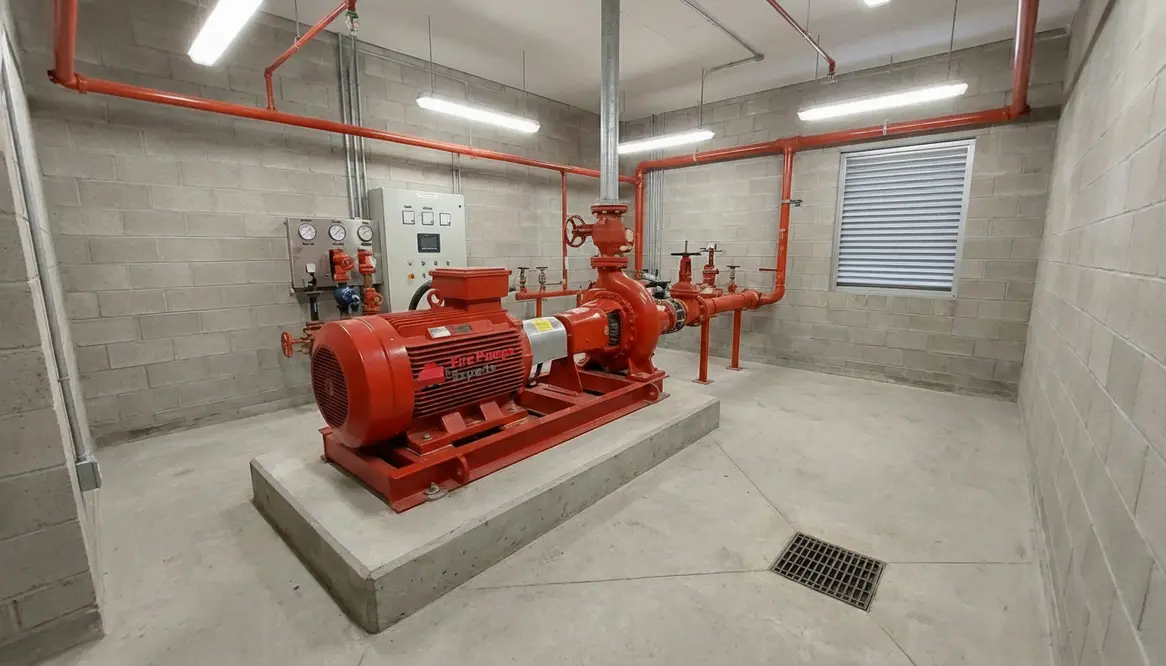
FM Data Sheet 3 7 Fire Pump House Requirements Guide
How I review FM DS 3 7 fire pump house requirements in real commercial and industrial buildings, without losing sight of how the room actually works under pressure.
FM Data Sheet 3 7 Fire Pump House Requirements: What I Look For
FM Data Sheet 3 7 fire pump house requirements start from one simple truth: a fire pump house must work when everything else has already gone sideways. In a commercial or industrial building, that room is not decoration. It is the quiet hero in the basement, the plant, or a detached structure, waiting for the moment when pressure drops and the system must perform. So I look at access, fire resistance, heat, drainage, power, ventilation, and protection from damage. In short, I treat it like the building’s backstage crew in a live show. Nobody cheers for it, but everybody depends on it.
The Quiet Hero Of The System
When I walk into a fire pump house, I do not see pipes and gauges. I see the one room that must perform on the worst day the building will ever have. That mindset shapes how I read FM DS 3 7 requirements and how I apply them on real jobs.
What FM Data Sheet 3 7 Expects From A Fire Pump House
Reliable Operation And Clear Space
FM Data Sheet 3 7 expects the fire pump room or fire pump house to support reliable operation, fast access, and safe maintenance. For commercial and industrial sites, that means the space must stay free from clutter, stored goods, and casual “temporary” items that somehow become permanent. We have all seen that one room where boxes move in and never leave. Not here.
Location, Separation, And Working Room
First, I check the location. The pump house should sit where flood risk, impact risk, and fire spread risk stay low. Then I review separation from the rest of the building. If the pump room shares space with other hazards, the fire pump can lose the calm, controlled environment it needs. I also look at doors, clear paths, and room size. Technicians need room to work, and the pump needs room to breathe.
Access, Security, And Layout That Work Under Pressure
Getting In Fast, Not Fighting The Door
Access matters more than most people think. If someone cannot reach the fire pump house quickly, the room might as well be guarded by a moat and a grumpy dragon. So I check that access stays clear at all times. I want doors that open easily, signs that make sense, and enough space around the equipment for inspection and repair.
Security matters too. However, I do not want a setup that slows emergency entry. The goal is simple: keep the wrong people out, and let the right people in without a wrestling match.
Controls Where People Can Actually Use Them
I also review the layout inside the room. Controls, valves, gauges, and service points should stay easy to see and reach. That saves time, and in fire protection time is not a luxury item. When I measure a layout against FM DS 3 7 fire pump house requirements, I picture someone under stress trying to find the right valve in low light with an alarm ringing. If they cannot spot it instantly, the layout fails the test.
FM DS 3 7 Fire Pump House Requirements For Power, Heat, And Ventilation
This is the part that makes or breaks the room. The pump house must keep equipment within proper operating conditions. If temperature drops too low, the system can fail. If heat rises too high, components can suffer. Either way, the fire pump starts acting like an actor who has forgotten the script.
Heat: Keeping The Room Above Trouble
I check heating first. The room must stay warm enough to prevent freezing and protect connected systems. In cold climates, that means more than a token heater humming in the corner. It means a plan that keeps piping, valves, and the pump itself within the right range during the worst weather the site expects.
Ventilation And Exhaust
Next, I review ventilation. Fire pumps and drivers need adequate air movement so the room does not trap heat. I also watch for exhaust issues if the pump uses a diesel driver. That exhaust must leave the space safely and cleanly. Poor ventilation can turn a compliant design on paper into a hot, unreliable space in real life.
Power: No Room For Drama
Then I look at power. The fire pump house should support dependable electrical service, with proper emergency power where required. In industrial facilities, I pay close attention to redundancy and protection from electrical damage. A pump without reliable power is just an expensive metal statue. FM DS 3 7 fire pump house requirements push owners to think beyond “is it wired?” and move into “will it still run when the building is having its worst day?”
Drainage, Fire Protection, And Water Control
Keeping Water Where It Belongs
Water control gets overlooked until it causes a mess. I always verify drainage in the fire pump house because leaks, test water, and sprinkler discharge can build up fast. If water pools near equipment, I see a problem waiting to happen. So I look for floor drains, proper slope, and a plan for safe removal of water without harming the pump or driver.
Not Creating A New Fire Problem
I also check fire protection around the room itself. The house should not create a new fire problem while trying to solve the old one. That means I review wall ratings, door protection, and nearby exposures. If the building uses a detached fire pump house, I confirm that the structure still gets the right protection from weather, vandalism, and impact damage. Meeting FM DS 3 7 fire pump house requirements here keeps the “solution room” from becoming the “origin room.”
How I Use FM DS 3 7 During Plan Review And Site Checks
Plan Review
Here is the simple way I use FM Data Sheet 3 7 in real life during design.
- I check the drawings first.
- I look for room size, access, fire separation, power routing, ventilation, and drainage.
- I confirm the fire pump house is treated as a dedicated, protected space, not a leftover corner.
Site Check
Once the building is standing, paper no longer tells the whole story.
- I walk the space and confirm that the built condition matches the drawings.
- I look for clearances, storage issues, and anything that blocks service.
- I check heat, ventilation, power feeds, and drainage as they actually exist, not as they were sketched.
Operational Review
Then I step back and think about the people who live with the system.
I ask whether staff can test, inspect, and maintain the fire pump without delay. If the answer feels shaky, I dig deeper. FM DS 3 7 fire pump house requirements are not just checkboxes; they are a stress test for how the building team will actually use and care for the equipment.
Why This Matters So Much For Major Property Buildings
Large commercial and industrial facilities face bigger loss if a fire pump fails. So I do not treat the pump house as a side note. I treat it as a core part of the fire protection system. When a site carries serious business interruption exposure or high-value processes, FM DS 3 7 fire pump house requirements become less about compliance and more about survival.
That is why I care so much about access, power reliability, drainage, and the way the room is protected from its own hazards and from the rest of the building. A pump house that is “mostly fine” on a calm day may fall short when the sprinklers open, the power blinks, and the people on site are making quick decisions under real pressure.
For owners, the smartest move is to compare their existing room against those FM DS 3 7 fire pump house requirements before an event forces the issue. A focused review now is cheaper than rebuilding a burned, flooded, or shut-down facility later.
FAQ: FM Data Sheet 3 7 Fire Pump House Requirements
Final Thoughts: My Takeaway On FM DS 3 7 Fire Pump House Requirements
I treat FM DS 3 7 fire pump house requirements as a practical guide, not a paper exercise. If I want a commercial or industrial building to stay protected, I need the pump house to do its job without drama. So I review access, power, ventilation, drainage, and protection with care, and I hold the room to the same standard I use for the rest of the fire protection system.
If you want a fire pump house review that focuses on major properties and real performance, taking the next step before something fails is the smart move. Bringing the room into line with FM DS 3 7 fire pump house requirements now is far cheaper and less painful than explaining, after an event, why a critical system was not ready when it mattered most. For a deeper look at best practices and resources, starting with a technical hub like https://firepumps.org can help frame the right questions before the next inspection or upgrade.