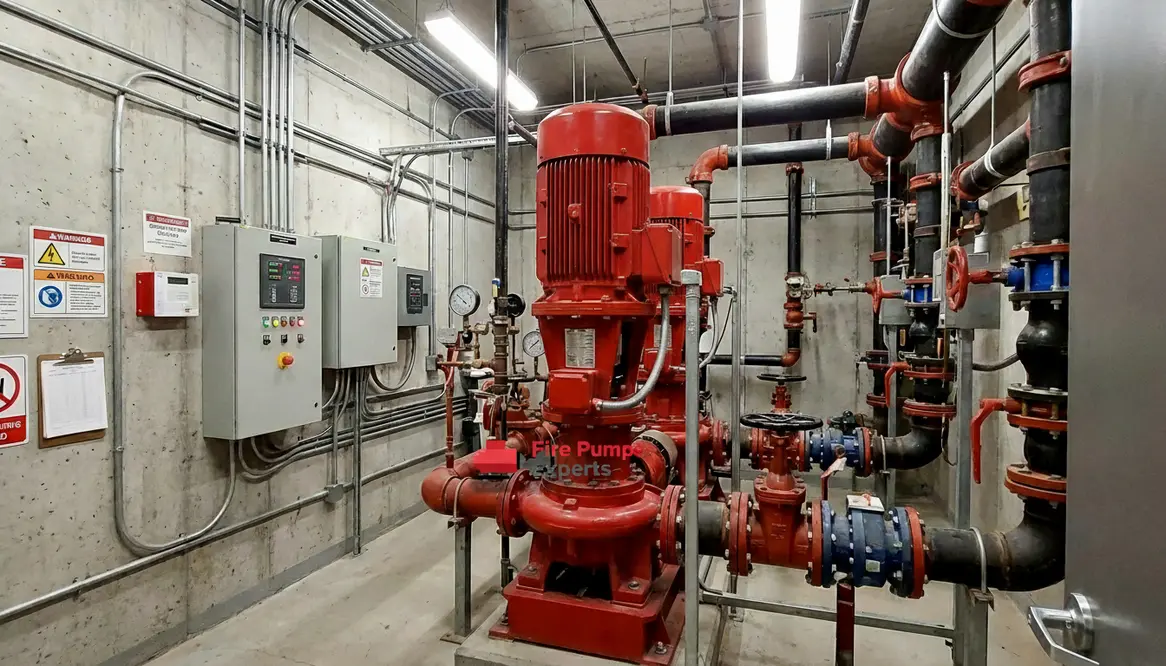
Fire Pump Requirements for High Rise Buildings
I’ve spent years walking through mechanical rooms that hum like a quiet engine room on a starship, and if there’s one thing I’ve learned, it’s this: fire protection in high rise commercial buildings is not where you cut corners. Right from the start, I look at systems like cold storage fire pumps as a benchmark for reliability under pressure. Because when you’re pushing water dozens of floors up, hesitation is not an option. It’s physics, not hope, that saves the day. And trust me, gravity is not on your side.
In tall buildings, I treat the fire pump room like a cockpit. Every gauge, valve, and controller exists to answer a single question: will this system deliver water with authority to the highest hose valve when everything else is going wrong? That mindset shapes how I interpret codes, how I apply standards, and how I evaluate equipment choices from cold storage fire pumps to high pressure vertical turbine assemblies.
In practice, that means looking beyond paperwork. A system can be technically compliant and still perform poorly. The details that make cold storage fire pumps survive brutal thermal conditions are the same details that keep high rise fire pumps calm during power outages, pressure swings, and real-world firefighting operations.
Understanding Fire Pump Requirements in High Rise Commercial Buildings
When I design or evaluate a system, I start with a simple truth. Water does not naturally climb skyscrapers. Therefore, a fire pump becomes the heart of the system, delivering consistent pressure and flow where municipal supply falls short.
In high rise environments, codes require pumps that can maintain adequate pressure at the highest occupied floor. That means calculating elevation head, friction loss, and demand simultaneously. Moreover, redundancy matters. I never rely on a single point of failure, because fire does not schedule appointments.
Additionally, standards like NFPA 20 guide installation, while NFPA 14 governs standpipe systems. Together, they ensure that when a firefighter opens a valve on the 40th floor, water arrives with authority, not a polite suggestion.
How high rise fire pumps fit into the bigger system
In a tall commercial building, the fire pump is not a stand-alone hero. It works alongside tanks, standpipes, sprinklers, controllers, and backup power. When cold storage fire pumps are engineered, every component around them is chosen to protect performance under extreme temperature swings. High rise systems deserve that same level of respect, even if the mechanical room doesn’t sit inside a freezer.
What pressure and flow do high rise fire pumps actually need?
Let me answer this the way most engineers wish code books did. It depends, but not in a vague way.
The required pressure must overcome building height and system losses while still delivering usable force at the outlet. Typically, I calculate:
- Elevation head based on building height
- Friction loss from pipe length and fittings
- Residual pressure required at the highest hose valve
Then, I match that with flow demand, often driven by standpipe and sprinkler requirements operating at the same time. Consequently, the pump must deliver both high pressure and high volume without flinching.
Think of it like lifting weights while sprinting. Not easy, but that’s the job.
Translating numbers into real-world performance
On paper, you’ll see pump curves, system demand points, and safety margins. In the field, what matters is that when a firefighter opens a valve, there is no moment of suspense. Systems inspired by the robustness of cold storage fire pumps embrace safety margins, conservative assumptions, and clean hydraulics so that even on a bad day, the numbers still work in your favor.
Designing for Reliability and Redundancy
Now, here’s where things get serious. A fire pump system in a commercial tower must work every time, not most of the time.
So I always incorporate:
- Backup power sources such as diesel drivers or emergency generators
- Jockey pumps to maintain system pressure without cycling the main pump
- Controller redundancy to ensure automatic activation
Furthermore, I consider environmental conditions. For example, systems similar to cold storage fire pumps demonstrate how equipment can perform reliably even in extreme conditions. That same philosophy applies in high rise mechanical rooms where heat, humidity, and vibration can quietly sabotage performance.
And yes, I test everything. Because hope is not a commissioning strategy.
Why redundancy is non-negotiable
High rise owners sometimes ask if a single pump can “handle everything.” Hydraulically, maybe. Operationally, that’s a dangerous bet. Redundant pumps, backup drivers, and resilient controls are the difference between a brief outage and a catastrophe. The same mindset that drives the design of cold storage fire pumps for mission critical facilities should guide redundancy decisions in any commercial tower that wants to sleep well at night.
Key Components That Make or Break Performance
Every fire pump system is only as strong as its weakest component. So I pay attention to details that others might overlook.
Left Column: Core Equipment
- Pump assembly sized for peak demand
- Driver system matched to load conditions
- Controller with automatic and manual modes
- Pressure sensing lines placed correctly
Right Column: Supporting Systems
- Reliable water storage or supply connection
- Properly sized suction piping
- Discharge headers with monitoring gauges
- Test headers for performance verification
Meanwhile, I never ignore installation quality. Even the best equipment can fail if installed poorly. It’s like casting a blockbuster movie with a great script and then filming it on a phone from 2007. The potential is there, but the execution ruins everything.
Connecting design, installation, and ongoing care
The most reliable systems are built by teams that think long term: engineers, installers, and service providers working from the same playbook. If you want an example of that kind of lifecycle thinking, look at how routine fire pump inspections are treated as part of the original design intent instead of an afterthought. That same mindset should apply to every high rise project that expects its pump to wake up instantly and perform on command.
Inspection, Testing, and Long Term Performance
Once the system is in place, the real work begins. Because fire pumps are not decorations. They demand attention.
I follow routine testing schedules that include weekly churn tests and annual flow tests. During these checks, I verify pressure, flow, and response time. Moreover, I listen. Pumps tell you when something is wrong long before they fail completely.
In addition, I document everything. Trends in performance often reveal hidden issues like wear, blockage, or controller faults. Therefore, consistent monitoring becomes just as important as initial design.
And if a system starts acting like it’s in a horror movie, making strange noises and behaving unpredictably, I don’t wait for the sequel. I fix it immediately.
The quiet value of disciplined maintenance
The same way cold storage fire pumps are inspected to prevent a frozen surprise during a winter emergency, high rise pumps deserve disciplined, boring, predictable maintenance. Weekly checks. Documented tests. Honest comparisons against the original acceptance data. It’s not glamorous, but it’s exactly what keeps systems from failing spectacularly at the worst possible moment.
FAQ: Fire Pump Requirements for High Rise Buildings
Conclusion: Build It Right, Because Failure Is Not an Option
When I approach fire pump design for high rise commercial buildings, I treat it like a mission critical system, because it is. From selecting the right equipment to ensuring long term reliability, every decision matters. If you’re managing or developing a major property, now is the time to evaluate your system. Connect with experts who understand performance at scale and demand more from your infrastructure. Because when it comes to fire protection, good enough never is.