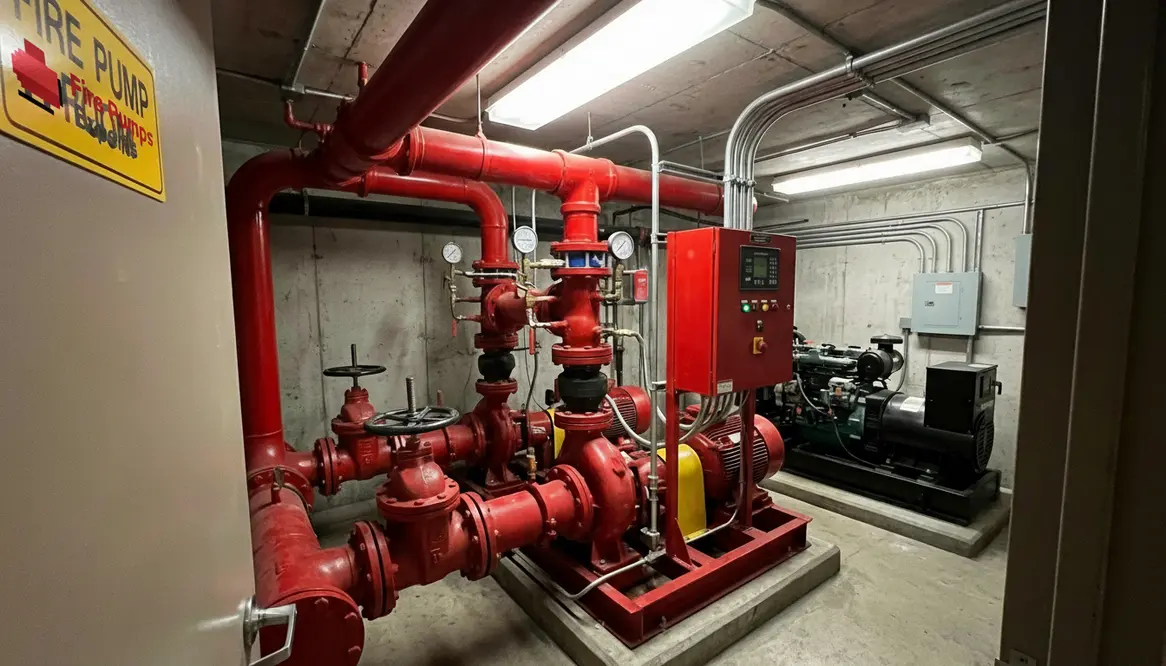
Fire Pump Systems for Apartments and Condos
I have spent years around large scale fire protection systems, and I can tell you this right away. When people hear about convention center fire pumps, they imagine massive halls and trade shows with people handing out tote bags and stress balls. However, the same level of precision and power behind those systems quietly protects apartments and condominiums every single day. And honestly, those residential towers can be even more demanding. After all, people sleep there. They cook there. They occasionally forget things on the stove there.
So today, I want to walk you through what really matters when planning fire pump systems for multi story residential properties, using the same principles that guide high performance systems in major commercial buildings.
What makes fire pump systems different in apartments and condos?
Right away, I look at occupancy and vertical design. Unlike open commercial spaces, residential buildings stack risk floor by floor. Therefore, pressure requirements climb fast. Water has to travel higher, faster, and more reliably.
In addition, people are not trained occupants. In a convention hall, staff often know emergency procedures. In a condo tower, you might have someone trying to finish a TV episode before evacuating. So the system must respond instantly without human help.
Moreover, redundancy becomes critical. I always recommend backup power and secondary pump options because outages and emergencies tend to arrive together like uninvited guests.
How do I size a fire pump for a high rise residential building?
I start with flow and pressure demands, and I do not guess. Instead, I calculate based on standpipe systems, sprinkler density, and building height. Then I add a safety margin, because real life rarely behaves like a textbook.
Next, I consider friction loss. Pipes, valves, and fittings all resist water flow. Therefore, the pump must overcome not just gravity but also resistance along the way.
Finally, I align the system with local codes and national standards. While that sounds obvious, I have seen projects stumble here. Codes are not suggestions. They are the rulebook, and ignoring them is like trying to win a chess game without knowing how the pieces move.
Key components I never overlook in residential fire pump rooms
When I walk into a pump room, I expect to see more than just a pump sitting there looking important. Every component plays a role, and skipping one is like removing a wheel from a car and hoping for the best.
Core Equipment
- Pump and driver assembly
- Controller with clear status indicators
- Pressure sensing lines
- Relief valves
- Test header for performance checks
Support Systems
- Reliable power supply and backup
- Proper ventilation and drainage
- Accessible layout for maintenance
- Monitoring and alarm connections
- Seismic bracing where required
Additionally, I always ensure the room itself is protected. It sounds ironic, but yes, the fire pump room needs fire protection too. Otherwise, the system designed to fight fire could fail when it is needed most.
Why reliability matters more than raw power
I have seen oversized systems that looked impressive on paper but failed in practice. Bigger is not always better. What matters is consistency. The pump must start every time, maintain pressure, and operate under stress without hesitation.
Because of that, I prioritize testing and maintenance planning from day one. A system that is not regularly tested is just a very expensive decoration. And while decorations are nice, they do not put out fires.
Similarly, I look at long term wear. Motors, seals, and controllers all age. Therefore, choosing durable components and planning service intervals keeps the system dependable over decades.
Lessons I borrow from convention center fire pumps
Large public venues demand performance without compromise, and I bring that same mindset into residential design. For example, I focus on rapid response times and system monitoring. If something goes wrong, I want alerts immediately, not hours later.
In addition, I apply scalability. Buildings change over time. Renovations happen. Occupancy shifts. So I design systems that can adapt without requiring a complete overhaul.
And yes, I also think about access. Maintenance teams should not need to perform acrobatics worthy of an action movie just to reach a valve. Clear layout saves time and reduces errors.
Common mistakes I see and how I avoid them
One mistake is underestimating demand. Developers sometimes aim for minimum compliance. However, minimum is not always enough when real world variables come into play.
Another issue is poor coordination between trades. Fire protection, electrical, and plumbing systems must work together. If they do not, problems show up fast and usually at the worst possible moment.
Finally, I often see maintenance treated as an afterthought. A well designed system includes a clear service plan from the beginning. Otherwise, performance declines quietly until it becomes a serious risk.
FAQ: Fire Pump Considerations for Apartments and Condominiums
Residential towers share more with convention center fire pumps than most people realize. These questions come up constantly when owners and managers start looking closer at what protects their buildings.
Bringing it all together
When I design or evaluate fire pump systems for apartments and condominiums, I treat them with the same seriousness as any major commercial facility built around convention center fire pumps. Because in the end, performance is not about the building type. It is about protecting lives and property without hesitation.
If you are planning or upgrading a system for a large residential property, now is the time to get it right. Reach out to experts who understand high demand environments and expect more from your system than just meeting the minimum. The same disciplined thinking that drives reliable convention center fire pumps can, and should, be working quietly behind the walls of every apartment and condo tower residents call home.