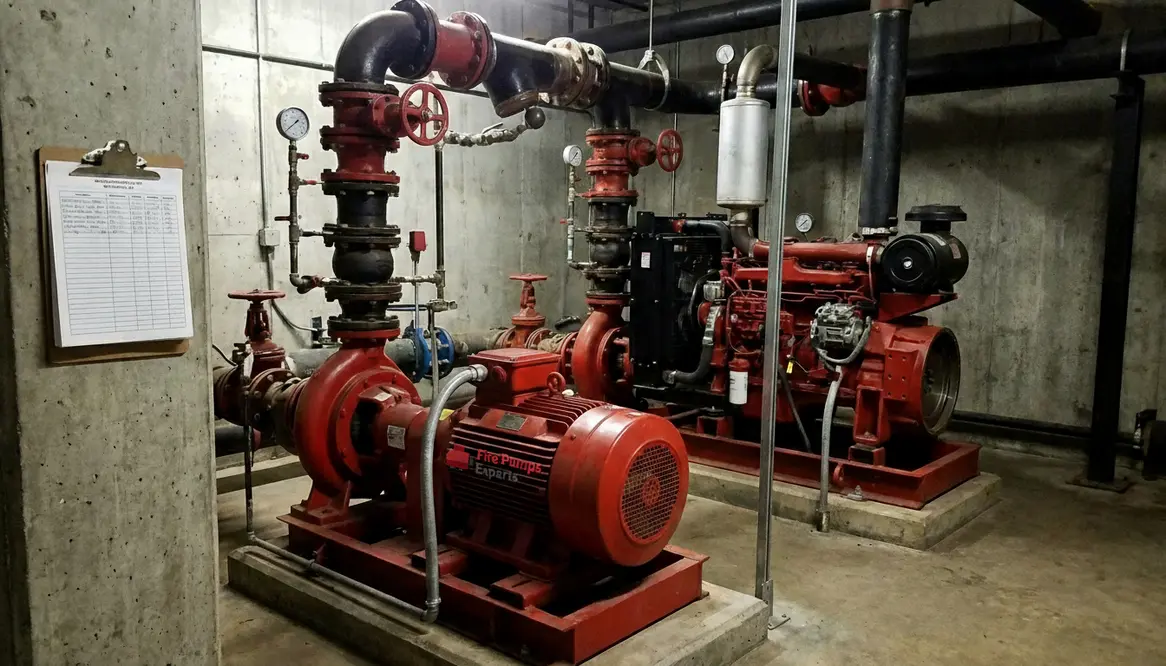
Airport Fire Pump Requirements for Critical Systems
Critical facilities do not get second chances. The water moves, or everything stops. That’s why airport fire pump requirements have become my unofficial gold standard for serious buildings.
I have spent years around critical infrastructure, and I can tell you this with calm certainty: when fire strikes, there is no room for improvisation. Systems either work, or they don’t. That is why I always circle back to airport fire pump requirements as a benchmark. These environments demand precision, redundancy, and unwavering performance. If a system can handle the pressures of an airport, it can stand tall in hospitals, data centers, and high rise commercial facilities. And let’s be honest, if planes trust it, your building probably should too.
Why Airports Set the Tone
Airports compress every challenge into one place: high occupancy, complex structures, massive distances, and zero tolerance for downtime. Designing to match airport fire pump requirements forces you to think bigger, harder, and much more uncomfortably about what “worst case” actually looks like.
Where This Standard Fits
Hospitals, data centers, industrial campuses, and high rise commercial towers may never see a runway, yet they carry airport-level consequences if systems fail. Holding these facilities to airport fire pump requirements keeps everyone honest about risk, not just compliant with a checklist.
What Makes Fire Pump Systems Essential for Critical Infrastructure?
Fire pump systems act as the quiet guardians of a building. They do not ask for attention, yet they deliver when everything else is going wrong. In critical infrastructure, water pressure from municipal sources often falls short. Therefore, I rely on fire pumps to bridge that gap and maintain consistent flow.
Moreover, these systems ensure that sprinklers and standpipes perform at peak levels. Without them, even the best designed suppression network becomes a decorative suggestion. Think of it like trying to stream a blockbuster movie on dial up. Technically possible, painfully ineffective.
In facilities like hospitals or industrial plants, downtime is not just inconvenient. It is dangerous. So I always design with reliability first, knowing that every second counts.
How Do Fire Pump Systems Meet Airport-Level Demands?
Redundancy
Redundancy ensures that if one pump fails, another immediately takes over. No scrambling, no guesswork, just a silent handoff. For critical sites, that typically means multiple pumps, separate power sources, and clear logic that favors “run” over “wait and see.”
Capacity & Control
Capacity guarantees sufficient water flow even during peak fire events. Control systems provide real time monitoring and automatic activation, tying pumps to alarms, sensors, and building management systems so that nobody has to play hero in a control room during a fire.
Additionally, I incorporate diesel and electric pump combinations when possible. This way, even if power fails, the system keeps running. It is a bit like having both Batman and Superman on standby. Overkill? Maybe. Effective? Absolutely.
When designs borrow from airport fire pump requirements, they typically include layered redundancy, clear separation of power sources, protected routing of critical circuits, and robust, testable control logic. That same philosophy works beautifully in non-aviation environments where failure is simply not acceptable.
Key Components I Always Prioritize in System Design
When I design or evaluate a fire pump system, I do not just look at the pump itself. I look at the ecosystem around it. Each component plays a role, and neglecting one can unravel the whole system.
Core Elements
- Pump unit with proper rating
- Reliable driver such as electric or diesel
- Controller with automatic start features
- Pressure sensing lines
Support Systems
- Dedicated water storage or supply
- Backup power integration
- Alarm and monitoring systems
- Routine testing connections
Furthermore, I always ensure accessibility for maintenance. Because a system you cannot service easily is a system that will eventually fail you. And trust me, fire safety is not the place for surprises.
Design Strategies for Large Commercial and Industrial Buildings
Tailoring to the Building’s Reality
Every building tells a different story, and I design accordingly. A data center demands uninterrupted operation, while a manufacturing plant may require higher water volumes due to combustible materials. So, I tailor each system to its environment.
Consistent Strategies That Never Leave
- Calculate peak demand scenarios rather than average ones.
- Integrate zoning to isolate risks without compromising the entire system.
- Align designs with standards inspired by airport fire pump requirements, ensuring performance under stress.
- Plan clear, documented testing procedures from day one.
Also, I plan for future expansion. Buildings evolve, and systems should too. It is much easier to scale a well planned system than to rebuild one from scratch. Kind of like upgrading your phone versus going back to a flip phone. Nobody wants that.
When airport fire pump requirements shape the early design conversations, it becomes far easier to justify extra capacity, smarter routing, and better controls. Nobody argues with a standard that was built around moving thousands of people safely every single day.
Maintenance and Testing That Actually Keep Systems Ready
A fire pump system is not a set it and forget it deal. I treat maintenance as part of the system itself. Regular testing ensures that components respond correctly under real conditions.
I schedule weekly churn tests and annual flow tests. Additionally, I monitor vibration, temperature, and pressure readings. These small checks prevent large failures.
Moreover, I train on site teams to recognize early warning signs. Because the sooner you catch an issue, the less dramatic the fix becomes. And in this line of work, less drama is always a good thing.
Airport-Level Mindset for Everyday Facilities
The same discipline used to prove compliance with strict airport fire pump requirements translates perfectly to high stakes sites that never see a runway. Structured logs, witnessed testing, and repeatable procedures are not just paperwork; they are how you sleep at night knowing the pump will start when it matters.
FAQ: Fire Pump Systems for Critical Infrastructure
Conclusion: Building Confidence Into Every System
When I design fire pump systems, I am not just meeting codes. I am building confidence into every pipe, valve, and controller. Inspired by airport fire pump requirements, I create systems that stand ready when it matters most. If you manage a commercial or industrial facility, now is the time to evaluate your system. Reach out, ask questions, and make sure your protection is more than just a plan on paper. Because when the moment comes, performance is everything.