Cold Storage Fire Pumps and Stadium Fire Protection
I have spent years around large scale fire systems, and I can tell you this much right away. When people hear stadium fire protection, they picture roaring crowds and bright lights. But the same level of precision and reliability is just as critical in a cold storage facility, where the silence is louder than any stadium and the risks are just as real. Cold environments change everything. Water behaves differently. Equipment responds differently. And if you do not plan for that, your fire pump system will remind you at the worst possible moment.
So let’s step inside the chilled world of cold storage and talk about what really matters.
Why fire pumps behave differently in cold storage environments
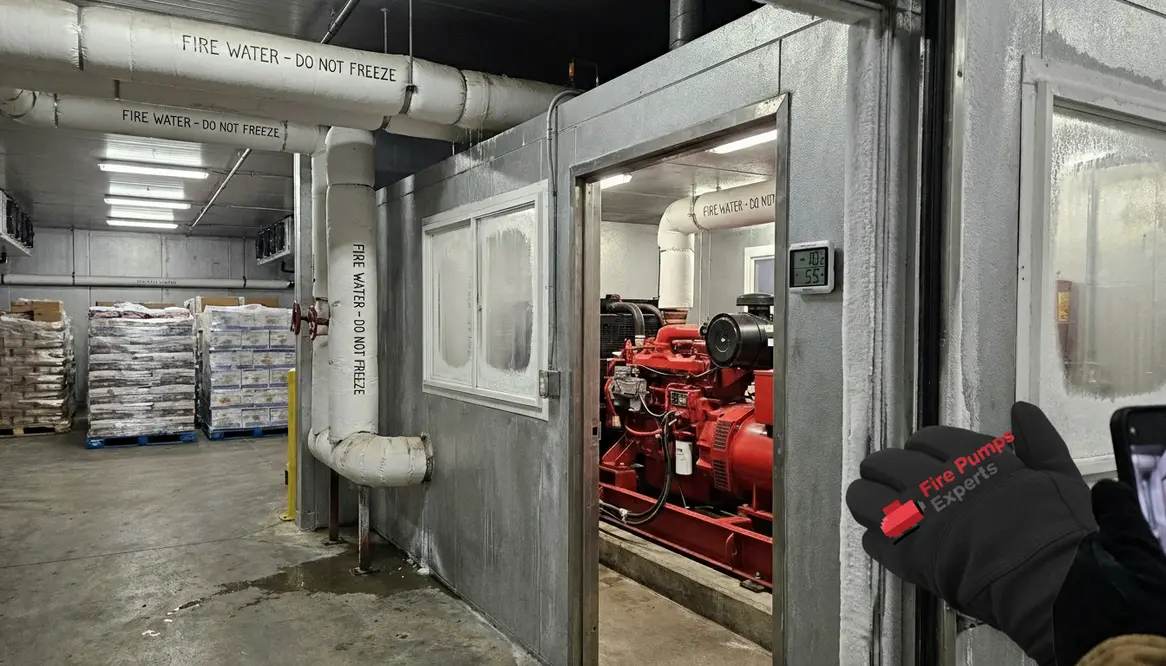
Cold storage facilities are not just big refrigerators. They are controlled ecosystems where temperatures can drop well below freezing. Because of this, fire pumps face a unique challenge. Water can freeze. Pipes can crack. And even the most reliable system can turn into a very expensive ice sculpture.
As I often explain, fire pumps rely on consistent water flow and pressure. However, in freezing conditions, viscosity increases and components can stiffen. As a result, pumps must work harder to maintain performance. That means standard systems designed for warmer industrial buildings simply do not cut it here.
Additionally, condensation and frost can interfere with electrical components. So while the pump itself is critical, the surrounding environment plays an equally important role. Think of it like trying to run a marathon in a snowstorm. It is possible, but you better be prepared.
What type of fire pump system works best in freezing conditions
If I had to give a straight answer, I would say diesel driven fire pumps often lead the pack in cold storage settings. Why? Because they are less dependent on external power sources that may fail in extreme conditions. However, electric pumps still have their place when properly protected and insulated.
Here is where design becomes everything. I always emphasize heated pump rooms. Without them, even the best equipment will struggle. In fact, I have seen systems fail simply because someone assumed the building heat would be enough. It was not.
Key considerations I always look at
Mechanical Factors
- Insulated piping systems
- Dry pipe or preaction sprinkler systems
- Proper pump sizing for increased resistance
- Reliable fuel supply for diesel systems
Environmental Controls
- Dedicated heated enclosures
- Temperature monitoring sensors
- Ventilation that prevents condensation buildup
- Backup heating systems
And yes, if you are thinking this sounds like overkill, it is not. Frozen pipes do not negotiate.
stadium fire protection lessons applied to cold storage facilities
Now, here is where things get interesting. I often borrow design philosophies from stadium fire protection when working on cold storage projects. At first glance, they seem like completely different worlds. One holds cheering fans. The other holds frozen pallets of food. But both demand reliability under pressure.
In stadiums, systems must respond instantly and handle large scale demand. Similarly, cold storage facilities require immediate response despite environmental stress. Therefore, redundancy becomes a shared principle. Backup pumps, secondary power sources, and layered safety measures are not optional.
Also, monitoring systems play a huge role. Just like stadiums track system performance in real time, cold storage facilities benefit from continuous diagnostics. If something drifts out of range, you want to know before it becomes a headline.
And let’s be honest. Nobody wants their warehouse making the news for the wrong reasons.
How do I prevent fire pump failure in subzero conditions
I get this question a lot, and the answer is both simple and demanding. You prevent failure by respecting the environment.
First, I always ensure that pump rooms are fully climate controlled. Not partially. Not occasionally. Fully. Then, I look at system testing. Regular testing in cold conditions reveals weaknesses that would otherwise stay hidden.
Next, I focus on materials. Not all components are rated for extreme cold. Choosing the right seals, lubricants, and metals makes a noticeable difference over time.
Finally, I never overlook maintenance. Cold storage facilities operate around the clock, and so should your awareness of system health. Skipping inspections is like ignoring a check engine light during a cross country trip. You might get away with it, but you probably will not enjoy the outcome.
Designing for long term reliability and compliance
Cold storage facilities fall under strict fire codes, and rightly so. The combination of combustible goods and challenging environments creates a higher risk profile. Because of this, compliance is not just about passing inspections. It is about building a system that performs under stress.
I always align designs with NFPA standards while tailoring them to the facility’s specific needs. For example, pump capacity must account for friction loss in colder systems. At the same time, water supply must remain dependable even during extended operation.
Moreover, integration with alarm and suppression systems is essential. A fire pump does not operate in isolation. It is part of a larger network that must function as one cohesive unit.
And if that sounds like assembling the Avengers of fire protection, well, that is not far off. Each component has a role, and when they work together, the results are powerful.
This is exactly why approaches from large arenas and stadium fire protection are so valuable here. The same mindset of redundancy, real time monitoring, and bulletproof water supply applies whether you are protecting tens of thousands of people or millions of dollars of temperature sensitive inventory.
If you want to see how these concepts translate into real world projects, resources like https://firepumps.org showcase how disciplined design thinking scales from complex venues to demanding industrial spaces.
FAQ
Conclusion
If you are managing a cold storage facility, your fire pump system is not just another line item. It is your first line of defense when conditions turn critical. I design these systems with the same discipline used in large scale environments because failure is not an option. When you pull proven thinking from stadium fire protection into the frozen end of the industry, you get systems that stay calm, predictable, and effective when everything around them is hostile. If you want a solution built for performance and reliability, now is the time to take action and get it right.