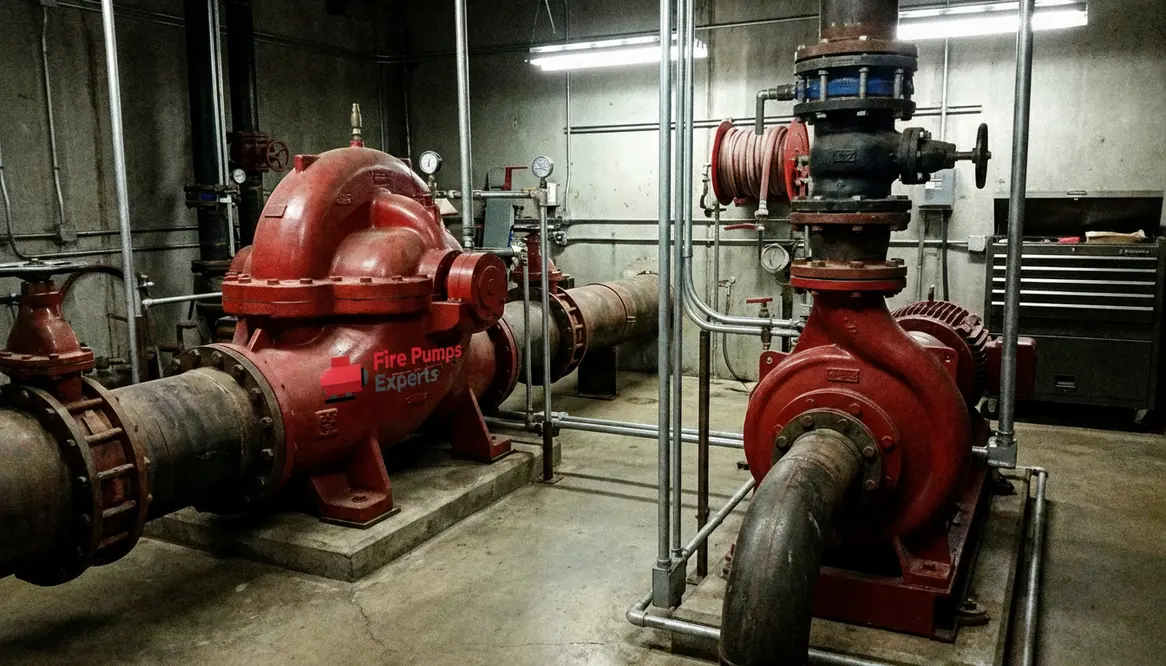
Split Case Fire Pump vs End Suction Comparison
I have spent enough time around pump rooms to know this truth: when the alarm sounds, nobody cares about theory. They care about flow, pressure, and reliability. That is where the conversation of split case fire pump vs end suction steps in. It may sound like a niche debate, but in commercial towers, hospitals, and industrial facilities, this choice quietly decides how well your fire protection system performs when it matters most. So let me walk you through it, calmly and clearly, with just enough wit to keep things interesting.
What is the real difference between split case fire pump vs end suction?
Let me answer this the way most engineers wish someone had done earlier. A split case fire pump uses a horizontally split casing with an impeller supported on both sides. Meanwhile, an end suction pump has a simpler design, where water enters from one end and exits at the top.
Now, here is where things get interesting. The split case design handles higher flow rates with more stability. On the other hand, end suction pumps offer compactness and simplicity. Think of it like choosing between a full size luxury sedan and a nimble city car. Both will get you there, but the ride feels very different.
Moreover, split case pumps are easier to maintain because you can open the casing without disturbing the piping. End suction pumps, however, often require more disassembly. And yes, that matters when downtime costs real money.
Performance expectations in commercial and industrial systems
When I evaluate fire protection systems in large facilities, I always start with performance under stress. Split case pumps shine here. They deliver consistent flow at higher capacities, which makes them ideal for high rise buildings, manufacturing plants, and large campuses.
In contrast, end suction pumps perform well in smaller or moderately sized systems. They are efficient, but they do not quite match the endurance of a split case design under heavy demand.
Additionally, vibration control plays a role. Split case pumps operate with better balance, which reduces wear over time. End suction pumps can experience more strain, especially when pushed beyond their comfort zone. And pumps, like people, do not enjoy being pushed too far for too long.
Where split case pumps excel
- High demand sprinkler and hydrant systems
- Long pipe runs with significant pressure loss
- Facilities that cannot tolerate extended downtime
- Properties planning for future expansion
Where end suction pumps fit well
- Low to moderate flow commercial buildings
- Retrofits with limited mechanical space
- Smaller campuses with defined demand
- Projects with tight capital budgets
Installation realities and space considerations
Now let us talk about something every facility manager cares about: space. Because no one has ever said, “I wish this pump room were bigger.”
Split Case Fire Pumps
- Require more floor space
- Need careful alignment during installation
- Work best in dedicated pump rooms
- Offer easier long term servicing
End Suction Fire Pumps
- Compact footprint
- Simpler installation
- Fit tighter mechanical rooms
- Maintenance can take longer
So, while the split case fire pump vs end suction debate often leans toward performance, space constraints can tip the scale. Especially in retrofits, where squeezing equipment into existing layouts feels like a game of Tetris.
Maintenance, lifecycle, and long term cost
I always tell clients this: the purchase price is only the opening scene. The real story unfolds over years of operation.
Split case pumps typically last longer. Their balanced design reduces bearing wear and shaft deflection. As a result, maintenance intervals are more predictable. You open the casing, service the internals, and get back online without dismantling half the system.
End suction pumps, while cheaper upfront, may require more frequent attention. Over time, that can add up in labor and downtime. It is a bit like owning a budget airline ticket. Sure, it is cheaper at first, until you pay for every extra along the way.
For large commercial and industrial properties, lifecycle cost often outweighs initial savings. That is why many facility engineers lean toward split case pumps when reliability is non negotiable.
Balancing budgets with reliability
If capital is tight but the system still needs to perform when everything is on the line, the choice between split case fire pump vs end suction becomes a strategic decision instead of a purely technical one. Many owners start with an end suction pump, then move to a split case design when the facility expands or when the cost of downtime becomes painfully clear.
That is why early planning with a fire protection engineer, and referencing resources such as https://firepumps.org, can help align the pump selection with long term operational goals instead of short term sticker prices.
Choosing the right pump for your facility
So how do I decide between these two? I look at three things: system demand, available space, and operational priorities.
If the building demands high flow and continuous reliability, I go with a split case pump. It handles pressure swings better and provides long term stability. However, if the system is smaller and space is tight, an end suction pump becomes a practical choice.
Also, I consider who will maintain the system. Facilities with dedicated maintenance teams often benefit from split case designs. Meanwhile, smaller operations may prefer the simplicity of end suction units.
And yes, sometimes the decision feels like choosing between Batman and Spider Man. Both get the job done, but they operate in very different ways.
Quick decision snapshot
Choose split case if:
- You operate a high rise, hospital, or industrial plant
- System downtime carries real financial risk
- You expect future expansions or added demand
- You have or plan to have strong maintenance support
Choose end suction if:
- Your building is smaller or moderately sized
- Mechanical space is tight from the start
- Project budgets are limited
- You want a compact, straightforward installation
Whichever way you lean in the split case fire pump vs end suction conversation, the most important step is matching the pump to the building’s risk profile, water supply, and long term operational strategy.
Conclusion: making the right investment for fire protection
In the end, choosing between these pumps is not about trends or preferences. It is about protecting lives, assets, and operations. If you manage a commercial or industrial facility, take a hard look at your system demands and future maintenance plans. Then choose with confidence. And if you want guidance tailored to your property, reach out to experts who understand fire pump performance at scale. The right decision today can quietly save everything tomorrow.
The more clearly you understand the tradeoffs in the split case fire pump vs end suction decision, the easier it becomes to justify the investment, explain it to stakeholders, and sleep a little better knowing that when the alarm sounds, your system is ready.