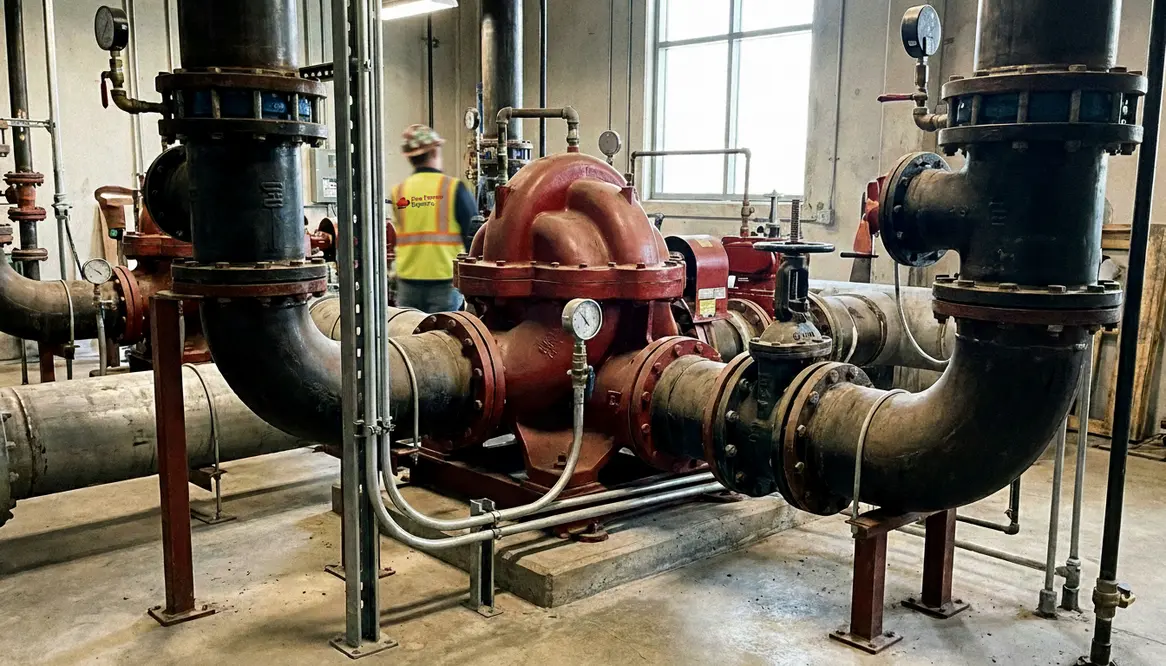
Horizontal Split Case Fire Pump Guide for Facilities
I have spent years around fire protection systems, and I can tell you this without hesitation: when reliability matters most, the horizontal split case fire pump quietly takes center stage. It is not flashy. It does not demand attention. Yet, in the critical seconds when a commercial facility faces a fire emergency, this pump delivers water with calm precision. It shows up, does the job flawlessly, and never breaks a sweat.
So, let me walk you through what makes this pump such a trusted workhorse in large scale buildings, industrial plants, and high value properties. Along the way, I will keep things clear, grounded, and maybe even a little entertaining. Because yes, even pumps deserve a good story.
What is a horizontal split case fire pump and why do facilities rely on it?
At its core, this pump is designed with a casing that splits horizontally. That simple design choice changes everything. Because of it, I can access internal components without disconnecting the entire system. In a commercial setting, that means less downtime and fewer headaches.
Moreover, the pump uses a double suction impeller. This allows water to enter from both sides, which balances the load and reduces wear. As a result, it runs smoother and lasts longer. And let us be honest, in a facility where downtime can cost thousands per hour, longevity is not just nice to have. It is essential.
Facilities rely on this type of pump because it delivers high flow rates with consistent pressure. Whether I am protecting a manufacturing plant or a high rise building, I know it will perform when called upon. When I specify a horizontal split case fire pump, I am choosing a design that has proven itself again and again under demanding conditions.
Inside the design: why this pump performs so well
The design is where the magic happens. Although it may look simple from the outside, every component works together with purpose.
Balanced Impeller
Water enters from both sides, which reduces axial thrust and extends bearing life.
Split Casing
I can open the pump without removing piping, which simplifies maintenance.
Heavy Duty Bearings
These support continuous operation, even under demanding conditions.
Efficient Flow Path
The internal design minimizes energy loss and keeps performance steady.
Because of these features, the pump handles large volumes of water without strain. In addition, it maintains efficiency over time, which helps control operational costs. And yes, even accountants appreciate a well designed pump, though they might not admit it out loud.
When a facility opts for a horizontal split case fire pump, it is often choosing lower lifecycle cost as much as raw performance. The balance between durability, energy efficiency, and serviceability is what keeps this configuration so widely used.
Where I see these pumps used the most
In my experience, this pump is a natural fit for large scale environments. It thrives where demand is high and failure is not an option.
I often see it installed in:
Commercial complexes where multiple floors require steady water pressure.
Industrial facilities that need reliable fire suppression across wide areas.
Data centers where protecting equipment is mission critical.
Hospitals and campuses that cannot afford system interruptions.
These are not small operations. Therefore, the equipment must match the scale. And while smaller pumps have their place, they simply cannot deliver the same level of performance in these environments. When a campus standardizes on a horizontal split case fire pump across multiple buildings, it gains consistency in response, maintenance routines, and spare parts.
Horizontal split case fire pump maintenance made simple
If you ask me what truly sets this pump apart, I would say maintenance. Because when a system is easy to maintain, it is more likely to stay in peak condition.
Thanks to the split casing, I can inspect and service internal parts without dismantling the entire unit. This reduces labor time and keeps systems online. In large facilities, that is a big deal.
Additionally, routine checks become more straightforward. I can monitor bearings, seals, and alignment with minimal disruption. As a result, issues are caught early instead of becoming costly failures.
And let us face it, no one wants to explain to management why a preventable issue turned into a major shutdown. That conversation never ends well.
With a horizontal split case fire pump, technicians gain clear access to internal components, so vibration problems, seal wear, or bearing noise rarely turn into nasty surprises. Combined with a good testing schedule, this simplicity is a quiet form of risk reduction.
How I choose the right configuration for a facility
Choosing the right pump is not about guesswork. It requires a clear understanding of the building’s demands.
First, I look at flow requirements. Large facilities often need high gallons per minute, so the pump must meet that demand without strain. Then, I consider pressure needs. Taller buildings require higher pressure to reach upper levels.
Next, I evaluate the power source. Electric motors are common, but diesel engines provide backup when power is unreliable. In critical infrastructure, redundancy is not optional. It is expected.
Finally, I think about long term operation. A well selected pump should run efficiently for years. Otherwise, the initial savings quickly disappear in maintenance costs.
In many cases, I recommend exploring solutions from trusted providers like commercial fire pump system specialists, especially when dealing with complex facilities. Expertise matters here. A team that has sized, installed, and tested hundreds of horizontal split case fire pump systems will spot pitfalls long before they affect your facility.
Why this pump remains a top choice in modern fire protection
Despite advances in technology, this pump continues to hold its ground. That is not by accident. It combines simplicity with performance in a way that newer designs often struggle to match.
Moreover, it adapts well to modern systems. Whether integrated with advanced monitoring or paired with backup units, it remains flexible. And in a world where systems evolve quickly, that adaptability is a major advantage.
There is also something reassuring about proven equipment. It is like choosing a classic car that still runs perfectly. Sure, newer models exist, but the classic gets the job done every single time.
For many facilities, the horizontal split case fire pump has become that classic. It is familiar to inspectors, recognized by insurers, and well documented by standards. When you add in strong support from resources such as https://firepumps.org, you get a solution that is both technically sound and practically supported over the long haul.
How a horizontal split case fire pump supports overall safety strategy
It is easy to think of a fire pump as a standalone piece of hardware, but in practice it is part of a much larger safety ecosystem. Sprinkler layouts, water storage, control valves, detection systems, and emergency procedures all connect back to whether the pump can be trusted.
When that pump is a horizontal split case fire pump, it often simplifies decisions across the board. Training becomes more consistent, spare parts inventory is easier to manage, and response testing follows a familiar rhythm. Over time, that consistency builds confidence for everyone responsible for life safety in the building.
Final thoughts and next steps
If you are responsible for protecting a large facility, choosing the right fire pump is not just a technical decision. It is a strategic one. The horizontal split case fire pump offers reliability, efficiency, and ease of maintenance that few alternatives can match. Now is the time to evaluate your system, consult with experts, and ensure your property is protected by equipment that performs when it matters most. Because when the moment comes, there is no room for second guesses.