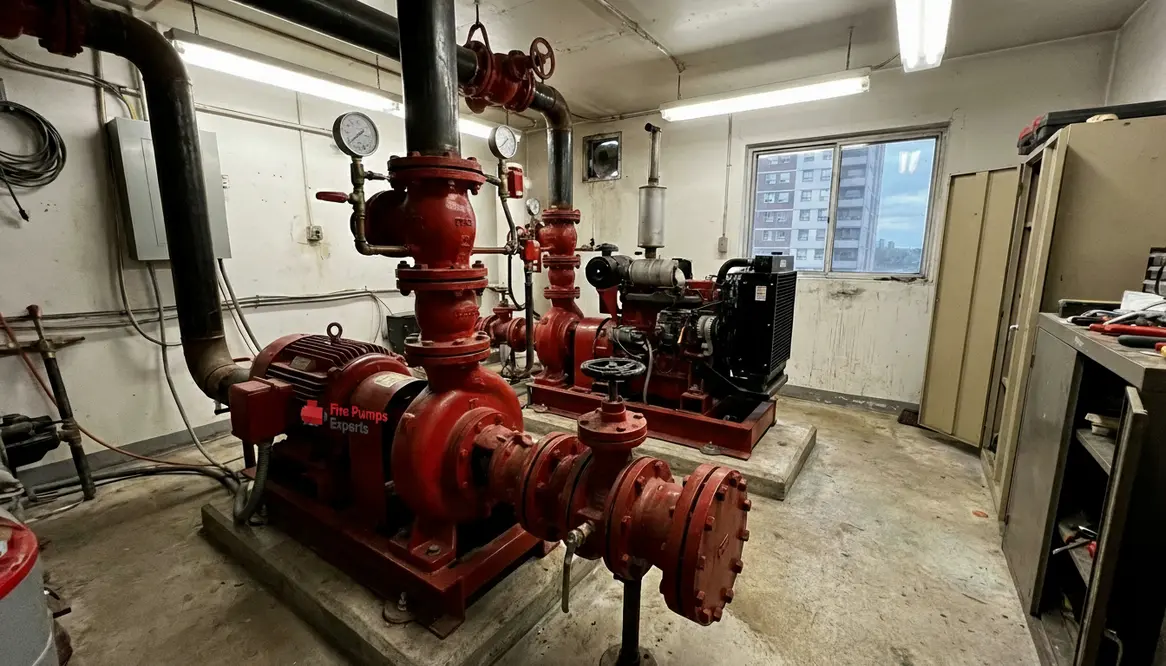
Multi Use Industrial Park Fire Pumps for High Rise
How industrial-strength reliability translates into real-world protection for multi story residential towers that cannot afford a single misstep.
I have spent years around fire protection systems, and if there is one thing I never take lightly, it is how quickly a small spark can turn into a five alarm problem. In multi story residential buildings, the margin for error is thin. That is where multi-use industrial park fire pumps quietly earn their keep. They do not ask for applause. They just stand ready, like a seasoned night watchman who has seen it all and still shows up on time. And yes, while they are often associated with industrial campuses, their engineering principles carry serious weight in large residential towers.
Why Fire Pump Systems Matter in Multi Story Buildings
When I walk into a high rise, I do not just see walls and windows. I see vertical risk. Water does not naturally want to climb twenty or thirty floors. Therefore, without a properly designed fire pump system, sprinklers and standpipes become little more than decorative plumbing.
Moreover, fire pumps ensure consistent pressure across every level. Whether the fire starts in the lobby or the penthouse, the response must be immediate and equal. Think of it like giving every firefighter a jetpack instead of a ladder. Efficient. Direct. No wasted time.
And while gravity works against us, engineering works for us. That is where systems inspired by industrial grade fire pump solutions come into play, delivering reliability that scales with building height.
How Do Fire Pump Systems Work in High Rise Buildings?
At its core, a fire pump system takes available water and boosts its pressure to meet demand. However, the execution is where things get interesting.
First, the system connects to a water source, often a city main or dedicated storage tank. Then, when pressure drops, usually triggered by sprinkler activation, the pump kicks in automatically. No hesitation. No dramatic pause like in a suspense movie.
Additionally, controllers manage the operation, ensuring the pump runs continuously during an emergency. This is not the time for energy saving mode. It is full power, all in.
Because of this, many modern designs borrow reliability concepts from multi-use industrial park fire pumps, where failure is simply not an option. Redundancy, durability, and performance take center stage.
Key Components That Keep Everything Running
I like to think of a fire pump system as an orchestra. Each component plays its part, and if one goes off key, the whole performance suffers.
Core Equipment
- Fire pump unit that delivers pressure
- Driver such as electric motor or diesel engine
- Controller that manages activation
- Jockey pump to maintain baseline pressure
Support Systems
- Water storage or supply connection
- Valves that regulate flow
- Pressure gauges for monitoring
- Alarm systems for alerts
Furthermore, each piece must work in harmony. If the jockey pump fails, the main pump may cycle too often. If the controller misfires, the system may hesitate. And hesitation, in fire protection, is a luxury no one can afford.
Design Considerations for Large Residential Towers
Designing for height is not just about adding more power. It is about precision. I always consider pressure zoning first. Too much pressure on lower floors can damage pipes, while too little leaves upper floors exposed.
Therefore, engineers often divide buildings into zones, each with controlled pressure levels. This approach keeps the system balanced and efficient.
In addition, reliability standards used in large scale industrial fire pump systems influence these designs. Backup power, redundant pumps, and rigorous testing protocols become essential. After all, a system that works only most of the time is about as useful as a smoke detector without batteries.
Also, space planning plays a role. Fire pump rooms must allow for maintenance access, ventilation, and future upgrades. Because eventually, every system needs attention. Even the best ones.
Maintenance and Testing That Actually Prevent Failure
I have seen pristine systems fail simply because no one bothered to test them. On the other hand, I have seen older systems perform flawlessly because they were maintained like clockwork.
Routine testing ensures pumps start instantly and deliver the required pressure. Weekly churn tests, monthly inspections, and annual performance evaluations are not optional. They are the backbone of reliability.
Additionally, monitoring systems now provide real time data. This allows facility managers to catch issues early. A slight pressure drop today can become a major failure tomorrow.
And yes, skipping maintenance to save money is a bit like ignoring a check engine light on a cross country road trip. It might work for a while. But eventually, you will be calling for help.
Choosing the Right System for Commercial Scale Residential Properties
Not all buildings are created equal. A mid rise and a luxury high rise have very different demands. That is why I always look at capacity, redundancy, and compliance together.
Systems influenced by multi-use industrial park fire pumps often provide the scalability needed for large residential complexes. They are built to handle varying loads, continuous operation, and demanding environments.
Moreover, compliance with fire codes and standards is non negotiable. Local regulations dictate everything from pump capacity to testing frequency. Ignoring them is not just risky. It is costly.
Ultimately, the goal is simple. Deliver water where it is needed, when it is needed, without fail. In that sense, well-designed systems mirror the reliability of multi-use industrial park fire pumps, which are built to perform under pressure, again and again.
Real-World Reliability: Lessons Borrowed From Industrial Parks
The reason multi-use industrial park fire pumps have such a solid reputation is simple: they are designed for environments where downtime is not tolerated. Manufacturing lines, logistics hubs, and large storage facilities all rely on continuous protection, regardless of what the electrical grid or the weather is doing outside.
Those same expectations translate beautifully to commercial scale residential towers. High rises function like small cities stacked vertically. People cook, store belongings, run businesses from home, and come and go at all hours. A small incident in a utility room or parking level can turn into something far more serious if the fire pump system is not as dependable as the multi-use industrial park fire pumps that protect mission-critical facilities.
Borrowing industrial design philosophies means embracing robust power supplies, generous safety margins, and clearly documented procedures. It means training staff, testing on schedule, and treating the fire pump room as essential infrastructure rather than just another mechanical space tucked out of sight.
If you want a deeper technical breakdown of how these systems are applied across property types, resources such as https://firepumps.org can help frame the broader context of performance expectations and best practices.
FAQ
Conclusion
When I look at a multi story residential building, I see more than architecture. I see responsibility. Fire pump systems carry that responsibility with quiet strength, ensuring safety when it matters most. If you manage or develop large scale properties, now is the time to invest in proven, industrial grade solutions. Because in this line of work, preparation is not just smart. It is everything. And the right system makes all the difference.