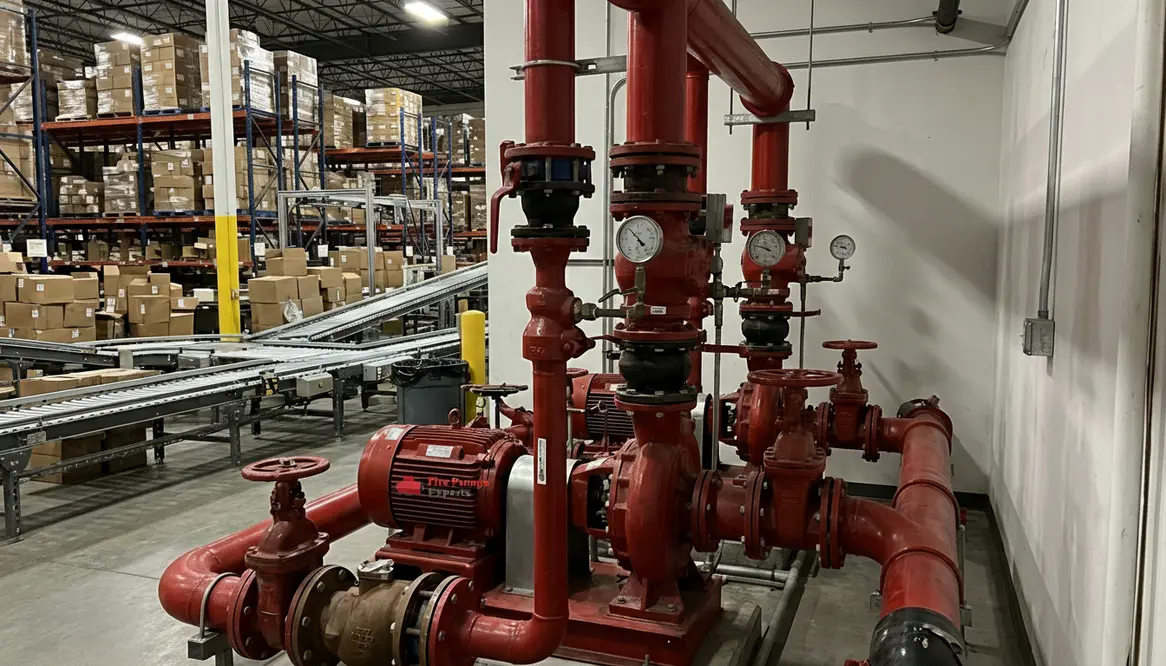
Fire Pump Design for Large Logistics Campuses
I have spent years walking through vast logistics hubs where time moves faster than a delivery truck on a tight schedule. In these environments, safety is not a side note. It is the backbone. That is where Fire pump design for large logistics campuses steps in, quietly powerful and always ready. It is not flashy. It does not demand attention. Yet, when things go wrong, it becomes the difference between a close call and a catastrophic loss. And trust me, in a warehouse packed tighter than a streaming platform’s content library, you want that difference.
Why logistics hubs demand serious fire protection
Logistics facilities are not your average buildings. They stretch across acres, stack goods high, and operate around the clock. Because of this, fire risks multiply quickly. A single spark can travel faster than gossip in a small office break room.
Moreover, modern distribution centers rely on automation, dense storage, and constant movement. Consequently, traditional fire protection methods often fall short. I have seen facilities that looked secure on paper but struggled to deliver water where it mattered most.
That is why a properly engineered fire pump system becomes essential. It ensures consistent water pressure across large areas, even at peak demand. In other words, it does not panic when everything else does.
How Fire pump design for large logistics campuses ensures reliability
I like to think of a fire pump system as the heartbeat of a facility’s fire protection plan. Without it, everything else slows down or stops. With it, every sprinkler and hydrant performs at full strength.
Built for scale
First, these systems are designed to handle scale. A logistics campus is not a small box. It is a network of buildings, loading zones, and storage areas. Therefore, the pump must deliver water across long distances without losing pressure.
Redundancy that expects failure
Second, redundancy plays a major role. If one component fails, another takes over. It is a bit like having a backup singer who suddenly becomes the star when needed. Nobody plans for failure, yet smart design expects it.
Seamless integration
Finally, integration matters. Fire pumps must work seamlessly with alarms, sprinklers, and suppression systems. When everything connects, response time shrinks dramatically. And in fire protection, seconds matter more than most people realize.
What makes a fire pump system effective in distribution sites?
I get this question a lot, and the answer is refreshingly straightforward. Effectiveness comes down to precision, durability, and adaptability.
Precision
Precision means the system delivers exactly the right pressure and flow. Too little water is obvious trouble. Too much can damage equipment and infrastructure. So balance is key.
Durability
Durability ensures the system performs under stress. Logistics hubs do not pause operations for emergencies. Therefore, fire pumps must operate under extreme conditions without hesitation.
Adaptability
Adaptability allows the system to grow with the facility. As operations expand, the fire protection system must keep pace. Otherwise, you end up protecting yesterday’s building in today’s environment.
Core strengths
- Consistent pressure across large zones
- Fast response during peak demand
- Integration with suppression systems
Operational benefits
- Reduced downtime during incidents
- Protection for high value inventory
- Confidence for compliance inspections
Fire pump design for large logistics campuses and risk reduction
Risk in logistics is not just about fire. It is about business continuity. A single incident can disrupt supply chains, delay shipments, and impact revenue on a massive scale. That is why fire pump design is not just an engineering decision. It is a business decision.
With the right system in place, facilities can contain fires early. As a result, damage stays localized instead of spreading across thousands of square feet. I have seen cases where a well designed system turned a potential disaster into a manageable repair.
Additionally, insurance providers often look favorably on robust fire protection. While it may not make you the hero of the next action movie, it can certainly lower risk profiles and improve operational stability.
And let us be honest. Sleeping better at night knowing your facility is protected is not a bad perk either.
How I approach fire protection planning for large facilities
When I evaluate a logistics site, I start with the layout. Every corner, every aisle, every storage height matters. Then, I consider water supply. Without a reliable source, even the best pump design falls short.
Next, I focus on system demand. Different zones require different levels of protection. Therefore, customization becomes critical. One size fits all solutions belong in sitcoms, not industrial safety.
Finally, I look at future growth. Facilities evolve quickly. So, I make sure the system can scale without requiring a complete overhaul. Because tearing out infrastructure later is about as fun as assembling furniture without instructions.
FAQ
What does a fire pump do in a logistics facility?
It maintains strong water pressure so sprinklers and hydrants can control fires quickly.
Why are fire pumps critical for large campuses?
They ensure water reaches distant areas where municipal pressure alone is not enough.
How often should fire pump systems be tested?
Weekly and monthly testing is standard to confirm performance and reliability.
Can fire pump systems scale with facility growth?
Yes, when designed properly, they can expand to match increased demand.
Do fire pumps reduce operational risk?
Absolutely. They help contain fires early, limiting damage and downtime.
Conclusion
If you manage or operate a large logistics hub, fire protection is not an afterthought. It is a strategic investment. A well planned fire pump system protects your people, your inventory, and your operations without compromise. So if you are ready to strengthen your facility with proven solutions, now is the time to act. Because in this business, preparation is not optional. It is everything.