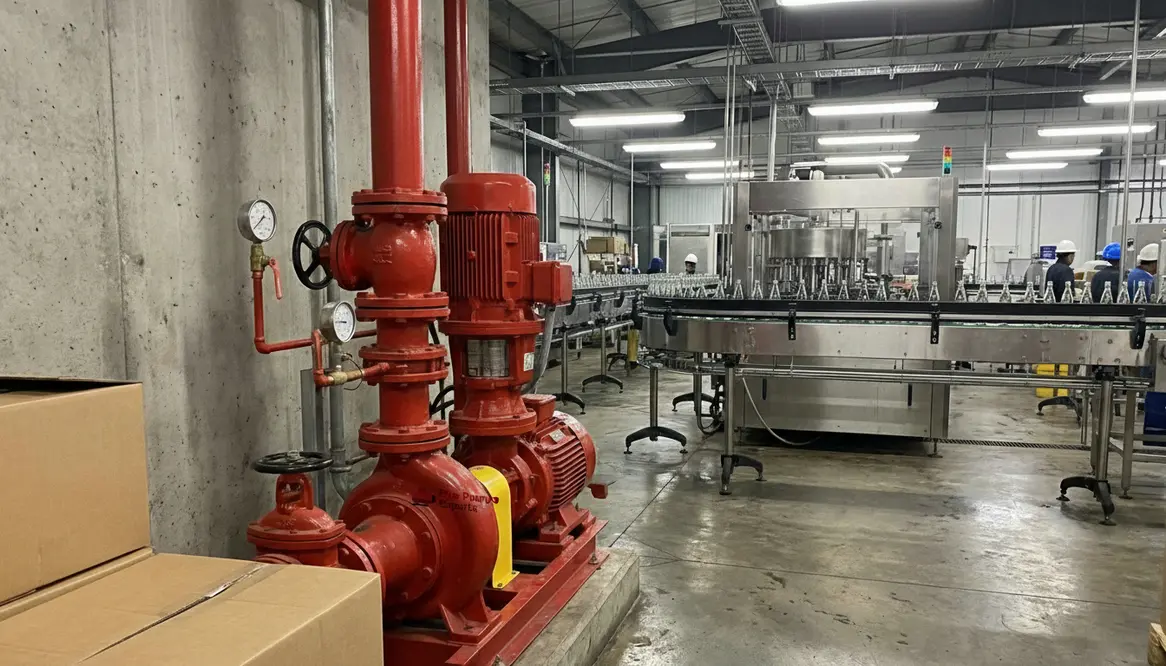
Fire Pump Requirements for Beverage Plants
When liquids move fast, risk moves faster. Here is how to keep your beverage plant protected without getting lost in technical fog.
I have spent enough time around production floors to know one thing for certain. When liquids move fast, risk moves faster. In beverage facilities, where sugar, alcohol, and pressurized systems share space, Fire protection for bottling and production environments is not just a box to check. It is the quiet guardian in the background, like that one character in a movie who saves the day without asking for applause. Today, I am going to walk you through fire pump requirements for beverage production plants in a way that actually sticks. No dry manuals. No snooze worthy jargon. Just what matters, told plainly.
Think of your fire pump as the plant’s emergency heart. It does not need applause, but it absolutely must work the moment things go wrong. The goal is simple: water at the right pressure, in the right place, fast enough to matter.
If that sounds dramatic, good. Fire is not impressed by half measures, and neither should you be.
Why beverage plants have unique fire risks
First, let us set the stage. Beverage plants are not your average industrial facility. You have flammable liquids, high speed conveyor systems, electrical loads, and sometimes confined spaces. Add in packaging materials like cardboard and plastic, and suddenly you have a recipe that would make even a firefighter raise an eyebrow.
Because of this, fire pump systems must deliver consistent pressure and flow under demanding conditions. Moreover, production does not stop easily, so reliability becomes non negotiable. If a system fails mid shift, you are not just risking property. You are risking lives and millions in downtime.
And yes, water and fire seem like obvious opposites. Still, when sugar dust ignites, it does not care about irony.
Core fire pump requirements for industrial beverage facilities
When I design or evaluate systems, I focus on performance first. A compliant fire pump must meet flow and pressure demands set by hazard classification. However, beverage plants often fall into higher risk categories due to storage and processing materials.
Key fire pump requirements that actually matter
- Reliable water supply from tanks, municipal lines, or reservoirs
- Automatic activation triggered by pressure drop
- Redundant power sources such as diesel backup
- Compliance with NFPA standards especially NFPA 20
Additionally, I always recommend testing under real load conditions. On paper, everything looks heroic. In reality, weak pressure curves show up fast.
Fire protection for bottling and production environments in high speed lines
Now let us talk about bottling lines. These systems move fast. Almost suspiciously fast. If something ignites, fire spreads along conveyors like gossip in a small town.
Therefore, fire pumps must support sprinkler systems designed for rapid response. Quick response heads, zoned suppression, and consistent pressure are essential. Furthermore, spacing and layout matter because bottling lines often create obstructions that block water distribution.
I have seen systems that looked perfect on blueprints but struggled in real life because of poor placement. Water cannot fight what it cannot reach. It is not magic. It is physics.
How do I size a fire pump for a beverage production plant
I get this question a lot, and the answer is both simple and detailed. You start with hazard classification and required flow rates. Then you calculate system demand, including sprinklers and hose allowances. Finally, you select a pump that meets or exceeds that demand without strain.
However, sizing is not just math. It is judgment. For example, future expansion must be considered. If your plant grows, your fire system should not become obsolete overnight.
Also, I always leave a margin for safety. Because if there is one thing I trust less than a quiet production floor, it is a system running at its absolute limit.
Practical sizing checkpoints
- Confirm hazard classification for each production and storage area.
- Calculate sprinkler demand plus hose stream allowances.
- Verify available water supply curves against required system curves.
- Select a pump that provides required pressure at rated flow with reasonable safety margin.
- Review room for future line additions or storage changes.
This is where Fire protection for bottling and production environments moves from theory to reality: your numbers, your layout, your risk profile.
Key components that make or break system performance
Let me break this into two simple perspectives so it sticks.
System Strength
- Pump type selection electric or diesel
- Controller reliability and responsiveness
- Proper suction and discharge piping design
System Stability
- Pressure maintenance pumps for steady operation
- Regular inspection and testing schedules
- Backup systems that activate without hesitation
When both sides work together, the system performs like a well rehearsed orchestra. When they do not, it sounds more like a garage band on a bad day.
Fire protection for bottling and production environments and compliance
Compliance is where many facilities stumble. Not because they ignore rules, but because standards evolve. NFPA guidelines, insurance requirements, and local codes all play a role.
Therefore, I always advise regular audits. Not just once every few years. Stay ahead of changes. Keep documentation clean. And test systems as if your business depends on it. Because it does.
Also, inspectors appreciate facilities that take initiative. It turns a stressful visit into a routine check. Think of it as the difference between a surprise exam and an open book test.
Strong compliance work is part of serious Fire protection for bottling and production environments, not an optional extra tacked on at the end.
Bringing it all together on the production floor
On a busy shift, nobody is thinking about fire pumps. Operators watch fill levels, maintenance chases breakdowns, supervisors track throughput. Meanwhile, your pump, sprinklers, and valves just wait their turn.
That is exactly why Fire protection for bottling and production environments has to be engineered, documented, and tested long before anyone smells smoke. You get one real chance to see if your design works. That is not the moment to discover missing capacity or a failed controller.
If you want a solid technical reference point, start with NFPA 20, qualified fire protection engineers, and reputable resources such as https://firepumps.org to round out your understanding.
FAQ
Conclusion
If you run or manage a beverage production facility, now is the time to take a closer look at your fire pump system. The right design does more than meet code. It protects your people, your equipment, and your bottom line. I can help you assess, upgrade, or design a system built for real world demands. Reach out today and let us make sure your protection works when it matters most.