Vertical Retail Fire Pump System Design Guide
Fire Pump Considerations for Vertical Retail Formats
I have spent years walking through towering retail spaces where escalators hum like background music and glass atriums stretch toward the sky. In these environments, fire protection is not just a system, it is a promise. That is where multistory retail fire pump systems come into play, quietly standing guard behind walls and in mechanical rooms. Within the first few minutes of any design conversation, I make one thing clear: vertical retail is a different beast. It demands precision, foresight, and just a bit of respect for gravity, because gravity always wins.
So let’s break this down in a way that actually sticks, with a little clarity, a little humor, and just enough real talk to keep things grounded.
Designing Fire Pump Systems For Vertical Retail Buildings
First, I focus on pressure zones. Tall retail buildings are not just bigger versions of a strip mall. They behave differently. Water pressure increases as you go down and drops as you go up. Therefore, I divide the building into zones to maintain control. Without that, you risk over pressurizing lower levels or starving upper floors.
Next, I match the pump capacity to peak demand, not average use. Retail spaces can surge fast, especially during peak hours. One minute it is calm, the next it feels like Black Friday decided to show up early. So I plan for worst case scenarios.
Finally, I coordinate closely with sprinkler and standpipe layouts. These systems must work together, not compete. When they align properly, the result is a seamless response that protects both property and people.
Understanding Pressure And Flow In Vertical Spaces
Pressure and flow are the heartbeat of any fire pump system. However, in vertical retail formats, they can turn into a tricky balancing act. On one hand, you need enough pressure to reach upper floors. On the other hand, you cannot allow excessive pressure to damage piping or fixtures below.
That is why I often recommend pressure reducing valves and carefully calibrated pump curves. In addition, I evaluate elevation changes early in the design phase. Waiting until installation is like trying to fix a movie plot after the credits roll. It is too late.
Moreover, I pay attention to friction loss across long pipe runs. Vertical malls often have extended piping networks that snake through floors. Each turn and length adds resistance. Therefore, I calculate these losses with precision, ensuring the pump delivers exactly what the system needs.
Equipment Placement That Actually Makes Sense
Where you place your fire pump matters more than most people think. I have seen systems tucked into corners like forgotten gym memberships. That approach creates access issues and complicates maintenance.
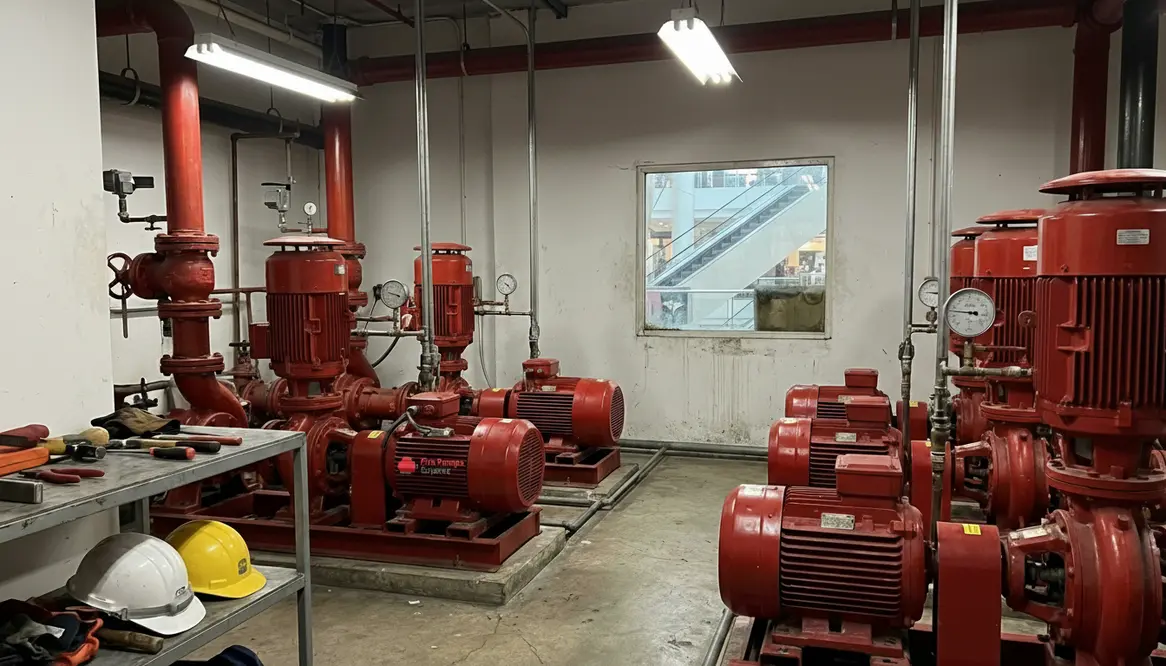
Instead, I prioritize accessibility and protection. A properly located pump room should be easy to reach, protected from flooding, and compliant with fire separation standards. In addition, it should allow enough space for service teams to work without performing yoga poses just to reach a valve.
Also, I consider proximity to water supply. The closer the pump is to a reliable source, the better its performance. This reduces suction issues and improves efficiency over time.
When these priorities are respected, multistory retail fire pump systems perform smoothly. When they are ignored, well, things get messy fast.
Key Design Priorities Vs Common Pitfalls
What I Always Prioritize
- Accurate demand calculations
- Reliable power supply and backup
- Clear zoning strategies
- Routine maintenance access
What I Avoid Like A Bad Sequel
- Oversized pumps that waste energy
- Poor coordination with sprinkler systems
- Ignoring elevation impact
- Hard to access equipment rooms
Power Supply And Redundancy In High Rise Retail
Power reliability is non negotiable. A fire pump without power is just expensive decoration. Therefore, I always design with redundancy in mind. Backup generators, automatic transfer switches, and dedicated circuits are essential.
Additionally, I consider how quickly the system can recover after an outage. In a busy retail tower, downtime is not just inconvenient, it is dangerous. So I build systems that respond instantly and consistently.
And yes, I have heard the argument that backup systems are excessive. To that, I usually say, so is a parachute until you actually need one.
Maintenance Planning For Long Term Performance
A well designed system still needs care. I always emphasize maintenance planning from day one. This includes scheduled testing, clear documentation, and easy access to components.
In vertical retail environments, wear and tear can be uneven. Upper floors may experience different usage patterns than lower ones. Therefore, regular inspections help catch small issues before they grow into major problems.
Furthermore, I encourage building owners to invest in monitoring systems. These tools provide real time data, allowing teams to respond quickly. Think of it as giving your fire pump system a voice, one that speaks before trouble arrives.
How multistory retail fire pump systems Support Real World Operations
In a typical shopping tower, the fire protection strategy has to keep pace with changing tenants, seasonal crowds, and constant fit outs. That is why I treat multistory retail fire pump systems as living infrastructure, not a static box on a set of drawings.
When the system is zoned correctly, tied into reliable standby power, and supported by clear maintenance routines, it can adapt to new anchor stores, restaurant build outs, or added floors without starting from scratch. The stronger the foundation of the original design, the more flexible the building becomes over its life.
FAQ: Quick Answers For Busy Decision Makers
Conclusion: Build It Right The First Time
When I design fire protection for vertical retail, I think beyond code and checklists. I think about people, movement, and the unpredictable nature of large commercial spaces. If you are planning or upgrading your system, now is the time to act. Partner with experts who understand the demands of height, flow, and performance. Because in the end, a well designed system does more than protect a building. It protects everything inside it.
If you want a deeper technical reference on multistory retail fire pump systems and related standards, resources at https://firepumps.org can be a useful starting point alongside your local codes and professional guidance.