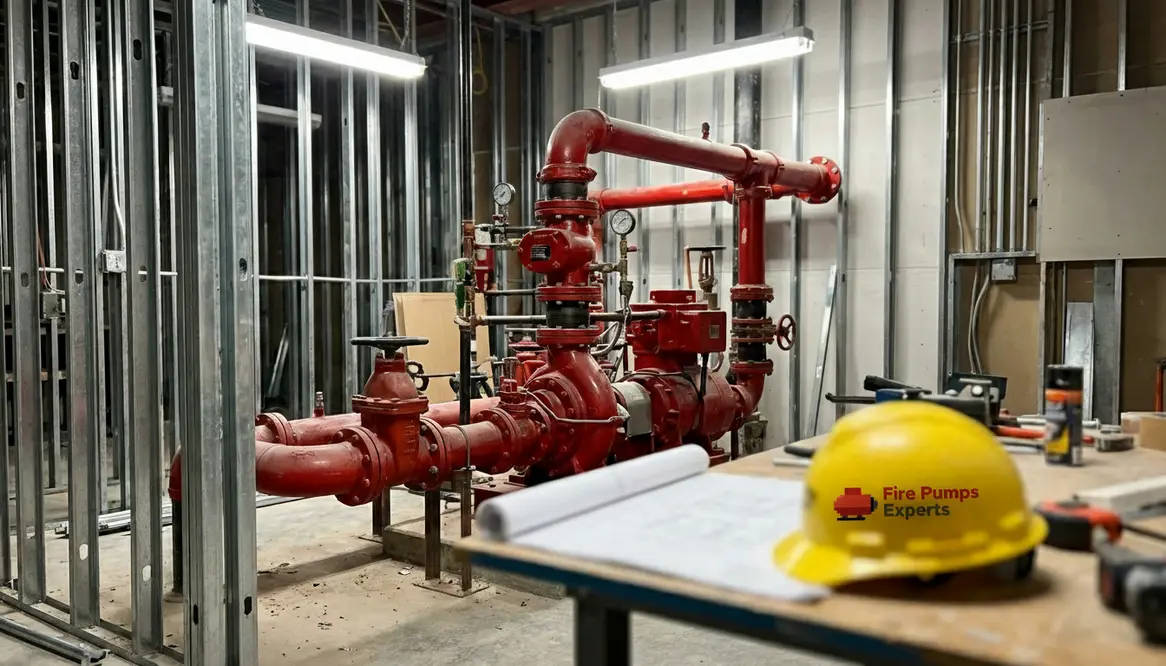
Retail Tenant Fit Out Fire Pump Systems Planning Guide
I have walked through enough commercial buildouts to know one thing for certain. Fire safety is either planned early, or paid for dearly later. When I talk about retail tenant fit out fire pump systems, I am talking about the heartbeat of a building’s fire protection strategy. It is not glamorous. It will not trend on social media. Yet when everything goes wrong, it is the one system that quietly does everything right. So let’s take a steady walk through what matters, why it matters, and how to get it right the first time.
In retail and commercial spaces, fire pumps rarely get the spotlight. Yet they are the quiet backbone of a protection strategy that keeps tenants open, merchandise safe, and people walking back out the door after an emergency. Planning them correctly during a tenant fit out is less about fancy equipment and more about clear thinking, coordination, and respect for what can go wrong when water does not arrive with enough pressure, at the right time.
Starting Strong with retail tenant fit out fire pump systems
I always begin with infrastructure. Before the walls go up and before the paint dries, I look at water supply and pressure. Because without proper flow, even the best sprinkler design is just wishful thinking. Fire pump systems step in when municipal supply cannot carry the load. And in large commercial or industrial facilities, that is more common than people think.
However, I do not treat fire pumps like an afterthought. I coordinate them with building engineers, architects, and code officials early. This ensures that space, power, and access are not squeezed into some forgotten corner. After all, a fire pump tucked behind storage racks is about as useful as a fire extinguisher locked in a display case.
How do I plan fire protection during a tenant buildout?
I start by understanding the use of the space. A warehouse behaves differently than a retail showroom. A data center carries risks that a distribution hub does not. So I match the fire protection design to the actual hazard, not just the floor plan.
Next, I align with local codes and national standards. This is where many projects stumble. They assume compliance instead of verifying it. I do the opposite. I confirm everything, from sprinkler density to alarm integration.
Then, I coordinate systems. Fire alarms, sprinklers, and pump systems must act as one. Not three strangers meeting during an emergency. Because when seconds count, systems should not be introducing themselves.
Key questions I ask before layout gets locked in
- What will actually happen in this space on a busy day?
- How will storage heights, rack layouts, or display fixtures change over time?
- Where are the choke points that people will crowd during an emergency?
- Can retail tenant fit out fire pump systems support both today’s hazards and tomorrow’s ambitions?
When these questions are answered honestly, the fire protection strategy tends to be cleaner, simpler, and more reliable, without becoming a budgetary scare story.
Designing for Real World Conditions, Not Just Blueprints
On paper, everything works beautifully. In reality, conditions shift. Equipment gets moved. Tenants change layouts. Storage heights grow taller than originally planned. So I design with flexibility in mind.
For example, I account for future expansion. I leave room in system capacity. I ensure access points remain reachable. And I avoid overcomplicating layouts that will inevitably be altered. Because if there is one constant in commercial spaces, it is change.
Also, I pay attention to environmental factors. Temperature, humidity, and even dust can impact system performance. A fire pump system in a controlled mechanical room behaves very differently than one exposed to harsher conditions.
Design moves that prevent headaches later
- Leaving clear working space around fire pumps and valves.
- Routing pipe to minimize vulnerable spots where damage is likely.
- Planning for how different tenants might reconfigure racking, walls, or displays.
- Making sure retail tenant fit out fire pump systems are sized with a margin that respects real-world drift, not just theoretical calculations.
Balancing Compliance, Cost, and Common Sense
Now here is where things get interesting. Budget conversations. Everyone wants safety. Nobody wants to overspend. I get it. But cutting corners on fire protection is like buying a parachute at a discount. It might save money upfront, but the risk is not worth the gamble.
Instead, I focus on smart investment. I prioritize systems that meet code while also delivering long term reliability. This includes efficient pump selection, durable materials, and proper installation practices.
And yes, I have seen projects try to “value engineer” fire systems into oblivion. Spoiler alert. Inspectors are not known for their sense of humor when safety is compromised.
Where the money is actually well spent
- Quality controllers and drivers for fire pumps that do not fail at the first power blip.
- Piping materials and fittings that will not corrode into a science experiment within a few years.
- Clear documentation and labeling so future teams are not playing detective in the pump room.
- Coordination of retail tenant fit out fire pump systems with backup power so they act like a safety system, not a suggestion.
Two Sides of the Same System
Performance Focus
I ensure the system delivers consistent pressure and flow under peak demand. This includes testing under simulated fire conditions and verifying redundancy where required.
Operational Reliability
I make sure maintenance teams can access and service equipment easily. Because a system that cannot be maintained will eventually fail, no matter how well it was designed.
When both sides are respected, retail tenant fit out fire pump systems feel less like mysterious hardware in a back room and more like a dependable, predictable tool the facility team can trust.
Integration That Actually Works
Fire protection does not operate in isolation. It connects with electrical systems, backup power, alarms, and even building management systems. So I make sure these connections are seamless.
For instance, fire pumps require reliable power. In many commercial properties, that means backup generators. I verify that transitions between power sources happen smoothly. Because during a fire event, the system does not get a second chance.
Moreover, I coordinate alarm triggers with pump activation. When one system detects danger, the others respond immediately. No delays. No confusion. Just action.
Tying retail tenant fit out fire pump systems into a well-tuned alarm and monitoring strategy also makes inspections smoother and incident reviews far less painful.
retail tenant fit out fire pump systems in Large Scale Properties
In major commercial and industrial buildings, scale changes everything. Larger spaces demand higher capacity systems and more precise coordination. I approach these projects with a focus on redundancy and resilience.
I also consider tenant turnover. New occupants bring new risks. So I design systems that can adapt without requiring complete overhauls. This keeps properties compliant and operational without constant disruption.
And yes, I always think ahead. Because in buildings of this size, small oversights tend to become very large problems.
Scaling strategy without scaling chaos
- Mapping zones so that incidents stay contained rather than cascading across the property.
- Designing pump rooms with clear separation of equipment, controls, and egress paths.
- Using consistent standards across multi-tenant spaces so fit outs do not become a patchwork of half-compatible systems.
- Referencing resources like https://firepumps.org when evaluating complex fire pump configurations or unusual hazards.
FAQ
Conclusion
Fire safety in tenant buildouts is not a box to check. It is a system to respect, plan, and execute with care. If you are working on a commercial or industrial project, now is the time to get it right. Connect with experts who understand fire pump systems, compliance, and long term performance. Because when the unexpected happens, preparation is not just helpful. It is everything. Let’s build smarter, safer spaces together.