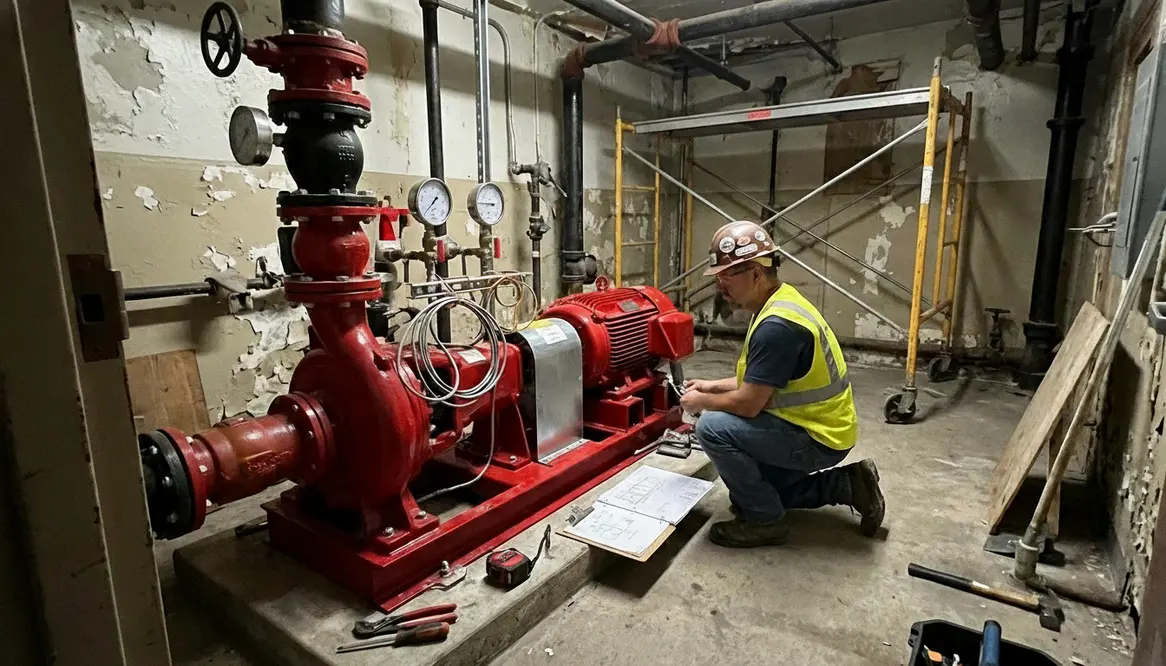
Apartment Redevelopment Fire Pump Requirements Guide
I have spent enough time around mechanical rooms to know that nothing whispers “this building is ready” quite like a well tuned fire pump. In major housing rehabs, especially large scale multifamily and high rise projects, the conversation always circles back to apartment redevelopment fire pump requirements. Not as a box to check, but as a system that protects lives, investments, and reputations. And yes, it is about as exciting as watching paint dry until the day you need it. Then it becomes the star of the show.
So let me walk you through it the way I would on a job site. Calm, clear, and with just enough humor to keep you awake.
What triggers fire pump upgrades in major rehabs
When I step into a redevelopment project, I immediately look for pressure gaps and system age. Older buildings were not designed for today’s density or code expectations. As a result, once you add floors, increase occupancy, or modernize fire protection systems, the existing pump often cannot keep up.
Moreover, local codes evolve. What passed inspection twenty years ago might now earn a raised eyebrow and a firm “fix it.” In many cases, upgrades are not optional. They are required to meet current fire flow demands and safety standards.
And then there is the simple truth. Equipment wears out. A pump that has been sitting quietly since the era of flip phones may still run, but reliability is a gamble. In commercial scale housing, gambling with fire protection is a bad bet.
How I evaluate existing fire pump systems during redevelopment
I start with performance, not paperwork. I want to know what the pump actually does under load. Therefore, flow testing becomes the foundation. It tells me if the system can deliver the pressure and volume needed for modern fire suppression.
Next, I look at infrastructure. Piping conditions, electrical supply, and controller compatibility all matter. Even a strong pump can fail if the support systems are outdated.
Finally, I compare findings against apartment redevelopment fire pump requirements and local authority expectations. This step connects real world performance to compliance. It also prevents surprises later, which developers appreciate almost as much as staying on budget.
Designing upgrades that actually meet modern demands
Upgrading a fire pump is not about swapping out old for new. It is about designing a system that fits the building’s current and future needs. So I focus on right sizing first. Oversized pumps waste energy and strain systems. Undersized ones simply fail when it counts.
Then I consider redundancy. In large residential buildings, downtime is not acceptable. Backup systems or split configurations can keep protection active even during maintenance.
Controls also matter more than people think. Modern controllers provide monitoring, alerts, and integration with building systems. In other words, they turn a silent machine into a communicative partner. Think less “mystery box” and more “Jarvis from Iron Man,” but for water pressure.
Cost, compliance, and long term value in one view
Upfront investment
I always remind stakeholders that fire pump upgrades are capital expenses with long tails. Yes, the initial cost can feel steep. However, cutting corners here tends to cost more later through fines, retrofits, or worse.
Compliance alignment
Working closely with local authorities ensures that designs meet both code and interpretation. This reduces approval delays and keeps projects moving.
Operational savings
Efficient pumps and smart controls reduce energy use and maintenance frequency. Over time, those savings add up quietly in the background.
Asset protection
A reliable fire pump system protects not just people, but the entire property investment. That kind of value is hard to overstate.
When you line these factors up, the upgrade stops looking like a burden and starts looking like a strategic move.
Common mistakes I see in fire pump upgrade projects
First, I see teams underestimate demand. They assume the old system was “good enough,” which is a phrase that has never ended well in construction.
Second, coordination gets overlooked. Fire protection does not exist in isolation. It interacts with electrical systems, structural layouts, and water supply. When teams fail to communicate, problems show up late and cost more.
Third, testing gets rushed. I get it. Everyone wants to wrap up and move on. But skipping thorough testing is like buying a parachute and never checking if it opens. Not ideal.
Lastly, some projects ignore future scalability. Buildings evolve. A system that cannot adapt will need another upgrade sooner than expected.
Meeting apartment redevelopment fire pump requirements without overbuilding
I approach this with balance. The goal is not to build the biggest system possible. It is to meet requirements precisely while leaving room for growth.
So I rely on detailed calculations, accurate modeling, and clear communication with code officials. This ensures the system meets fire flow and pressure needs without unnecessary excess.
And yes, there is a quiet satisfaction in getting it just right. Like tuning an instrument until every note lands perfectly. Except instead of music, you get water pressure that can save lives. Not quite a Grammy moment, but close in our world.
FAQ about fire pump upgrades in major housing rehabs
Conclusion
If you are planning a major housing rehab, do not treat your fire pump as an afterthought. I encourage you to approach it as a core system that deserves careful planning and expert input. When done right, it protects your building, supports compliance, and delivers long term value. Reach out to experienced professionals who understand commercial scale systems and can guide you from evaluation to final testing with confidence.