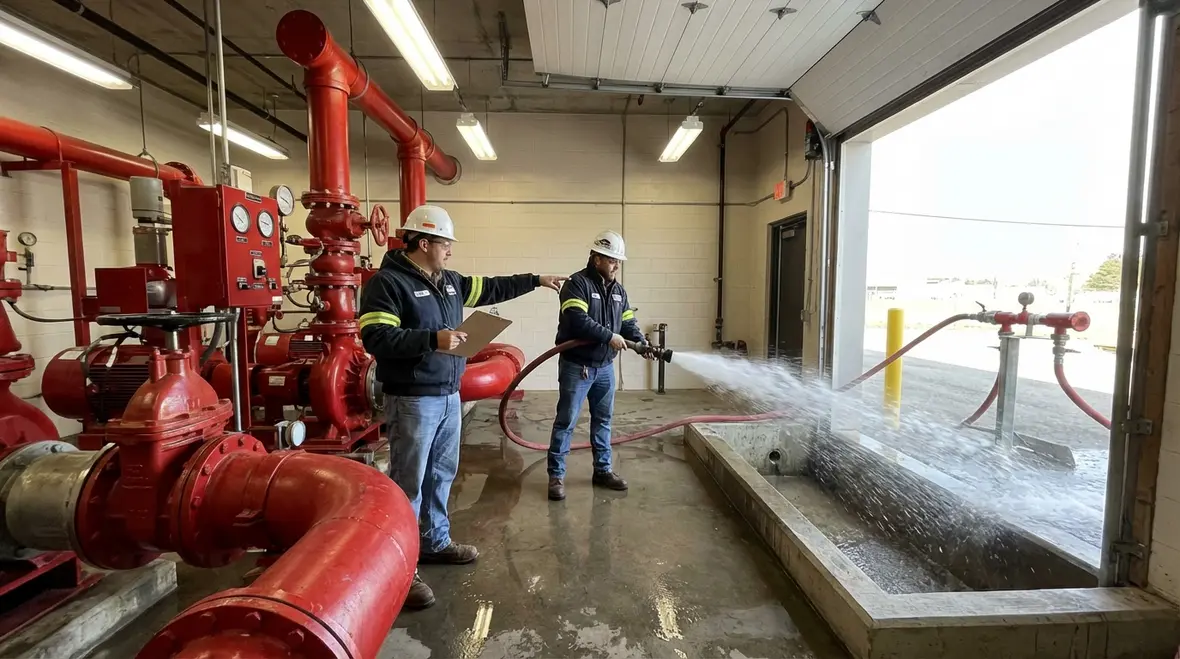
Fire Pump Flow Testing Explained Step by Step
Imagine a calm, confident narrator guiding you through a rugged but oddly poetic fire pump room, the air thick with purpose, the smell of metal and diesel lingering like a plot twist in a Tarantino film. You’re in the right place, my friend.
Today, we unravel the mystery behind the fire pump flow test procedure commercial property managers, building engineers, and facility directors often whisper about as if it’s black magic—or worse, a surprise inspection. And trust me, it’s neither. It’s just essential. Like batteries in your kid’s Christmas toy or coffee on a Monday morning.
If you manage a high-rise, manufacturing plant, or commercial complex where life safety systems are no joke (think Die Hard but with sprinklers), keep reading. This is your no-fluff, no-nonsense, professionally sarcastic guide to understanding fire pump flow testing, one deliberate step at a time.
What Is Fire Pump Flow Testing and Why Should You Care?
If your building has a fire pump, you already know it’s there to do one job: get the right amount of water where it needs to be, fast. But how do you know it’ll show up for work when it counts?
Enter: fire pump flow testing. This is the process where we simulate a fire (without the fire), crank the pump to its limits, and see how it performs. No, it’s not just for fun. It’s for compliance with NFPA 25 and your insurance carrier’s peace of mind—not to mention those pesky local authorities who tend to frown upon untested life safety systems.
Think of it as the physical exam your fire pump never asked for but absolutely needs. We measure pressure outputs, flow rates, and how your pump behaves under load. If it flunks? Well, let’s just say no one wants a lazy pump during a five-alarm fire.

The Fire Pump Flow Test Procedure Commercial Clients Can Expect
Now that we’ve set the stage, let’s get elbow-deep into the actual fire pump flow test procedure commercial and industrial facilities go through. I’m breaking this down like a cooking show—minus the apron, plus a clipboard.
Step 1: Notify the Stakeholders
Before anyone touches a valve, we alert building management, the fire department, and whoever else may care that a test is about to go down. Water’s going to flow, alarms may be triggered, and your janitor might panic if he’s not in the loop.
Step 2: Visual Inspection
Before firing up the beast, we do a walkaround. Checking oil levels, electrical connections, pressure gauges—you know, pretending we’re pit crew for a water-delivery NASCAR team.
Step 3: Setup & Safety
We connect calibrated flow meters to the test header. We check the drain paths so we’re not flooding your neighboring Starbucks, and we equip ourselves with radios and PPE. It’s more Mission: Impossible than you think.
Step 4: Begin Testing at Churn
With the pump running but with no flow, we capture the churn pressure. This is like asking the pump how strong it is when it’s just sittin’ there flexin’ without lifting any weight.
Step 5: 100%, 150% Flow Measurements
We crank open valves to simulate the fire conditions. First to 100% rated flow, then to 150%. We monitor performance under pressure and check for signs of fatigue or mechanical failure. Imagine The Rock bench pressing… now triple it in water force.
Step 6: Record & Report
Once we shut it all down (without any Marvel-level catastrophe), we document it—flow vs. pressure, RPMs, amp draws, discharge pressures, the whole enchilada. Then, we draft a report that’s easier to understand than your average IKEA manual.
When Exactly Do You Need a Fire Pump Flow Test?
You’re not supposed to wait until the pump sounds like a dying blender. The National Fire Protection Association (NFPA 25) recommends that commercial and industrial facilities perform the flow test annually. But let’s peel that onion just a bit more:
- After a major repair or component replacement
- Following power supply upgrades or utility maintenance
- Before final occupancy in a new commercial building
- When there’s been a change in water supply or system demand
If your building’s changed in use, size, or structure—yeah, schedule a test. It’s cheaper than hiring a team of investigators post-incident when the fire pump fails and the sprinklers are just standing there like decorative ceiling boogers.

Interpreting Results Without Needing a Degree in Fluid Dynamics
So we run the test and you’ve got yourself a beautiful graph showing water pressure vs. flow. But wait—what do you actually do with those squiggly lines?
The results are compared to the factory curve—kind of like checking your credit score against your bank’s approval threshold. If your pump achieves:
- 100% flow at rated pressure: You’re golden
- 95% flow: Acceptable, but consider future inspections more frequently
- Below 91%: Red flag, wave it like you’re in Monaco
If readings are off, we start looking at suction pressures, impeller wear, motor health, or pipe obstructions. Or maybe your pump’s just tired—it’s allowed. But don’t wait it out. Repair it or replace it. Lives matter.
Routine Maintenance vs. Flow Testing: Know the Difference
This one deserves a quick dual-column reality check:
| Routine Maintenance | Flow Test Procedure |
|---|---|
| Weekly or monthly checks | Annual requirement |
| Visual inspections, battery tests, fuel levels | Dynamic system performance under full flow |
| Generally non-invasive | Simulates real fire conditions |
| Carried out by in-house maintenance | Performed by qualified professionals |
Both are vital. But don’t confuse one for the other. That’s like thinking brushing your teeth is the same thing as seeing the dentist. Good luck explaining that at your next check-up.
How to Choose the Right Testing Vendor
This is not the gig you outsource to your cousin Lou who once installed his own sprinkler at a backyard BBQ pit. Choosing a professional partner matters. Here’s what to look for:
- Certified and insured fire protection contractors
- Experience specifically with commercial or industrial settings (no mom-and-pop shops for your 10-story hotel, please)
- Modern testing equipment with calibrated flow meters
- Detailed, code-compliant reporting with digital logs
- Responsive communication and emergency support
If they bring donuts to the meeting? Huge bonus. But let’s stick to competence first.
Pro Tip
Ask potential vendors how they handle documentation, retesting after repairs, and how familiar they are with NFPA 25 and your local authority having jurisdiction (AHJ). Vague answers are your cue to keep shopping.
FAQ: Your Burning Questions (Pun Intended)
Final Thoughts and Time to Act
If your facility’s fire pump hasn’t been flow tested in the last twelve months—add it to your to-do list right now. Call in a certified team. Demand a clear report. Know what’s powering your protection. At Firepumps.org, we specialize in service for commercial and industrial buildings only. Because let’s face it… your system deserves better than a wing and a prayer. Get the assurance your asset protection strategy needs today.