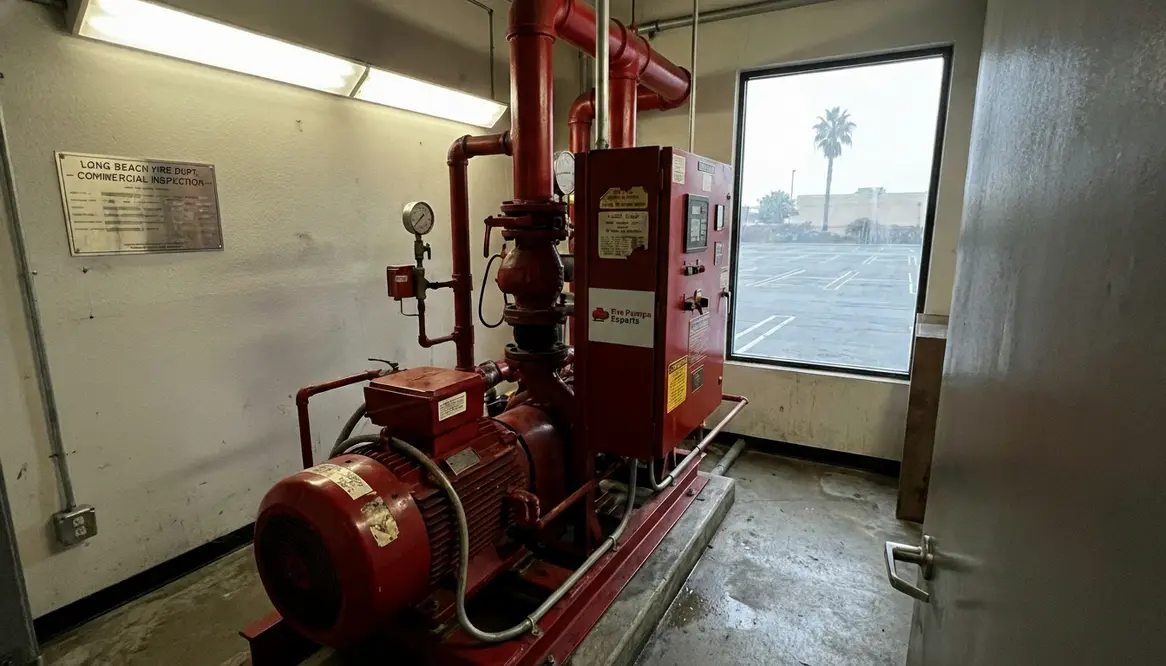
Fire Pump Churn Condition Long Beach Risks
I have spent years around fire protection systems, and I can tell you this: few things are as quietly dangerous as a fire pump churn condition Long Beach operators overlook. At first glance, everything seems calm. The pump hums, the gauges behave, and nobody is running for a wrench. Yet beneath that calm, heat builds like a slow-burning plot twist in a classic thriller. And in a city like Long Beach, where commercial and industrial facilities rely on consistent protection, that hidden heat can turn into real trouble if ignored.
What happens during a fire pump churn condition Long Beach?
When I talk about churn, I mean the pump is running without moving water. No flow, no discharge, just energy cycling inside the pump casing. As a result, all that mechanical energy converts into heat. It is a bit like revving your car engine in neutral for too long. Sure, it sounds impressive for a moment, but eventually something overheats.
In large buildings across Long Beach, this situation often appears during testing or system readiness checks. However, if operators let the pump run too long in this idle state, temperatures climb fast. Consequently, seals wear down, internal components expand, and efficiency drops. Over time, that harmless hum starts writing a repair bill.
And yes, I have seen pumps get hot enough to make you reconsider your career choices. It is not quite Hollywood explosion territory, but it is not far from a maintenance nightmare either.
How does heat buildup affect commercial fire systems?
Heat buildup is not just a technical footnote. It directly impacts system reliability. In high rise offices, warehouses, and industrial plants, fire pumps must respond instantly. However, excessive heat weakens internal parts and reduces lifespan.
Because of this, even a short period of churning can lead to long term damage. The water inside the pump begins to heat rapidly. Then, vapor pockets may form, which introduces cavitation. If you have ever heard a pump sound like it is chewing gravel, that is cavitation saying hello.
Moreover, repeated exposure to high temperatures stresses seals and bearings. Eventually, leaks develop or components fail during the worst possible moment. And let us be honest, fire emergencies are not known for their forgiving timing.
Therefore, managing heat is not optional. It is essential for maintaining system integrity in major properties across Long Beach.
Preventing fire pump churn condition Long Beach in large facilities
I always tell facility managers the same thing: prevention is less glamorous than repair, but it costs far less and keeps everyone sleeping better at night. To avoid churn related heat buildup, operators need to control flow even during testing.
For example, installing a properly sized circulation relief valve allows a small amount of water to move continuously. This simple step keeps temperatures stable. Additionally, automated monitoring systems can shut down pumps if heat rises beyond safe limits.
Here is where things get practical:
Operational Habits
- Limit no flow run time during testing
- Monitor discharge temperature closely
- Schedule routine inspections
System Upgrades
- Install thermal relief valves
- Use smart sensors for real time alerts
- Upgrade aging pump components
Meanwhile, trained personnel should understand exactly how long a pump can safely operate without flow. Guesswork has no place here. This is not a cooking show where you eyeball ingredients and hope for the best.
Why Long Beach systems face unique challenges
Long Beach presents a mix of coastal conditions and dense commercial infrastructure. Because of that, fire pump systems often work harder and face environmental stress. Salt air, humidity, and heavy usage patterns all contribute to wear.
Additionally, many facilities operate around the clock. That means pumps must remain ready at all times. Consequently, even minor inefficiencies during churn conditions can escalate quickly.
I have noticed that older buildings, in particular, struggle with outdated configurations. While they may meet minimum standards, they often lack modern safeguards against heat buildup. And in a city that never really slows down, outdated systems can fall behind fast.
So, adapting to local conditions is not just smart. It is necessary for maintaining compliance and ensuring long term performance.
Can ignoring churn conditions lead to system failure?
Short answer: yes. Slightly longer answer: absolutely yes, and it will not be subtle about it.
When heat builds unchecked, internal damage accumulates quietly. Then one day, during an emergency or routine test, the pump fails to deliver expected pressure. That is when small oversights turn into big consequences.
Furthermore, insurance inspections and compliance audits often flag signs of heat related wear. This can lead to costly repairs or even system shutdowns until issues are resolved.
Think of it like ignoring a warning light on your dashboard. It might not stop you today, but eventually it will leave you stranded. And unlike a car, a fire pump protects lives and major assets. The stakes are higher, and the margin for error is much smaller.
Best practices for managing a fire pump churn condition Long Beach
Across Long Beach, the facilities that handle churn conditions well usually follow a consistent playbook. They document acceptable no flow durations, tie pump controls into building automation systems, and keep clear logs of every test. They also train operators to treat a fire pump churn condition Long Beach scenario as a controlled risk, not background noise.
- Define specific limits for churn time during weekly or monthly testing.
- Use circulation paths or bypass lines to maintain a minimum flow whenever possible.
- Track discharge and casing temperature alongside pressure readings.
- Review manufacturer documentation for safe operating envelopes.
- Coordinate with licensed fire protection contractors who understand local conditions.
If internal staff lack specialized experience, partnering with a firm focused on fire pumps can close the gap quickly. Resources at https://firepumps.org help explain why a well managed fire pump churn condition Long Beach strategy is critical for long term reliability and compliance.
Conclusion: Keeping systems cool and ready
I always come back to one idea: control the heat, and you control the risk. A well managed system avoids the dangers of churn and stays ready when it matters most. If you oversee a commercial or industrial property in Long Beach, now is the time to review your setup, upgrade where needed, and bring in experts who understand these conditions. Because when the moment comes, your fire pump should perform flawlessly, not audition for a disaster movie.