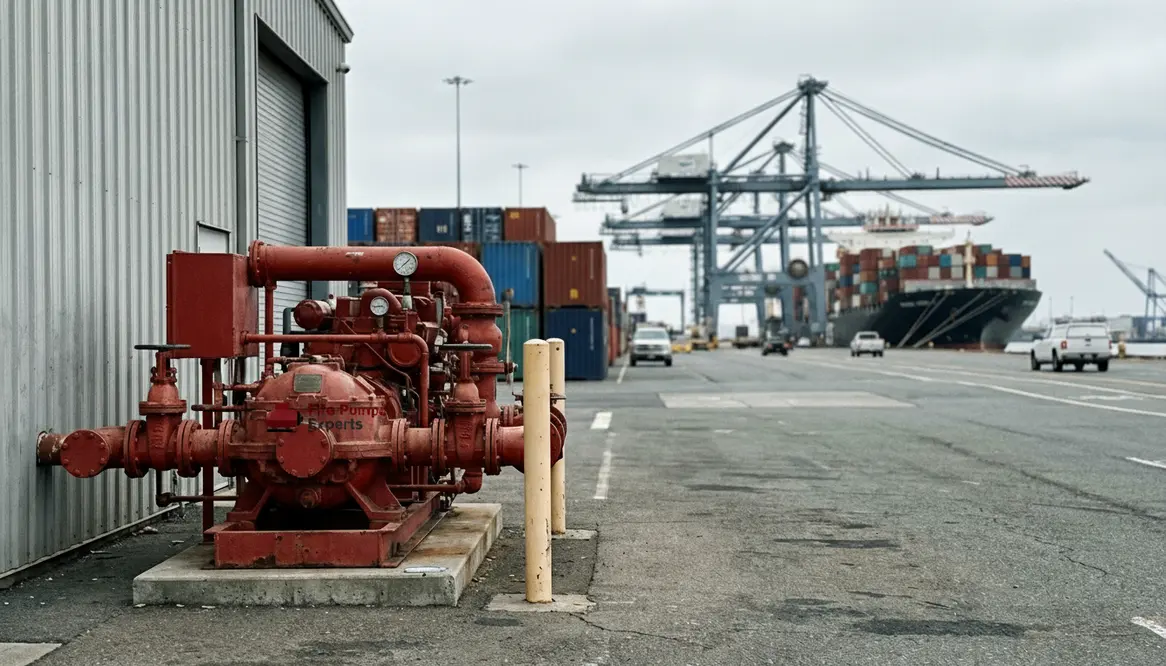
Port Fire Pump Systems Oakland for Reliable Safety
Where industrial scale pressure meets unforgiving coastal reality, protection has to be both rugged and relentlessly reliable.
I have spent years around heavy industry, and if there is one place where precision meets pressure, it is the Oakland waterfront. Here, cargo does not sleep, and neither should safety systems. When I talk about port fire pump systems Oakland, I am talking about the silent guardians that stand ready while cranes swing and containers stack like a real life game of Tetris. In a place where one spark can outrun common sense, these systems carry a responsibility that is both technical and deeply human.
In Oakland’s ports, one incident can escalate faster than anyone is comfortable admitting. That is why port fire pump systems Oakland are engineered not just to meet the minimum, but to confront worst case scenarios head on, day and night, without complaint and without pause.
What makes fire protection different at busy port facilities?
At a glance, a fire pump system is just equipment. However, at a port, it becomes part of a living ecosystem. You have salt air, constant vibration, heavy vehicle movement, and round the clock operations. Therefore, every component must endure more than just occasional use.
In Oakland, I have seen how corrosion alone can quietly eat away at performance. Meanwhile, fluctuating water supply conditions can test even the best designs. So, I always approach port environments with one thought in mind: reliability is not optional, it is survival.
And yes, if a system fails here, it is not just a bad day at work. It is closer to a blockbuster disaster scene, minus the heroic soundtrack.
Designing port fire pump systems Oakland for industrial scale demands
When I design or evaluate systems in this environment, I focus on scale first. Ports are not small facilities. They stretch, they expand, and they evolve constantly. Consequently, the fire pump system must keep up without hesitation.
Key design priorities
- High capacity output to match large hydrant networks and suppression systems
- Redundancy so one failure does not shut everything down
- Material durability to resist saltwater corrosion
- Flexible integration with existing infrastructure and future expansions
Additionally, I always factor in real world usage patterns. Equipment does not fail on a schedule. It fails when it feels like it. Therefore, systems must be ready for peak demand at any moment.
How do I ensure reliability in harsh coastal environments?
Materials, layout, and power
I start with materials, because the ocean does not play nice. سپس I move to system layout, ensuring accessibility for maintenance teams. After that, I look at power supply. Redundant power sources are not a luxury here. They are essential.
Moreover, routine testing becomes a cornerstone. A system that sits idle too long becomes a liability. So, I encourage regular flow testing and performance verification.
The attitude problem that breaks systems
And here is a truth that might sting a little. If maintenance is treated like a chore, the system will eventually act like one. On the other hand, when it is treated like a priority, it performs like a hero.
Balancing compliance with operational efficiency
Regulations shape everything in fire protection. However, I never treat compliance as the finish line. Instead, I see it as the starting point.
In Oakland, facilities must meet strict fire codes while keeping operations smooth. Therefore, I design systems that support both goals. For example, I integrate monitoring systems that provide real time data without disrupting workflows.
Meanwhile, I ensure that inspections and testing can happen without shutting down critical operations. Because let us be honest, no logistics manager wants to pause shipments for a fire pump check unless absolutely necessary.
Two critical elements I never compromise on
System Redundancy
I always include backup pumps and alternative power sources. If one component fails, another takes over instantly. This approach keeps protection active even during unexpected breakdowns.
Smart Monitoring
I integrate advanced monitoring tools that track pressure, flow, and system health. As a result, teams can spot issues early instead of reacting to failures after the fact.
Together, these elements create a system that does not just function, but adapts. And in a port setting, adaptability is everything.
Maintenance strategies that actually work in ports
From perfect plans to practical routines
I have seen maintenance plans that look perfect on paper and fail in practice. Therefore, I focus on realism. First, I align schedules with operational rhythms. Next, I ensure that staff are trained specifically for port conditions.
Additionally, I recommend periodic system audits. These go beyond routine checks and examine long term wear and performance trends. Over time, this approach reveals patterns that standard inspections might miss.
And yes, sometimes I compare it to going to the doctor. You do not wait until something breaks to get checked. Well, most people do, but that is a different conversation.
FAQ
Conclusion
When I look at Oakland’s ports, I see more than infrastructure. I see a system that depends on precision and preparation. port fire pump systems Oakland play a critical role in that balance. If you manage a commercial or industrial facility, now is the time to evaluate your system, strengthen its reliability, and plan for the unexpected. Reach out to experts who understand these environments and build protection that works when it matters most. For deeper technical guidance on fire pumps and related standards, resources such as https://firepumps.org can support your next round of planning and upgrades.