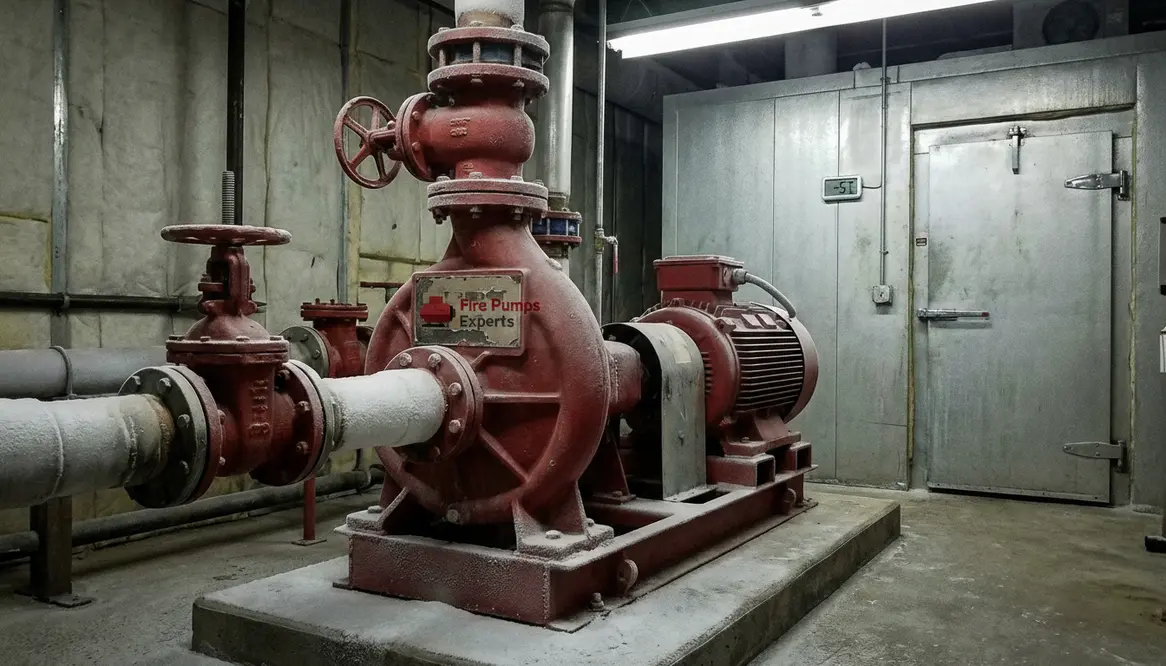
Fire Pump Freezer Warehouse Stockton Design Guide
I have spent years around industrial facilities where the air bites back, where frost clings to steel like it owns the place. In those environments, fire protection is not just a checkbox. It is survival. When I talk about fire pump freezer warehouse Stockton needs, I am talking about systems that perform under pressure, in subzero conditions, without hesitation. Because when a fire breaks out in a cold storage facility, it does not politely wait for equipment to warm up. It moves fast. And so must we.
How do I choose the right fire pump for freezer facilities in Stockton
I start with the basics, then I go deeper. Always.
First, I look at hazard classification. Freezer warehouses often store high piled commodities, and that changes everything. Then, I factor in water demand. Sprinkler density increases in cold storage because fire spreads differently in insulated spaces.
Next, I consider temperature exposure. A pump sitting in Stockton might not freeze outside, but inside a freezer facility, that is a different story. Therefore, I ensure pump rooms are heated or isolated.
Finally, I match the pump type to system needs. Electric pumps offer reliability, but diesel pumps add resilience during power outages. And let us be honest, Stockton summers can stress a grid like a plot twist in a summer blockbuster.
fire pump freezer warehouse Stockton design considerations that actually matter
I have seen designs that look good on paper but fail in practice. So I keep it grounded.
First, insulation impacts sprinkler activation. Cold air delays heat detection. Therefore, I account for that delay by ensuring sufficient pressure and flow.
Additionally, antifreeze solutions and dry pipe systems come into play. These systems require higher pump performance because they introduce delays and pressure losses.
Moreover, I never ignore pipe material. Brittle pipes in cold environments crack faster than a bad joke at a corporate meeting. So I choose materials rated for low temperatures.
And then there is redundancy. Because when one system fails, another must step in without drama.
Balancing efficiency and reliability in cold storage fire pumps
I like efficiency. Everyone does. But I never let efficiency outrun reliability.
So I size pumps correctly. Oversizing wastes energy. Undersizing risks failure. Therefore, I calculate demand precisely, using hydraulic modeling rather than guesswork.
In addition, I integrate variable frequency drives when appropriate. They help manage pressure smoothly. However, I never rely on them as a crutch. Mechanical reliability still leads the show.
Meanwhile, maintenance access matters. If a technician cannot reach a valve without performing gymnastics, the system will suffer. And no one wants a fire pump that requires a yoga certification to service.
Key components I never overlook in freezer warehouse systems
Every strong system depends on its parts. Miss one, and the whole thing weakens.
Core Components
- Pump and driver selection
- Controller with temperature protection
- Relief valves for pressure control
- Jockey pump for stability
Environmental Safeguards
- Heated pump rooms
- Insulated piping
- Freeze protection sensors
- Backup power integration
Each piece plays a role. Together, they create a system that does not panic when temperatures drop.
fire pump freezer warehouse Stockton compliance and codes I follow
I do not improvise when it comes to codes. I follow NFPA standards closely, especially NFPA 20 for fire pumps and NFPA 13 for sprinkler systems.
However, Stockton facilities also require attention to local regulations and seismic considerations. California does not sit still, and neither should your system design.
Therefore, I ensure anchoring, bracing, and flexible connections are in place. Because a fire pump that shifts during an earthquake is about as useful as a screen door on a submarine.
Additionally, I coordinate with insurance requirements. Many industrial clients carry strict underwriting conditions, and meeting those standards is non negotiable.
What mistakes do I avoid when designing fire protection for cold storage
I have seen enough missteps to write a cautionary tale.
First, I avoid underestimating water demand. Cold storage fires can escalate quickly due to packaging materials and insulation.
Second, I never ignore system testing. A pump that looks good but has not been tested under load is just a very expensive decoration.
Third, I do not cut corners on installation. Poor sealing leads to condensation, which leads to ice, which leads to failure. It is a domino effect nobody enjoys.
Finally, I stay away from outdated designs. Technology evolves, and so should our systems.
FAQ
When I plan fire protection for any fire pump freezer warehouse Stockton facility, I expect specific questions to come up over and over. The answers below are the ones I lean on in project meetings, maintenance briefings, and owner walk-throughs.
Closing thoughts and next steps
When I design a fire pump system for a cold storage facility, I treat it like a quiet guardian. It waits, it watches, and when needed, it acts without hesitation. If you are managing a large industrial property in Stockton, now is the time to make sure your system is ready. Whether you are upgrading an older fire pump freezer warehouse Stockton layout or planning a brand new build, the time to sort out the details is before the compressors start humming and the pallets roll in.
Reach out, ask the hard questions, and invest in a solution that performs when it matters most. Coordinate early with your fire protection engineer, your local fire marshal, and resources such as https://firepumps.org so that your documentation, testing, and commissioning are aligned from day one. Because in this line of work, preparation is everything, and the standard for any fire pump freezer warehouse Stockton facility should be quiet confidence, not crossed fingers.