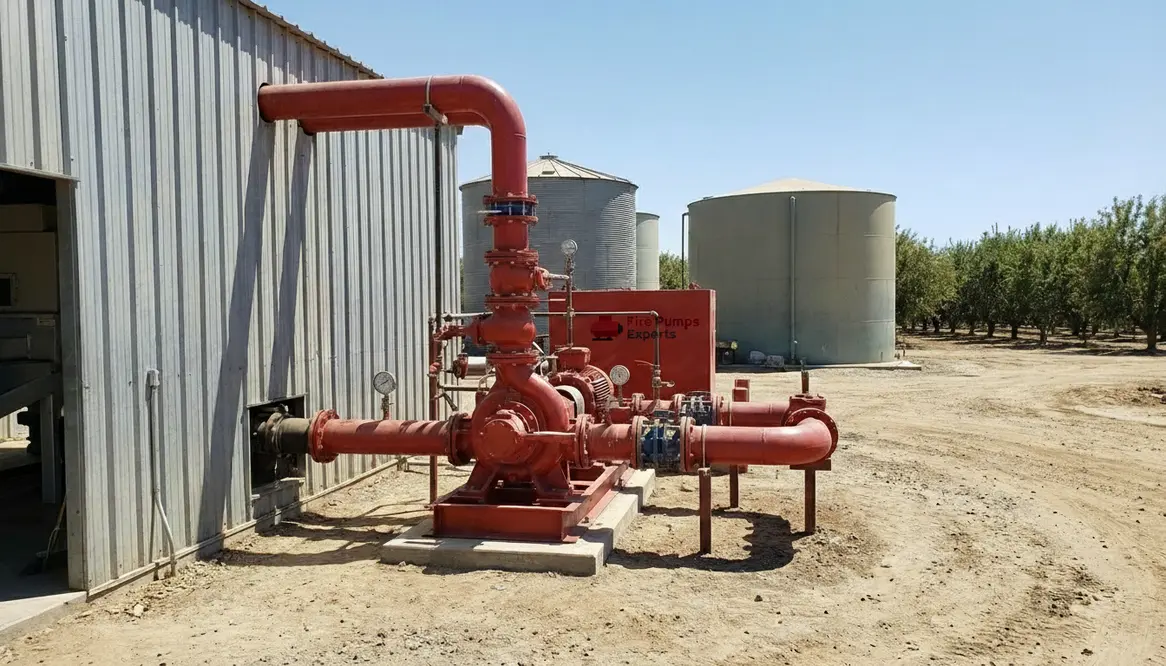
Fire Pump Agricultural Processing Fresno Guide
I have spent years walking through processing plants in California’s Central Valley, and I can tell you this much right away: when it comes to fire pump agricultural processing Fresno, there is no room for guesswork. These facilities run hot, fast, and often around the clock. One spark in the wrong place, and suddenly your almond line looks less like a business and more like a scene from an action movie. So yes, fire pump design matters. A lot. And if we are going to do it right, we need to think beyond basic compliance and into smart, durable, and tailored systems that actually match the rhythm of agricultural processing.
Why fire pump agricultural processing Fresno demands a different approach
First, let me say this clearly: agricultural processing is not your average warehouse setup. You have dust, oils, high heat equipment, and constant movement. Therefore, I design systems that anticipate chaos rather than react to it.
For example, nut processing facilities generate fine particulate dust that can ignite faster than you can say “who left the conveyor running.” Because of that, I focus on pumps that deliver consistent pressure even during peak demand. Moreover, redundancy is not optional. It is survival.
At the same time, Fresno’s climate adds another twist. Long dry seasons mean water supply planning becomes critical. So, I often integrate storage tanks and backup drivers to keep systems reliable when municipal supply gets stretched thin.
That combination — dusty, fast paced production paired with a thirsty climate — is exactly why I treat fire pump agricultural processing Fresno as its own category, not just an industrial copy and paste.
How do I size a fire pump for a processing facility in Fresno?
I start with flow demand, and I do not cut corners. The facility’s hazard classification drives everything. Then, I layer in real world conditions like pipe friction, elevation changes, and simultaneous system demands.
Next, I calculate total dynamic head. It sounds technical, but think of it like this: how hard does the pump need to work to push water where it needs to go, right when it matters most? If the answer is “barely,” I go bigger. Always.
Additionally, I account for future expansion. These facilities grow fast. Nobody wants to rip out a perfectly good pump five years later because production doubled. That is like buying a small coffee when you know you will be back in ten minutes for a refill.
A quick mental checklist I use
- What is the true worst case scenario water demand across sprinklers, hydrants, and hose lines?
- How much pressure loss will occur through long pipe runs and elevation changes?
- What happens to pressure if two or more systems activate at once?
- Where will the facility be in five to ten years, and can this pump grow with it?
Core components that keep systems dependable
When I design a system, I think in layers. Each component has a job, and together they form a safety net that catches problems before they escalate.
Primary elements
- Electric or diesel fire pump
- Controller with clear diagnostics
- Reliable water source connection
- Pressure sensing lines
Support systems
- Backup power or diesel driver
- On site water storage tanks
- Jockey pump for pressure stability
- Monitoring and alarm integration
Meanwhile, I always stress maintenance access. A perfectly engineered system is useless if no one can service it without performing acrobatics worthy of a superhero movie.
Designing for Fresno’s water realities and infrastructure
Fresno brings unique challenges. Water supply can fluctuate, and infrastructure varies across industrial zones. Because of that, I rarely rely on a single source.
Instead, I design hybrid systems. For instance, I combine municipal supply with on site storage. Then, I ensure the pump can draw from either without hesitation. This approach keeps operations stable even when external conditions are not.
Furthermore, I consider seismic factors. California does not exactly sit still, and your fire protection system should not fail when the ground decides to dance. Flexible connections and proper anchoring make a huge difference.
When planning fire pump agricultural processing Fresno projects, I also look closely at how far the nearest reliable water infrastructure really is, not just what the map claims. Distance, pressure zones, and shared demand with other users all impact how confidently your pump can perform when everything is on the line.
Fire pump agricultural processing Fresno compliance and beyond
Yes, codes matter. NFPA standards guide the foundation of every design I create. However, I do not stop at “meets code.” That is like passing a test with the lowest possible grade and calling it a day.
I go further by aligning systems with insurance expectations and operational realities. For example, I often recommend higher capacity pumps or additional redundancy in high value facilities. The goal is simple: keep production running and losses minimal.
Additionally, I integrate monitoring systems that provide real time data. Because if something starts to go wrong, I would rather know immediately than read about it in a report later.
Going past “good enough”
In practice, that means reviewing how your fire pump agricultural processing Fresno layout interacts with actual production schedules, seasonal shifts, and staffing patterns. A system that technically meets code but shuts down your line for every minor glitch is not protecting your bottom line the way it should.
It also means verifying documentation, testing routines, and remote notifications are aligned so that when a pump controller throws an alarm at 2 a.m., the right person knows exactly what to do without guesswork.
Keeping systems efficient without overengineering
Now, let’s address a common temptation. Bigger is not always better. I have seen systems so oversized they behave like a sports car stuck in traffic. Impressive, but inefficient.
So, I strike a balance. I design pumps that meet demand with room to grow, but without unnecessary strain on energy or maintenance budgets. Variable frequency drives can help in some cases, although I apply them carefully to avoid compromising reliability.
In addition, I simplify where possible. Complex systems fail in complex ways. Simple systems, on the other hand, tend to behave exactly as expected. And in fire protection, predictability is king.
Where efficiency actually pays off
- Right sizing pumps so they do not short cycle or waste energy
- Standardizing components so replacement parts are easy to source
- Designing clear layouts so technicians can troubleshoot quickly
- Using modern controllers that log data and trend performance over time
If you want a deeper technical breakdown of pump options and standards, resources like https://firepumps.org can be helpful, especially when you are comparing equipment lines for a new installation.
FAQ
Conclusion
If you are running a processing facility in Fresno, you already know how quickly things can change. That is why I design fire pump systems that stay ready, steady, and dependable no matter what the day throws at them. When you are ready to upgrade or build new, I am here to help you protect your operation with confidence, clarity, and a system that works as hard as you do.