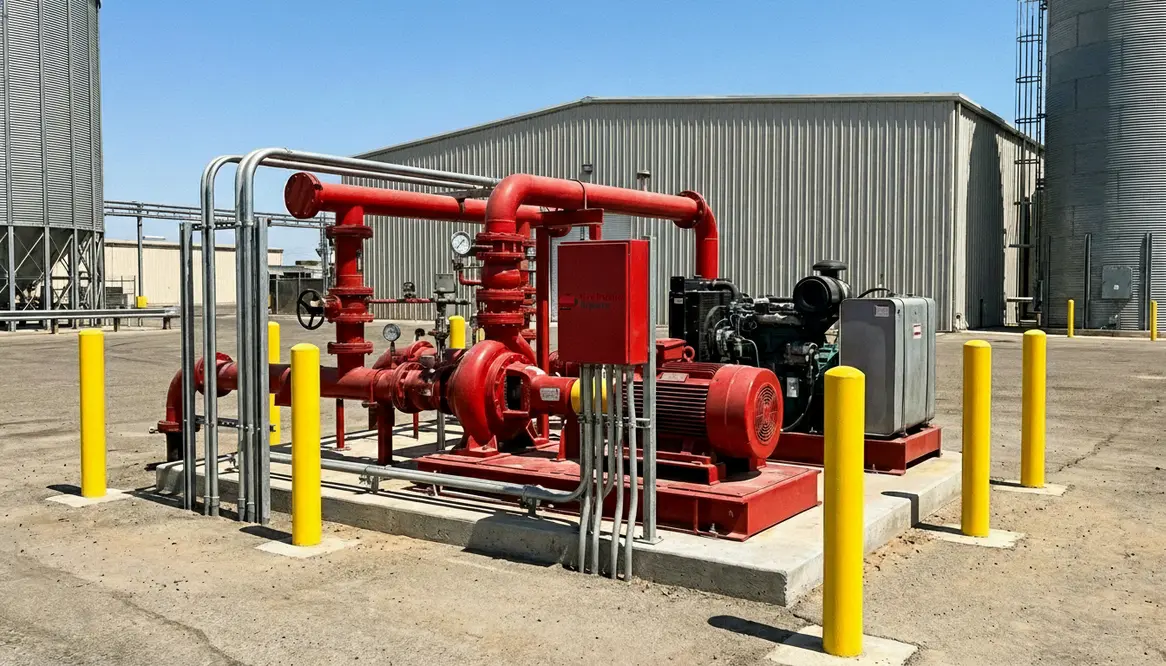
Fire Pump Food Plant Bakersfield Systems Guide
I have spent enough time around industrial sites to know one truth: when things go wrong, they rarely whisper. They roar. And in a place like Bakersfield, where food manufacturing plants operate with precision and scale, fire protection is not a background detail. It is the main character waiting quietly in the wings. That is where fire pump food plant Bakersfield systems step in, steady and ready, like a seasoned actor who never misses a cue.
Today, I will walk you through the types of fire pumps used in these facilities, why they matter, and how they keep production lines safe without ever asking for applause. And yes, we might have a little fun along the way. Even serious equipment deserves a moment in the spotlight.
What fire pumps are used in food manufacturing plants in Bakersfield
Let me answer this the way most people would ask it in a search bar. Food manufacturing facilities in Bakersfield rely on a few primary fire pump types, each chosen for a specific role. While the goal stays the same, deliver water fast and strong, the path to that goal can differ.
First, I often see centrifugal fire pumps. These are the workhorses. They move water with speed and consistency, making them ideal for large scale systems. Then there are vertical turbine pumps, which shine when water sources sit below ground. Bakersfield facilities sometimes pull from wells, and these pumps handle that job like a pro.
Additionally, split case pumps are common in industrial settings. They offer reliability and easy maintenance, which plant managers appreciate more than their morning coffee. And finally, end suction pumps appear in smaller or more targeted applications within a facility.
Each type fits into a larger safety strategy. No guesswork. No shortcuts.
How I choose the right fire pump for a food plant
Choosing a fire pump is not like picking a blender off a store shelf. Although, if it were, I imagine the packaging would promise something like extreme fire suppression power in bold letters.
I always start with water supply. If the facility depends on underground sources, vertical turbine pumps become essential. However, if the water supply is stable and above ground, centrifugal or split case pumps often take the lead.
Next, I look at system demand. Food manufacturing plants are not small operations. They require high pressure and consistent flow. Therefore, I match pump capacity to the facility size and hazard level.
Finally, I consider reliability. Because downtime in a food plant does not just pause production. It can spoil inventory, disrupt supply chains, and create safety risks. That is why many facilities in Bakersfield invest in redundant systems. One pump works, another stands ready. Like Batman and Robin, except both wear steel and move water instead of fighting crime.
Key differences between electric and diesel fire pumps
Electric fire pumps
These pumps connect directly to the facility power supply. They run quietly, require less maintenance, and fit well in plants with reliable electrical infrastructure. Moreover, they start quickly and operate smoothly, which makes them a favorite in modern facilities.
Diesel fire pumps
Diesel pumps bring independence. They do not rely on external power, which makes them essential backup systems. In fact, I often see them installed alongside electric pumps. If power fails, the diesel unit takes over without hesitation. Think of it as the generator that never complains.
Both options serve a purpose. And in many fire pump food plant Bakersfield configurations, they work together to ensure no single point of failure exists.
Why compliance drives every decision
Now, let us talk about something that keeps facility managers awake at night. Compliance. It may not sound exciting, but it holds everything together.
Food manufacturing plants must follow strict fire codes and insurance requirements. Therefore, every fire pump food plant Bakersfield setup must meet standards set by NFPA and local authorities. This includes testing, maintenance, and system design.
I have seen facilities treat compliance like a checklist. That approach works, but only to a point. The smarter operators treat it as a living system. They test pumps regularly, monitor performance, and address issues before they grow.
Because when an inspector walks in, you want confidence, not crossed fingers.
The role of maintenance in long term performance
Fire pumps are not decorative. They do not exist to look impressive in a mechanical room. They exist to perform under pressure, literally.
That is why maintenance plays a critical role. I always recommend scheduled testing, including weekly churn tests and annual flow tests. These checks ensure the pump delivers the required pressure and flow when needed.
Additionally, components like valves, controllers, and fuel systems must stay in top shape. A pump is only as strong as its weakest part. And trust me, that weak part will choose the worst possible moment to fail if ignored.
So yes, maintenance may feel routine. However, it is the quiet hero behind every reliable system in a fire pump food plant Bakersfield operation.
FAQ about fire pump systems in food facilities
Final thoughts and next steps
When I look at fire protection in food manufacturing plants, I see more than equipment. I see a system designed to protect people, products, and operations without hesitation. If you manage or design a facility in Bakersfield, now is the time to evaluate your setup. Reach out to experienced professionals, review your current system, and make sure your fire pump solution stands ready. Because when it matters most, preparation is everything for any fire pump food plant Bakersfield operation.