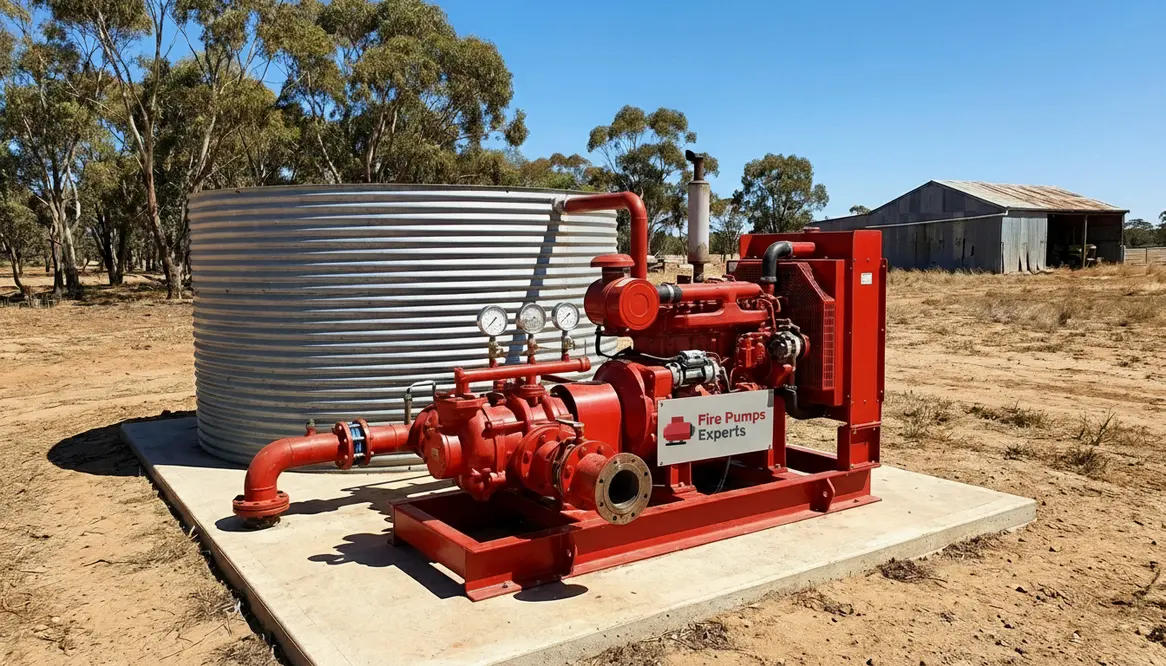
Fire Pump Rural Water Supply Australia Guide
I have spent enough time around pumps, pipes, and pressure gauges to know one simple truth. When it comes to fire pump rural water supply Australia, things get real very quickly. Out in the wide, dry stretches where hydrants are more myth than reality, performance is not just a metric. It is survival. And if you think a city setup works the same way out here, well, that is like bringing a spoon to a barbecue and expecting to flip steaks. Let me walk you through what actually matters, without the fluff.
Understanding Fire Pump Performance in Rural Water Supply Conditions in Australia
In rural Australia, water is not always sitting politely in a pressurized main waiting to be called into action. Instead, I often deal with dams, tanks, bore systems, and sometimes sources that behave like they woke up on the wrong side of the bed.
Because of that, pump performance becomes less about peak specs and more about reliability under imperfect conditions. I focus on suction lift, flow consistency, and how well the system handles variable supply. Moreover, commercial and industrial facilities cannot afford hesitation. A processing plant or large warehouse needs steady pressure, even if the source fluctuates.
And yes, I have seen pumps struggle like a gym newbie on leg day when suction conditions are poorly planned. It is not pretty.
What challenges affect rural fire pump systems the most
First, water availability is unpredictable. Unlike urban systems, rural setups often depend on stored or naturally sourced water. Therefore, pumps must adapt to changing levels and potential debris.
Second, long distances between water sources and protected assets increase friction loss. As a result, I always account for pipe length, diameter, and elevation changes early in the design.
Third, power supply can be inconsistent. Consequently, diesel driven fire pumps often take center stage in rural Australia. They offer independence, which is critical when the grid decides to take a nap.
Finally, environmental conditions play their part. Heat, dust, and isolation mean maintenance must be simple and durable. Because if something fails, help is not exactly around the corner grabbing coffee.
How do I choose the right fire pump setup for remote facilities
I start with the hazard profile. Industrial sites like mining operations or large agricultural processing plants demand higher flow and pressure. Then, I evaluate the water source. Is it static storage, flowing supply, or a hybrid system?
Next, I match the pump type. Centrifugal pumps dominate, but configuration matters. End suction works for some sites, while split case or vertical turbine pumps handle deeper or more complex supply conditions.
After that, I look at compliance. Australian standards are strict for a reason. Meeting them is not optional, even if the nearest inspector is a kangaroo with a curious stare.
Finally, I design for redundancy. Because in fire protection, backup is not a luxury. It is the difference between control and catastrophe.
Design strategies that improve reliability and flow
I rely on a few core principles that consistently deliver results in rural fire pump water supply systems in Australia.
Hydraulic efficiency
I reduce friction losses by optimizing pipe sizing and layout. Straight runs beat complex routing every time.
Stable suction conditions
I ensure adequate net positive suction head. Air in the system is the silent villain no one invited.
Smart storage integration
I connect tanks and reservoirs in ways that maintain consistent supply levels.
Control systems
I use controllers that respond quickly and accurately to pressure drops.
Material durability
I select components that handle corrosion, sediment, and heat without complaint.
Routine testing access
I design layouts that make testing easy, because systems that are hard to test often do not get tested.
Additionally, I always factor in future expansion. Industrial sites grow, and the fire system should not become the bottleneck when they do.
Why performance testing matters more in rural environments
Testing is where theory meets reality. And in rural setups, reality can be… creative.
I conduct flow tests that simulate actual fire demand. This reveals pressure drops, suction issues, and control delays. Furthermore, I monitor how the system behaves over time, not just at startup.
Because a pump that performs beautifully for five minutes but fades after twenty is about as useful as a flashlight with dying batteries in a horror movie.
Regular testing also ensures compliance and gives facility managers confidence. In high value commercial and industrial properties, that confidence is not optional.
Fire pump rural water supply Australia compliance and standards
Australia maintains strict guidelines for fire protection systems, especially in remote environments. I align every system with relevant standards, including pump performance curves, installation requirements, and testing protocols.
Moreover, insurers often require proof of compliance for large facilities. So, a properly designed fire pump rural water supply Australia system does more than protect assets. It supports operational continuity and financial security.
And yes, paperwork may not be glamorous, but it beats explaining to stakeholders why a preventable failure occurred.
FAQ
Below are some common questions that come up when planning or upgrading a fire pump rural water supply Australia system for remote industrial or commercial facilities.
Final thoughts and next steps
If you manage a large facility in a remote area, do not leave fire protection to guesswork. I design systems that perform when it matters most, even under harsh Australian conditions. Reach out today, and let us build a solution that protects your assets, meets compliance, and gives you confidence when pressure rises. Because in this line of work, reliability is not just a feature. It is the whole point.
For further technical reading on pumps and performance principles, you can explore resources such as https://firepumps.org, then match that theory to the practical realities of your specific rural site.