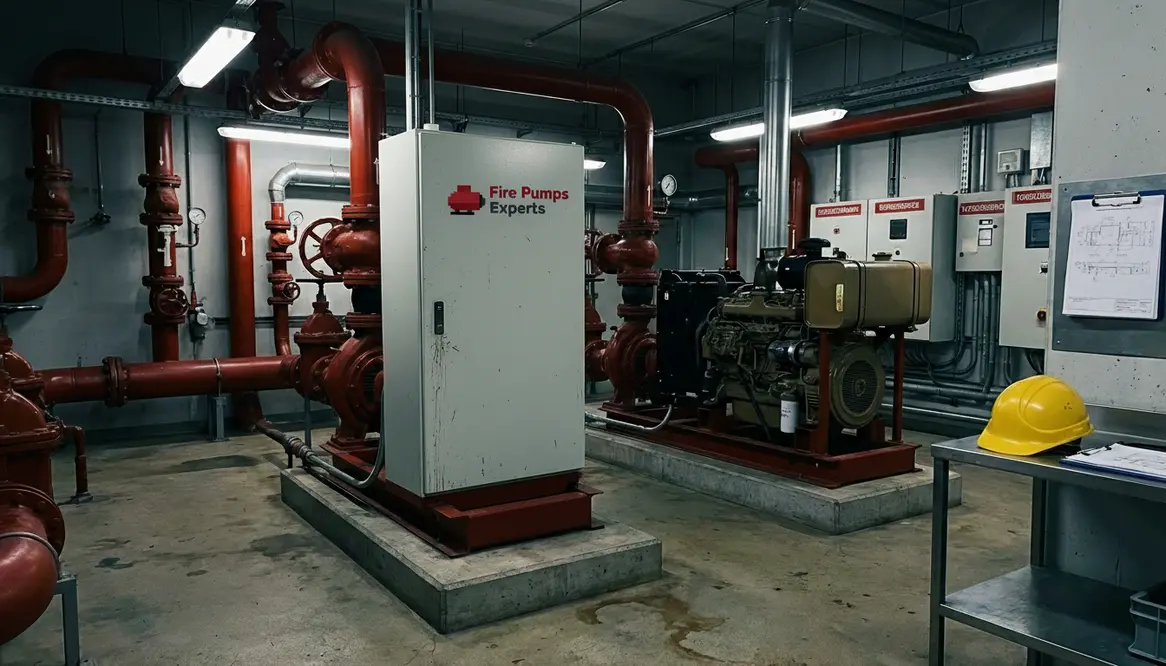
Fire Pump Industrial Germany Design Guide
I have spent years around heavy machinery, quiet control rooms, and the steady hum of systems that only get noticed when they fail. And when it comes to fire pump industrial Germany design, failure is not an option. In large scale facilities across Germany, from manufacturing plants to logistics hubs, fire protection is less about reacting and more about precision engineering. So today, I am going to walk you through how I approach designing these systems, with just enough personality to keep you awake and just enough seriousness to keep your building standing.
What makes fire pump systems in Germany unique?
First, let me answer the question I hear most often. German industrial standards are not just strict. They are precise, almost poetic in their consistency. Because of this, I design every system to align with both European norms and local codes, especially DIN standards.
Moreover, facilities here often operate with high value assets and complex layouts. Therefore, I must ensure that pump systems respond instantly, maintain pressure stability, and integrate with automated suppression systems.
And yes, while other countries might accept “good enough,” Germany tends to say, “let’s make it perfect and then improve it.” It keeps me on my toes.
Why fire pump industrial Germany standards matter
The phrase fire pump industrial Germany is more than a search term. It reflects a design culture where reliability, documentation, and lifecycle performance are treated as core requirements, not optional upgrades. When a system is engineered correctly in this context, it tends to age gracefully, stay auditable, and earn the trust of both regulators and insurers.
Core design principles I rely on every time
When I design a system, I do not start with the pump. I start with the risk. After all, a fire pump without context is like a superhero without a villain. Impressive, but slightly confused.
I focus on:
- Accurate hazard classification so I know exactly what the system must handle.
- Hydraulic calculations that ensure consistent pressure across large facilities.
- Redundancy planning because one pump is good, but two is peace of mind.
- Power reliability including diesel backups where electrical failure is a concern.
Additionally, I always design with future expansion in mind. Industrial facilities grow. And nothing ruins a good day faster than tearing out a perfectly good system because it was too small to begin with.
Risk-first thinking for fire pump industrial Germany projects
For complex sites, risk assessment is not a one-time form. I work through occupancy types, combustible loading, water supply stability, and operational patterns. When the phrase fire pump industrial Germany appears on a drawing package, it should imply that these questions have already been answered in detail and reflected in the hydraulic profile.
Designing for large scale facilities without guesswork
Now let me get practical. In Germany, industrial buildings can stretch across massive footprints. So I divide the system into zones. This way, pressure remains stable, and response times stay fast.
What I consider
- Flow demand across zones
- Pipe diameter and friction loss
- Distance from pump to hazard areas
- Water supply reliability
What I avoid
- Oversized pumps that waste energy
- Single point failure designs
- Ignoring maintenance access
- Underestimating peak demand
As a result, the system becomes both efficient and resilient. And frankly, it also keeps engineers from arguing during inspections, which is always a bonus.
Scaling fire pump industrial Germany layouts
For very long buildings or multi-building campuses, looped mains, sectional valves, and carefully placed pump houses keep losses under control. This kind of planning is where the fire pump industrial Germany approach shines: each zone is mapped, pressure is predicted, and the layout reads more like a strategy than a guess.
Fire pump industrial Germany compliance and system integration
Compliance is not a checkbox. It is the backbone of everything I design. So I align each system with German fire codes, insurance requirements, and international standards like NFPA where applicable.
However, compliance alone is not enough. I also integrate the pump system with building management systems. This allows real time monitoring, automated alerts, and faster response during emergencies.
In other words, the system does not just sit there waiting. It communicates, adapts, and performs. Think of it less like a machine and more like a very disciplined orchestra.
Digital monitoring and documentation
When fire pump industrial Germany projects are tied into modern building management platforms, trends and anomalies become visible long before a failure. Run hours, starting frequency, and pressure profiles can be logged, graphed, and reviewed during audits, making “show me the evidence” a much easier conversation.
How I choose the right fire pump setup
Choosing a pump is where engineering meets judgment. And yes, sometimes it feels like matchmaking.
I typically evaluate:
- Electric pumps for reliability and lower maintenance in stable power environments.
- Diesel driven pumps for backup and independence from electrical systems.
- Jockey pumps to maintain system pressure without cycling the main pump.
Then, I match these components to the facility’s operational risks. For example, a data center demands consistency, while a manufacturing plant may require raw power and redundancy.
Consequently, the final setup is never generic. It is tailored, precise, and built to perform under stress.
Matching pump types to industrial realities
Across the spectrum of fire pump industrial Germany applications, from chemical processing to automated warehouses, the right combination of electric, diesel, and jockey pumps is what turns a drawing into a dependable system. The art lies in choosing capacity, head, and redundancy so that no single failure leaves a critical area unprotected.
Maintenance planning is where most designs succeed or fail
I will say this plainly. Even the best design can fail if maintenance is ignored. So I build accessibility into every layout. Clear pathways, easy component access, and logical system arrangement.
Furthermore, I ensure that testing procedures are simple to execute. Weekly and monthly checks should not feel like solving a puzzle.
Because at the end of the day, a system that is easy to maintain is a system that actually gets maintained. And that makes all the difference.
Designing for decades, not just handover day
When a project carries the label fire pump industrial Germany on its specification sheets, I expect it to operate reliably through ownership changes, production expansions, and code updates. That only happens when valves are reachable, drains are sensible, controllers are readable, and test headers are placed where real people can actually use them.
FAQ
Final thoughts and next steps
Designing a fire pump system is not just engineering. It is responsibility. If you are planning or upgrading a system for a major facility, now is the time to get it right. Work with specialists who understand both performance and compliance. When you are ready, take that next step and build a system that does not just meet expectations, but quietly exceeds them every single day.