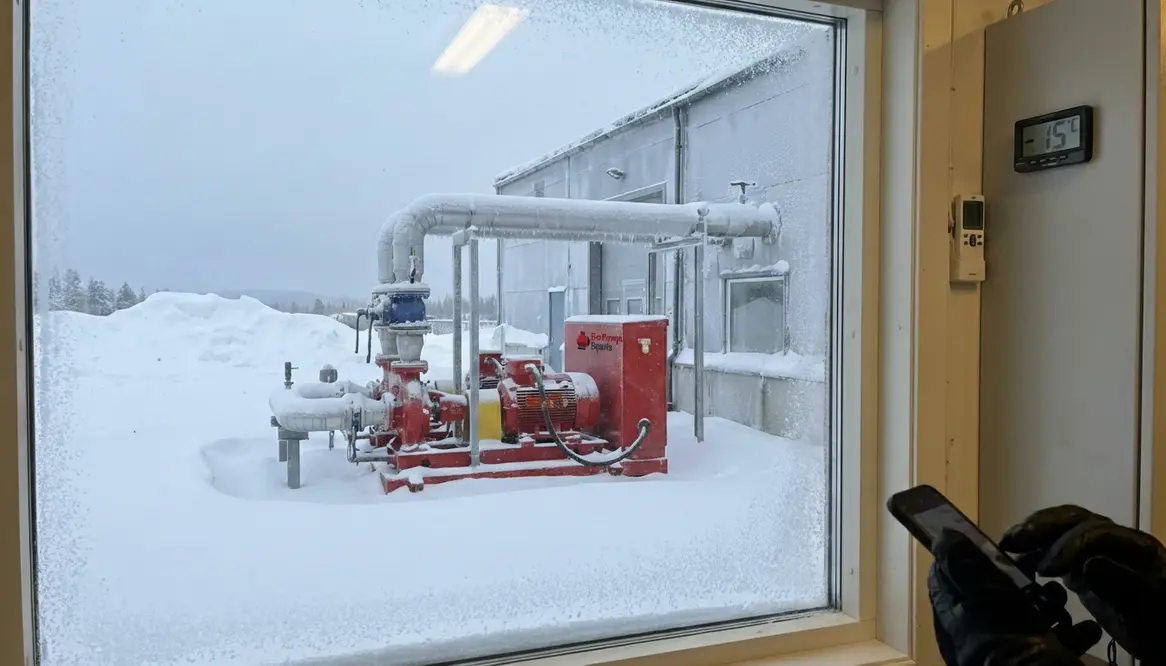
Fire Pump Cold Climate Scandinavia Reliability Guide
I have spent enough time around mechanical rooms to know this truth: equipment behaves very differently when winter decides to overachieve. In places where the cold bites like a stubborn tax bill, fire pump cold climate Scandinavia performance becomes less of a technical detail and more of a mission critical priority. Today, I want to walk you through how these systems hold the line when temperatures drop, pipes stiffen, and even steel seems to sigh a little.
Because when a fire breaks out in a commercial facility in Oslo or a data center in northern Sweden, nobody wants to hear, “Sorry, the pump is feeling a bit chilly.”
How do fire pumps behave in extreme Nordic winters?
In simple terms, cold changes everything. Water thickens slightly, lubricants lose their smooth touch, and seals contract. As a result, a fire pump that performs flawlessly at mild temperatures may struggle once the mercury dives.
However, I have seen well prepared systems handle these conditions with quiet confidence. The key lies in anticipating stress points. For instance, electric motors can draw higher current at startup in low temperatures. Meanwhile, diesel engines require preheating to avoid sluggish ignition. Therefore, engineers in Scandinavian facilities design with these realities in mind, not as afterthoughts but as starting points.
And yes, if you have ever tried starting a car in subzero weather, you already understand the drama. A fire pump is no different, except the stakes are significantly higher.
Designing for fire pump cold climate Scandinavia reliability
When I step into a well designed pump room in a Nordic industrial site, I notice one thing immediately: control. Temperature control, moisture control, and operational control.
Key design elements to keep the cold in check
- Heated pump rooms that maintain stable ambient conditions
- Insulated piping to prevent freezing and heat loss
- Jacket water heaters for diesel driven pumps
- Proper ventilation that balances warmth with airflow
Moreover, redundancy plays a starring role. Facilities often install backup pumps or dual power sources. Consequently, if one component falters, another steps in without hesitation.
I like to think of it as casting a blockbuster film. You do not rely on one actor to carry the entire story. You build a strong ensemble, just in case someone forgets their lines.
Materials and components that thrive in the cold
Not all materials enjoy winter. Some become brittle, while others lose flexibility. Therefore, choosing the right components is not just important, it is essential.
In Scandinavian applications, I often see elastomers rated for low temperatures, corrosion resistant metals, and specialized coatings that resist condensation buildup. Additionally, control panels are often enclosed and heated to protect sensitive electronics.
Then there is lubrication. Standard oils can thicken in the cold, which increases friction and wear. So, operators switch to low temperature rated lubricants that maintain flow even when the air feels like a freezer aisle.
It is a bit like dressing for winter. You would not wear a summer jacket in a snowstorm unless you enjoy making poor decisions.
Maintenance strategies that prevent cold weather failures
I cannot stress this enough: maintenance in cold climates is not seasonal. It is continuous. While some regions treat winter as a phase, Scandinavia treats it as a lifestyle.
Routine tasks that keep systems ready
- Frequent system testing under realistic temperature conditions
- Monitoring battery health for diesel engines
- Checking heater functionality in pump rooms and enclosures
- Inspecting insulation for wear or moisture intrusion
Furthermore, remote monitoring systems have become invaluable. Facility managers can track temperature, pressure, and performance in real time. As a result, they can respond before small issues turn into expensive emergencies.
Frankly, ignoring maintenance here is like ignoring a weather forecast that clearly says “blizzard.” You can do it, but you will regret it.
Operational challenges in large commercial and industrial facilities
Challenge
- Frozen suction lines
- Delayed pump startup
- Pressure fluctuations
- Ice buildup on valves
Solution
- Heat tracing and insulation
- Preheat systems and regular cycling
- Pressure regulation systems
- Protective enclosures and routine checks
In large scale properties such as manufacturing plants, airports, and logistics hubs, these challenges multiply quickly. However, with thoughtful engineering and disciplined operation, teams keep systems reliable.
I have seen facilities where everything runs so smoothly you would think winter forgot to show up. Of course, it did not. They simply prepared better.
Future trends shaping fire pump cold climate Scandinavia systems
Looking ahead, innovation continues to refine performance. Smart sensors now predict failures before they happen. Energy efficient heating systems reduce operational costs. Meanwhile, automation ensures pumps stay ready without constant manual oversight.
Additionally, sustainability is entering the conversation. Facilities want systems that perform in the cold without excessive energy use. So, designers are finding ways to balance resilience with efficiency.
It is a bit like upgrading from an old flip phone to a modern smartphone. Both make calls, but one does it with far more intelligence and style.
If you are benchmarking or comparing solutions for fire pump cold climate Scandinavia performance, pay close attention to how vendors integrate analytics, low energy heating, and remote diagnostics into a single, cohesive package.
FAQ
Final thoughts and next steps
If you manage a commercial or industrial facility in a cold region, now is the time to act. Review your system, strengthen weak points, and invest in upgrades that ensure reliability. The right fire pump strategy does not just protect assets, it protects people and operations. Connect with specialists who understand these environments and make your system winter ready before winter makes the decision for you.
For deeper technical references, case studies, and design checklists on fire pump cold climate Scandinavia projects, consult established industry resources such as https://www.firepumps.org and local regulatory guidance tailored to Nordic conditions.