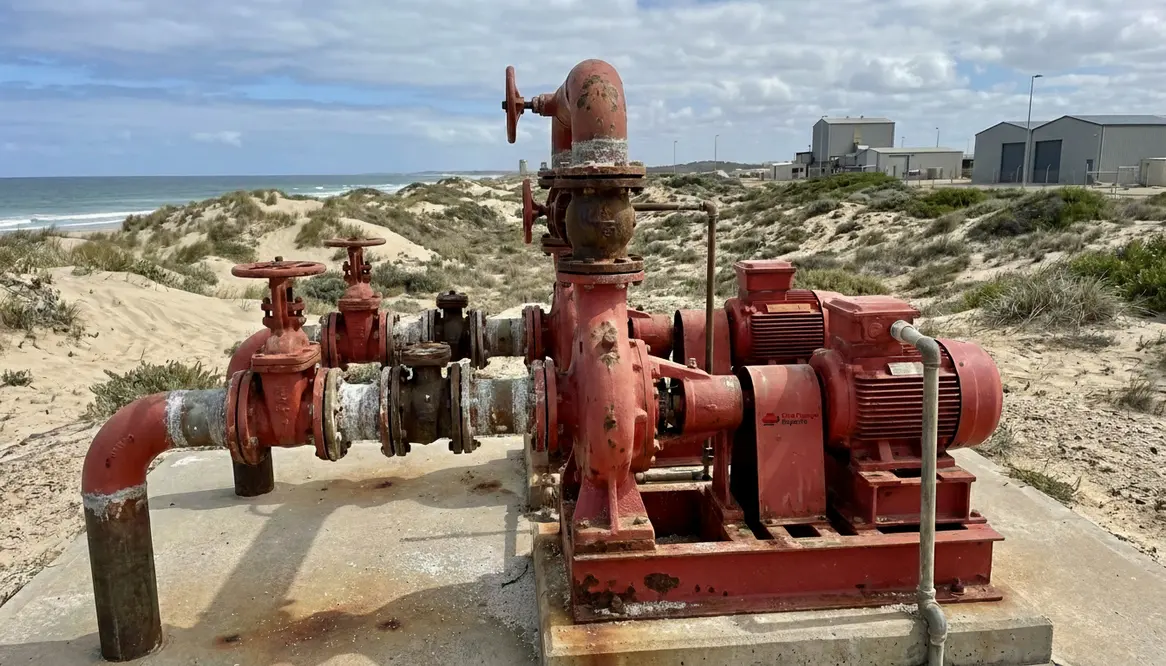
Fire Pump Coastal Corrosion Gold Coast Guide
I have spent years around fire protection systems, and if there is one thing the Gold Coast teaches quickly, it is this: the ocean is beautiful, but it is not your equipment’s friend. When I design for fire pump coastal corrosion Gold Coast environments, I treat salt air like an uninvited guest that refuses to leave. It seeps into metal, creeps into joints, and quietly shortens system life if you let it. So today, I will walk you through how I approach fire pump system design for coastal facilities, especially for large commercial and industrial properties that cannot afford failure when it matters most.
Why coastal conditions change everything
First, let me be clear. Designing inland is one game. Designing by the coast is an entirely different sport. And yes, the ocean always wins if you underestimate it.
Salt laden air accelerates corrosion, especially on exposed steel components, electrical connections, and pump casings. Therefore, I always assume that every exposed surface is under attack. Moreover, humidity adds another layer of stress, creating condensation that speeds up deterioration.
Because of this, I prioritize materials and coatings from the very beginning. Stainless steel, marine grade coatings, and corrosion resistant alloys are not upgrades. They are the baseline. Otherwise, you are essentially installing a countdown timer disguised as a fire system.
Think of the coastal environment as a constant stress test. If a material is marginal, the combination of salt, moisture, and temperature cycles will expose it quickly.
How do I choose the right fire pump system for coastal facilities?
I start with demand, always. Flow rate, pressure requirements, and hazard classification guide everything else. However, in the Gold Coast, I add another filter: survivability.
I often select diesel driven pumps for critical facilities. Why? Because during severe coastal storms, power reliability can be questionable. And when things go sideways, you want your fire pump to behave like a stubborn action hero, not someone waiting for the lights to come back on.
Additionally, I carefully consider enclosure design. A well ventilated, weather sealed pump room reduces salt exposure significantly. Yet, I avoid over sealing because trapped humidity can be just as damaging. Balance is key, like seasoning food. Too little or too much, and the whole thing falls apart.
Materials and coatings that actually hold up
Now, let us talk materials. Because this is where many designs quietly fail.
I specify epoxy coated or stainless steel piping wherever feasible. Furthermore, I avoid bare carbon steel unless it is heavily protected. Fasteners, brackets, and even small fittings receive the same attention. After all, a system is only as strong as its weakest bolt, and trust me, salt will find that bolt.
Protective coatings must be marine grade and applied correctly. I have seen expensive coatings fail simply because of poor surface preparation. It is like putting sunscreen on after you are already sunburned. Too late and not very helpful.
What I Always Specify
- Stainless steel or coated components
- Sealed control panels with corrosion protection
- Marine grade paint systems
- Proper drainage in pump rooms
What I Avoid
- Unprotected mild steel
- Poorly ventilated enclosures
- Low grade fasteners
- Ignoring environmental exposure
Fire pump coastal corrosion Gold Coast strategies that extend lifespan
When I design for fire pump coastal corrosion Gold Coast conditions, I think long term. Not just installation day, but year ten and beyond.
First, I incorporate routine maintenance access into the design. If technicians cannot easily inspect and service the system, it will be neglected. And neglect in a coastal environment is basically an invitation for failure.
Next, I specify cathodic protection where appropriate. This adds an extra layer of defense against corrosion, especially for buried or partially exposed components. In addition, I include humidity control systems in enclosed spaces to reduce condensation.
Finally, I work closely with facility managers to establish maintenance schedules. Because even the best design needs consistent care. Think of it like owning a high performance car. If you skip oil changes, do not act surprised when it stops performing like one.
Designing with maintenance in mind
In coastal installations, clear access paths, sensible valve placement, and readable labelling are not cosmetic choices. They are what keep a fire pump coastal corrosion Gold Coast installation maintainable for the long haul.
Designing for compliance and real world performance
Of course, compliance matters. Australian standards and local regulations guide every design decision. However, I do not design just to pass inspection. I design for real world scenarios.
For instance, I consider how salt buildup might affect valve operation over time. I also evaluate how emergency access might be impacted during severe weather. These details are often overlooked, yet they make a huge difference when systems are under pressure.
Moreover, I ensure redundancy where needed. Backup pumps, reliable controllers, and clear system zoning all contribute to resilience. Because when a fire event occurs, there is no time for second guessing.
When the installation is part of a broader risk strategy, I often point teams to industry resources such as https://www.firepumps.org for background reading, then adapt the concepts to the specific fire pump coastal corrosion Gold Coast environment on site.
Common mistakes I see in coastal fire pump systems
I have seen enough systems to know where things go wrong. And honestly, some mistakes are painfully avoidable.
One common issue is underestimating corrosion. Designers sometimes treat coastal exposure as a minor factor. It is not. It is the main character in this story.
Another mistake is poor installation practices. Even the best design can fail if components are installed incorrectly or left exposed during construction. Therefore, I always emphasize quality control during installation.
Lastly, skipping maintenance planning is a big one. A fire pump system is not a set and forget asset. It requires ongoing attention, especially in harsh environments. When you factor in fire pump coastal corrosion Gold Coast pressures, “set and forget” quickly becomes “set and regret.”
FAQ
Conclusion
If you are managing a commercial or industrial facility on the Gold Coast, you cannot afford to treat fire pump design as routine. Coastal conditions demand smarter choices and stronger systems. I design with durability, compliance, and real world performance in mind, so your investment holds up when it matters most. If you want a system that works as hard as you do, now is the time to get it right and build with confidence.