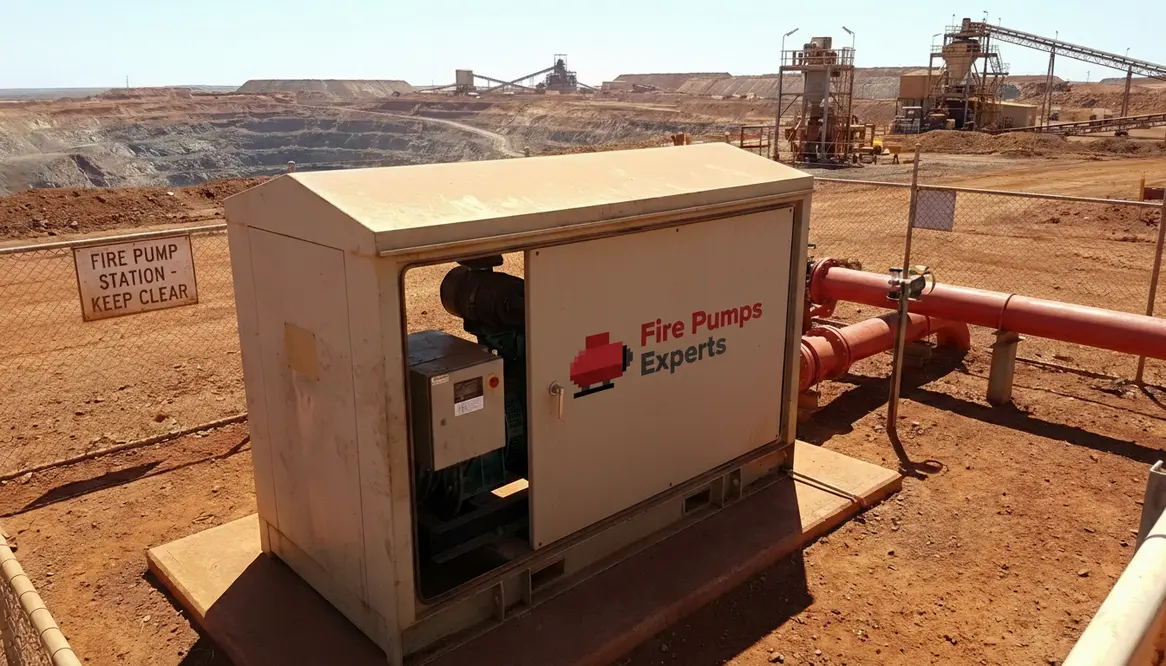
Fire Pump Mining Sites Western Australia Guide
I have spent enough time around remote operations to know one thing for certain. Out in the vast stretches of Western Australia, you do not get second chances with fire protection. When I talk about fire pump mining sites Western Australia, I am talking about systems that must perform without hesitation, even when the nearest help is hours away and the heat feels like it belongs in a Mad Max sequel. So, let me walk you through what truly matters when designing fire pump systems for these demanding environments.
What makes fire pump systems different in remote mining operations?
Right away, I focus on isolation. Unlike city installations, remote mining sites operate without reliable municipal water or emergency backup. Therefore, I design every system as if it must stand alone for days.
Additionally, environmental stress plays a starring role. Dust, extreme heat, and unpredictable power supply are not side notes. They are the main plot. As a result, I choose components that can tolerate harsh conditions without constant maintenance.
And yes, redundancy is not optional. It is survival. I often say designing for these sites is like building a spaceship. If one system fails, another must quietly step in, no drama, no alarms, just action.
Fire Pump Mining Sites Western Australia: Core Design Priorities
When I approach a system design, I begin with water supply. Without a stable source, everything else is just theory. So I prioritize dedicated storage tanks sized for worst case scenarios, not average days.
Next, I look at pump selection. Diesel driven pumps often win here, simply because they do not rely on fragile grid connections. However, I still incorporate electric pumps where feasible, creating layered reliability.
Then comes pressure consistency. Mining facilities are sprawling, and pressure drops can turn a strong system into a weak trickle. Therefore, I carefully calculate friction losses across long pipe runs and elevation changes.
Finally, I consider control systems. Automation must be simple, rugged, and predictable. If a system needs a software update to function, I already have concerns.
Key Design Focus
- Reliable water storage capacity
- Diesel and electric pump integration
- Pressure stability across large distances
- Simple, durable control panels
Environmental Challenges
- Extreme heat exposure
- Heavy dust and debris
- Remote maintenance limitations
- Unstable or limited power supply
How do I ensure reliability when maintenance crews are hours away?
I design with the assumption that no one is coming anytime soon. Because often, they are not.
First, I reduce failure points. Fewer moving parts means fewer surprises. Then, I specify high quality components that have proven themselves in industrial environments, not just in lab conditions.
Additionally, I build in monitoring systems that provide clear, actionable data. Not vague alerts. Real information that tells operators exactly what is happening.
And here is where I allow myself a small joke. If your system needs a 200 page manual to explain a fault, it has already failed. Clarity is king.
Power supply strategies that actually hold up
Power is often the quiet villain in remote mining sites. So, I treat it with respect.
Diesel engines remain the backbone for fire pump systems in these environments. They are dependable and, importantly, independent. However, I still design hybrid setups where electric pumps handle primary duties while diesel units stand ready as backup.
Moreover, I ensure fuel storage is sufficient and protected. A pump without fuel is just expensive decoration, and no one wants that conversation during an emergency.
Transitioning between power sources must also be seamless. Automatic transfer systems need to respond instantly, because hesitation is not part of the plan.
Fire Pump Mining Sites Western Australia: Compliance and performance balance
Meeting compliance is not the finish line. It is the starting point.
I always align designs with Australian standards and mining specific regulations. However, I go further by stress testing assumptions. For example, I consider peak demand scenarios, simultaneous system activation, and worst case environmental conditions.
In addition, I coordinate closely with site engineers. Fire protection cannot exist in isolation. It must integrate with overall site infrastructure, including processing plants, fuel storage areas, and accommodation facilities.
Think of it like assembling a cast for a film. Every component needs to play its role perfectly, or the entire production falls apart.
Designing for long term efficiency without cutting corners
Efficiency matters, but not at the expense of reliability. I always aim for systems that balance performance with operational cost.
For instance, I optimize pump sizing to avoid energy waste while still delivering required pressure. Oversized systems may look impressive on paper, but they often lead to unnecessary wear and higher costs.
At the same time, I plan for ease of maintenance. Accessible layouts, clear labeling, and logical system design save time and reduce errors. Over the years, I have learned that a well organized pump room can prevent more issues than the most advanced technology.
And yes, sometimes the simplest solution wins. Not every system needs to look like it belongs in a sci fi movie.
How fire pump mining sites Western Australia planning shapes real outcomes
When I am working on fire pump mining sites Western Australia projects, I keep one picture in mind: a crew on night shift with limited visibility, high winds, and a fire starting in exactly the one place everyone hoped it never would. In that moment, design decisions made months earlier either pay off or come back to haunt you.
That is why I focus on predictable performance. Clear hydrant layouts, logical valve placement, and intuitive pump controls mean operators can act fast, even under pressure. Training is vital, but when a system is laid out sensibly, operators do not have to fight the design just to get water where it is needed.
The best compliment I can receive about a project on fire pump mining sites Western Australia is not that it looks impressive on commissioning day, but that crews hardly think about it at all during normal operations. It sits in the background, ready, tested, and quietly reliable.
FAQ
Final thoughts and next steps
If you are planning or upgrading fire protection for a mining operation, I encourage you to think beyond basic compliance. A well designed system protects lives, assets, and continuity. At https://firepumps.org, we focus on robust solutions for industrial environments that cannot afford failure. Reach out and let us help you build a system that performs when it matters most, without compromise.