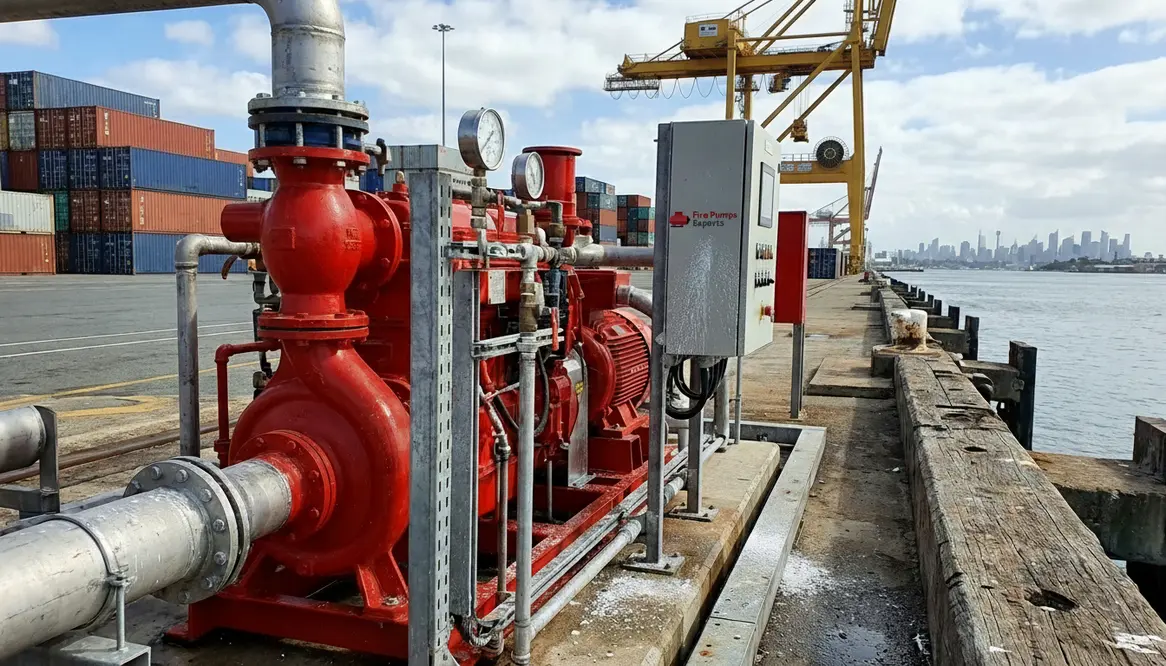
Port Fire Pump Systems Australia for Sydney Melbourne
I have spent enough time around busy ports to know one thing for certain. When steel meets saltwater and cargo moves like clockwork, there is no room for fire risk to play the villain. That is where port fire pump systems Australia step in, quietly doing the heavy lifting behind the scenes. In cities like Sydney and Melbourne, where port infrastructure operates at a relentless pace, choosing the right fire pump is not just a technical decision. It is a matter of resilience, compliance, and keeping operations moving without interruption.
So let me walk you through it. Slow and steady. No jargon storms. Just clear thinking, a few grounded insights, and maybe the occasional nod to reality, because even the most serious systems deserve a moment of levity.
How do I choose the right fire pump for port infrastructure in Sydney and Melbourne?
I start with the basics. Every port facility is a living system. It breathes through logistics, fuel storage, cranes, and warehouses. Therefore, the fire pump must match that complexity.
First, I look at hazard classification. Fuel terminals demand higher flow rates than container yards. Then I assess required pressure levels across large distances, because ports are not exactly cozy office spaces. After that, I consider redundancy. Because when something goes wrong at a port, it rarely does so politely.
However, local compliance matters just as much. Australian standards and marine safety regulations set the tone. In Sydney and Melbourne, I factor in coastal conditions, corrosion resistance, and water source reliability.
And yes, I always remind clients that choosing a fire pump is not like picking a coffee order. You cannot just say strong and hope for the best.
Understanding port fire pump systems Australia for large scale facilities
When I design or specify port fire pump systems Australia, I think in layers. Each layer supports a different part of the facility, yet all must work together without hesitation.
Typically, these systems include diesel driven pumps for reliability, electric pumps for efficiency, and jockey pumps to maintain pressure. Moreover, I ensure that each component integrates seamlessly with detection and suppression systems.
Sydney: retrofits and complexity
In Sydney, where infrastructure often blends old and new, retrofitting becomes part of the conversation. I constantly navigate tight plant rooms, legacy pipework, and structures that were never designed for modern fire protection loads.
This means carefully matching new pumps to existing suction lines, discharge headers, and control logic without creating bottlenecks or pressure drops at the far end of the wharf.
Melbourne: scale and expansion
Meanwhile, Melbourne facilities often demand scalability to support expansion. Long runs, broad aprons, and large tank farms call for systems that can grow with the site instead of being ripped out every time a new berth is added.
Therefore, flexibility becomes just as important as raw performance. Looped mains, sectionalizing valves, and modular pump capacities all earn their keep over the life of the facility.
And here is the truth. A fire pump system is only as strong as its weakest connection. Like a heist movie crew, everyone has a role. If one fails, the whole plan falls apart.
Key factors I prioritize when specifying fire pumps for ports
I like to keep this part grounded. No fluff. Just what actually matters.
Column A
- Flow rate matched to hazard level
- Pressure consistency across long pipe networks
- Corrosion resistant materials for marine environments
- Compliance with Australian fire standards
Column B
- Backup power through diesel systems
- Ease of maintenance and access
- Integration with existing infrastructure
- Long term operational reliability
Additionally, I always consider lifecycle cost. Because while the upfront investment might raise eyebrows, downtime costs far more. And ports, as we both know, do not enjoy downtime. They treat it like a bad habit they never picked up.
Why Sydney and Melbourne ports demand specialized fire pump solutions
Not all ports behave the same. Sydney brings a mix of heritage infrastructure and modern upgrades. As a result, I often work around spatial constraints and legacy systems. Meanwhile, Melbourne tends to offer larger layouts but higher throughput demands.
Because of this, I adjust system design accordingly. For instance, in Sydney, compact yet powerful pump configurations become essential. On the other hand, Melbourne facilities benefit from distributed systems that cover vast operational zones.
Climate also plays its role. Salt exposure, humidity, and temperature variations all influence material selection and system durability. Therefore, I never treat these cities as interchangeable. They each have their own rhythm, and the fire protection strategy must follow it.
Across both cities, port fire pump systems Australia must bridge the gap between harsh marine realities and strict regulatory expectations. The systems that last are the ones that respect both.
Designing for resilience and compliance in port fire pump systems Australia
I take compliance seriously, but I do not stop there. Meeting standards is the baseline. Building resilience is the goal.
Redundancy and real-world reliability
For example, I design systems with redundancy so that if one pump fails, another takes over instantly. Additionally, I ensure that testing and maintenance routines are practical, not theoretical. Because a system that looks good on paper but fails during inspection is about as useful as a screen door on a submarine.
People, procedures, and ports
Moreover, I coordinate closely with engineers, facility managers, and safety officers. This collaboration ensures that the fire pump system aligns with the broader emergency response strategy.
And yes, I always plan for the unexpected. Because in port environments, the unexpected tends to arrive uninvited and slightly ahead of schedule. Robust port fire pump systems Australia are one of the few tools that can turn chaos into a controlled incident instead of a headline.
FAQ: Fire Pump Selection for Port Infrastructure
Final thoughts on choosing the right system
When I look at port infrastructure in Sydney and Melbourne, I see more than cranes and cargo. I see systems that must work without hesitation, even under pressure. Choosing the right fire pump is about foresight, precision, and a clear understanding of risk. If you are planning or upgrading your facility, now is the time to act. Build a system that protects your operations, supports compliance, and stands ready when it matters most. The strongest port fire pump systems Australia are the ones nobody notices on a normal day and everyone is thankful for when that normal day abruptly ends.