Port Fire Pump Systems Australia Sydney Melbourne
Why the quiet “bodyguards” of Sydney and Melbourne ports matter more than most people ever realise.
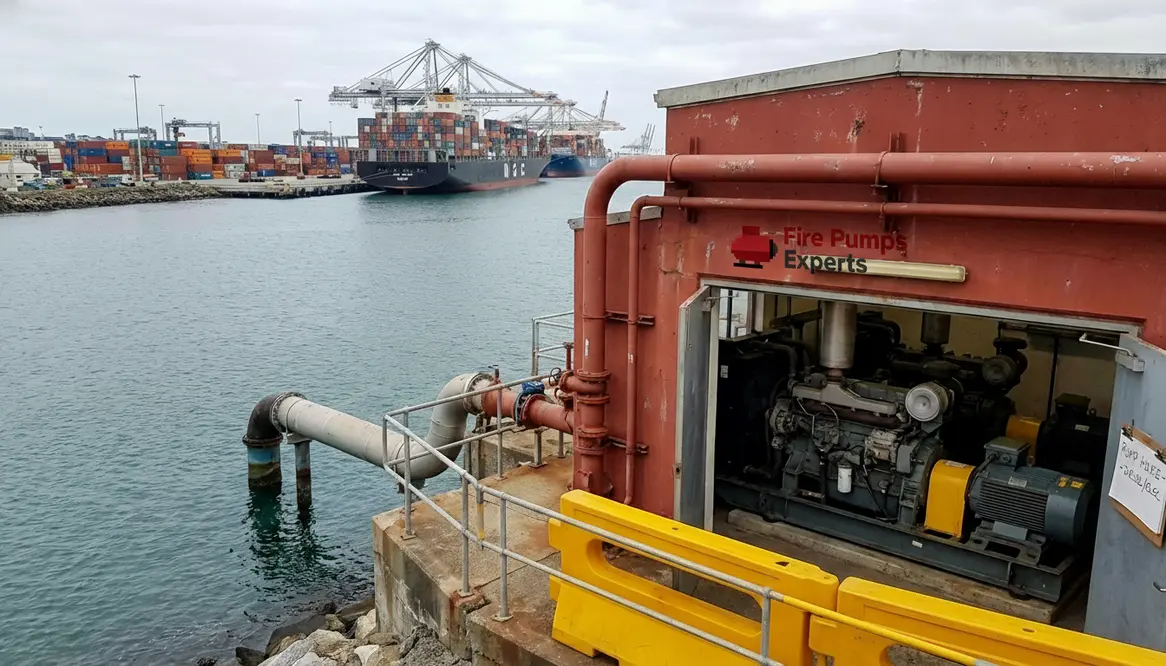
I have spent enough time around ports to know one thing for sure. When something goes wrong, it goes big. Ships carry fuel, cargo stacks climb like city blocks, and operations move fast. That is exactly why port fire pump systems Australia matter so much, especially in Sydney and Melbourne where traffic never really sleeps. I like to think of a fire pump as the quiet bodyguard of a port. You do not notice it, until the moment you really need it. And when you do, it better show up like a blockbuster hero in the final act.
Why ports are a different world
High fuel loads, stacked containers, complex logistics, and nonstop schedules mean fire protection cannot be an afterthought. In Sydney and Melbourne, the right pump system is the difference between a controlled incident and a headline that circles the globe.
What makes fire pump selection different for ports in Sydney and Melbourne
Ports are not your average commercial site. They are complex, high risk, and always in motion. Because of that, I approach fire pump selection with a sharper lens. In Sydney, salt air and corrosion play a bigger role. Meanwhile, Melbourne throws in colder conditions and different layout challenges.
So, I focus on durability first. Materials must resist corrosion, and coatings must hold up over time. Then, I look at water supply. Ports often rely on large storage tanks or direct access to seawater systems. However, using seawater is not as simple as dipping a bucket. It demands special pump design and filtration.
Finally, compliance drives everything. Australian standards are strict for a reason. If a system fails, the consequences ripple far beyond a single building. Therefore, I make sure every pump aligns with both national codes and site specific risks.
How do I choose the right capacity and pressure for port fire pump systems Australia
Capacity and pressure are where things get real. Too little, and the system struggles. Too much, and you risk damage or inefficiency. I always start with hazard classification. Container yards, fuel storage, and industrial terminals each demand different flow rates.
Then, I calculate demand based on the worst case scenario. Not the average day. Not the easy day. The worst day. Because fires do not politely schedule themselves.
After that, I factor in pipe lengths, elevation changes, and friction loss. Ports are large, and water does not like to travel without losing energy. As a result, the pump must compensate for distance without overworking itself.
Think of it like casting a movie. You do not hire an extra to play the lead role. You bring in someone who can carry the whole scene without breaking a sweat.
Key components I prioritize in modern port fire systems
Not all fire pumps are built the same. Over time, I have learned to focus on components that make a real difference in performance and reliability.
Core elements I always evaluate
- Driver type, whether diesel or electric, based on power reliability
- Controller systems that allow quick diagnostics and control
- Redundancy setups to ensure backup during failure
- Corrosion resistant materials for long term durability
Additionally, automation plays a bigger role now. Smart monitoring systems can flag issues before they become disasters. And honestly, anything that prevents a 2 am emergency call is a win in my book.
Comparing diesel vs electric setups for port fire pump systems Australia
Diesel driven pumps
Diesel pumps bring independence. They do not rely on the grid, which makes them ideal for critical infrastructure. If power goes out, they keep going. However, they require more maintenance and fuel management.
Electric driven pumps
Electric pumps offer efficiency and lower maintenance. They are cleaner and quieter. But they depend on a stable power supply, which can be a weak point if backup systems are not solid.
I usually recommend a combination. It creates a layered defense. One system supports the other, and together they form a safety net that is hard to beat.
What regulations and standards should I follow in Australian ports
Regulations are not just paperwork. They are the backbone of safety. In Australia, standards like AS 2941 and AS 2419 guide fire pump installation and hydrant systems.
However, ports often require additional considerations. Marine risks, hazardous materials, and large scale operations demand tailored solutions. Therefore, I always align design with both national standards and site specific risk assessments.
Skipping this step is like ignoring the instructions while building furniture. Sure, you might get something that looks right. But the moment you sit on it, things fall apart.
How I future proof fire pump systems for growing port demands
Ports evolve. They expand, modernize, and handle more volume each year. Because of that, I design systems with growth in mind.
I allow room for capacity upgrades. I choose scalable control systems. And I make sure maintenance access is simple and safe. A system that works today but fails tomorrow is not a good investment.
Moreover, I consider environmental impact. Energy efficient pumps and smart controls reduce operating costs and align with sustainability goals. It is not just about putting out fires. It is about doing it responsibly.
Well planned port fire pump systems Australia wide are now expected to combine resilience, sustainability, and smarter monitoring instead of just being oversized anchors in a plant room.
FAQ
Ready to secure your port with the right system
Choosing the right fire pump is not just a technical decision. It is a commitment to safety, reliability, and long term performance. I approach every project with that mindset, balancing precision with practical experience. If you are planning or upgrading a system in Sydney or Melbourne, now is the time to act. Reach out, and let us design a solution that stands ready when it matters most. Because in this line of work, preparation is everything.
Ports never really sleep, and neither should their protection. Whether you are reviewing existing port fire pump systems Australia wide or building from the ground up, the best time to get the design right is now, not after the first major incident.