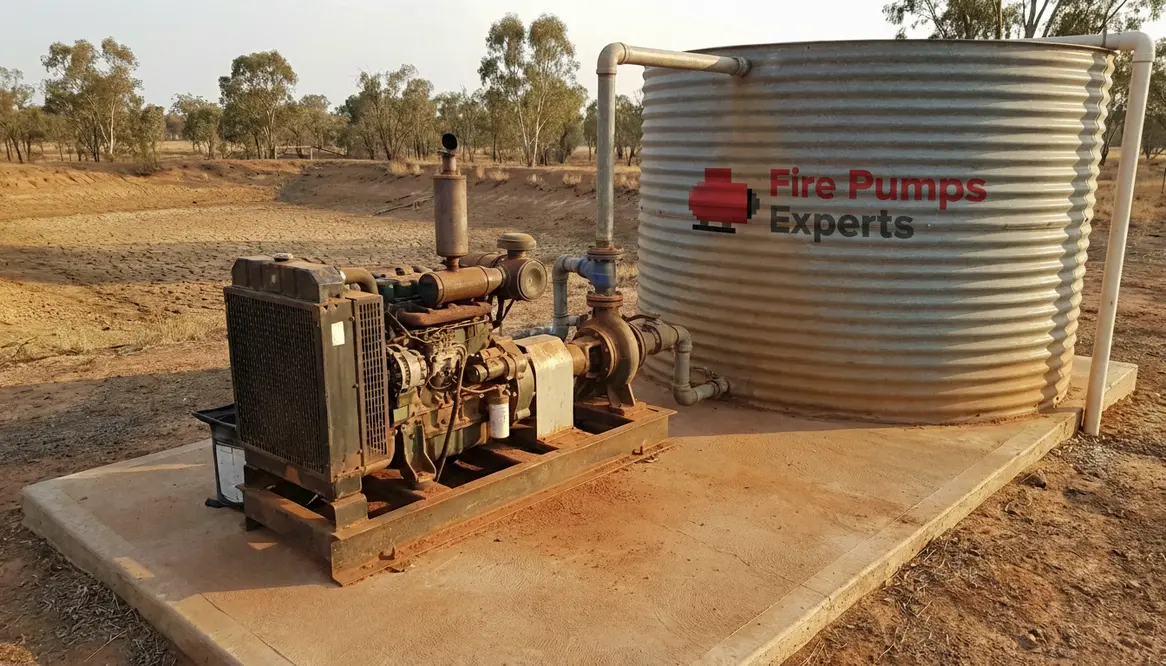
Fire Pump Rural Water Supply Australia Guide
I have spent years around pumps, pressure curves, and the quiet hum of systems that only get noticed when they fail. And when we talk about fire pump rural water supply Australia, we are stepping into a world where reliability is not a luxury, it is survival. Out here, distance stretches everything thin. Water sources vary, power can be unpredictable, and response times are not exactly city fast. So the pump has to do more than perform. It has to endure, adapt, and frankly, behave like the strong silent type in an old Western. No drama, just results.
Understanding Rural Supply Realities in Australia
Out in regional and remote zones, water is rarely handed to you on a silver platter. Instead, I see systems pulling from tanks, dams, or long transfer lines. As a result, flow consistency becomes a daily gamble. One day the supply is steady, the next it feels like trying to drink a milkshake through a coffee stirrer.
Because of that, fire pump systems must compensate. They need strong suction capability and stable performance across varying conditions. Moreover, rural infrastructure often lacks redundancy. So if a pump fails, there is no backup waiting politely in line.
Consequently, I always stress one principle. Design for the worst day, not the best one. That mindset separates dependable systems from expensive regrets.
How Does Fire Pump Performance Change in Remote Conditions?
Short answer. It gets tested. Constantly.
In metro environments, pressure is typically predictable. However, in rural Australia, pressure fluctuates based on storage levels, elevation, and even seasonal demand. Therefore, pumps must maintain output without relying on ideal inputs.
I often compare it to driving uphill with a full load. A standard engine might manage. A well built one does not even complain. That is the difference we are aiming for.
Additionally, temperature swings play a role. Heat can impact motor efficiency, while dust can quietly wear down components. So performance is not just about numbers on paper. It is about resilience in motion.
Designing for fire pump rural water supply Australia
When I approach system design for these environments, I focus on three core elements. Reliability, adaptability, and serviceability.
Reliability: resisting bad days
First, reliability means selecting pumps that can operate under variable suction conditions without cavitation. Not glamorous, but absolutely critical.
Adaptability: matching shifting demand
Second, adaptability ensures the system can handle changing demand. For example, commercial facilities and large industrial sites often experience fluctuating usage patterns. Therefore, the pump must respond without hesitation.
Serviceability: fixing things without drama
Third, serviceability matters more than most people expect. Remote locations do not allow for quick fixes. So components must be accessible, durable, and straightforward to maintain.
And yes, if a system requires a 200 page manual just to reset it, I consider that a design flaw. No one wants to decode a novel during an emergency.
Key Factors That Influence Performance in the Field
Water Source Stability
Inconsistent supply can reduce efficiency. Therefore, pumps must tolerate variable intake without losing prime.
Power Availability
Rural sites often rely on generators. As a result, pumps must integrate seamlessly with backup systems.
Elevation and Distance
Long pipe runs and elevation changes increase friction loss. Consequently, pressure calculations must be precise.
Environmental Exposure
Dust, heat, and weather can degrade components. So protective enclosures and robust materials are essential.
System Demand Variability
Industrial facilities rarely operate at a constant load. Therefore, pumps must handle peaks without stress.
Maintenance Access
Remote servicing challenges mean designs should minimize complexity and downtime.
Each factor adds a layer of complexity. However, when addressed together, they create a system that performs like it actually understands its job.
Matching Pump Types to Large Scale Facilities
Not all pumps are created equal, and choosing the wrong one is like casting the wrong actor in a lead role. Sure, it might look fine at first, but eventually, the cracks show.
Diesel, electric, and energy realities
For large commercial and industrial properties, I typically lean toward diesel driven systems for independence from unstable grids. Meanwhile, electric pumps still play a role where power infrastructure is reliable.
Choosing between split case and vertical turbine
Split case pumps often shine in these environments due to their efficiency and ease of maintenance. On the other hand, vertical turbine pumps are ideal when drawing from deep or variable water sources.
Therefore, the decision is never about preference. It is about context. The site dictates the solution, not the other way around.
Keeping Systems Reliable Without Constant Oversight
Here is the truth. Rural systems do not get daily attention. So they must behave well even when left alone.
Because of this, I emphasize automation and monitoring. Remote alerts, pressure sensors, and periodic self testing can catch issues early. Additionally, regular inspection schedules should be simple enough that teams actually follow them.
And let us be honest. If maintenance feels like assembling flat pack furniture without instructions, it is not going to happen consistently.
So simplicity wins. Every time.
FAQ Quick Answers
What makes rural fire pump systems different?
They deal with inconsistent water supply, limited infrastructure, and harsher environmental conditions.
Which pump type works best for large rural facilities?
Split case and vertical turbine pumps are common due to efficiency and adaptability.
Why is diesel often preferred?
It provides independence from unreliable power sources.
How do you maintain performance over time?
Use durable components, enable remote monitoring, and follow simple maintenance routines.
Can one system handle variable demand?
Yes, if designed with flexible performance curves and proper controls.
Final Thoughts on fire pump rural water supply Australia
If you manage a commercial or industrial site in rural Australia, you cannot afford guesswork. The right fire pump system protects assets, operations, and people without hesitation. So take a hard look at your setup. Upgrade where needed, simplify where possible, and invest in performance that holds steady under pressure. Because when the moment comes, your system should not think twice. It should simply deliver.
For more technical guidance, field-tested layouts, and examples tailored to fire pump rural water supply Australia projects, resources at https://firepumps.org can help you pressure test your next design before reality does it for you.
In short, when you are responsible for a fire pump rural water supply Australia installation, you are not just buying hardware. You are buying time, control, and a system that is ready for the worst possible day.