Hospital Fire Pump Requirements Australia Guide
A practical, no-nonsense look at how hospital fire pump requirements Australia play out when lives and seconds are on the line.
I have spent years around critical infrastructure, and if there is one place where failure is simply not an option, it is a healthcare facility. When I talk about hospital fire pump requirements Australia, I am not talking about paperwork or polite suggestions. I am talking about systems that must perform under pressure, literally and figuratively. In hospitals, seconds matter, and water flow is the quiet hero behind every successful fire response. So let me walk you through what actually matters, without the fluff, and with just enough personality to keep us both awake.
Why hospital fire pumps are different
Hospitals never really sleep. Patients on oxygen, operating theatres mid-procedure, high-risk areas full of vulnerable people — all of this means fire protection has to be more than just compliant. It has to be predictable, resilient, and a little bit obsessive about reliability.
Understanding Hospital Fire Pump Requirements Australia in Practice
I like to think of fire pumps as the bodybuilders of a fire protection system. They do not show off much, but when things get serious, they carry the load. In Australia, healthcare facilities must comply with strict codes such as AS 2419 and the National Construction Code. These standards define how fire pump systems must perform, how reliable they must be, and how they integrate with hydrants and sprinklers.
However, compliance is only the starting line. Hospitals operate 24 hours a day, and therefore, the fire pump system must deliver consistent pressure across multiple zones, even during peak demand. Moreover, redundancy is not optional. Backup pumps, dual power supplies, and monitored controls are essential because unlike your phone battery, you cannot just plug it in later and hope for the best.
Core obligations in plain language
- Meet AS 2419 and relevant NCC performance requirements
- Provide reliable pressure and flow to hydrants and sprinklers simultaneously
- Build in redundancy so a single fault does not cripple the system
- Monitor, alarm, and log performance so issues are seen early
What Drives System Design in Healthcare Facilities
Risk, people, and pressure zones
When I design or assess a system, I always begin with risk. Hospitals are complex environments with operating theatres, intensive care units, and high occupancy areas. Therefore, the fire pump system must handle varied demand across different sections of the building.
Additionally, water supply plays a major role. Whether the system relies on tanks, mains, or a combination, it must guarantee uninterrupted flow. That means calculating peak demand scenarios, not average ones. After all, fires do not politely wait for off peak hours.
Another key factor is system zoning. Large hospitals often divide fire protection into multiple zones to ensure pressure stability. This prevents a situation where one activated sprinkler leaves another area underprotected. It is a bit like sharing pizza at a party. Everyone needs their slice, or things get tense quickly.
Designing around hospital fire pump requirements Australia
In practical terms, hospital fire pump requirements Australia shape everything from pump sizing and suction conditions to how far and how high water has to be pushed. The art is in translating code clauses into real-world layouts that still work when half the building is under renovation and the other half is at capacity.
Key Components That Must Work Together
Every fire pump system is a team effort. And like any good team, each part has a clear role. Here is how I break it down when explaining it to clients.
Core Equipment
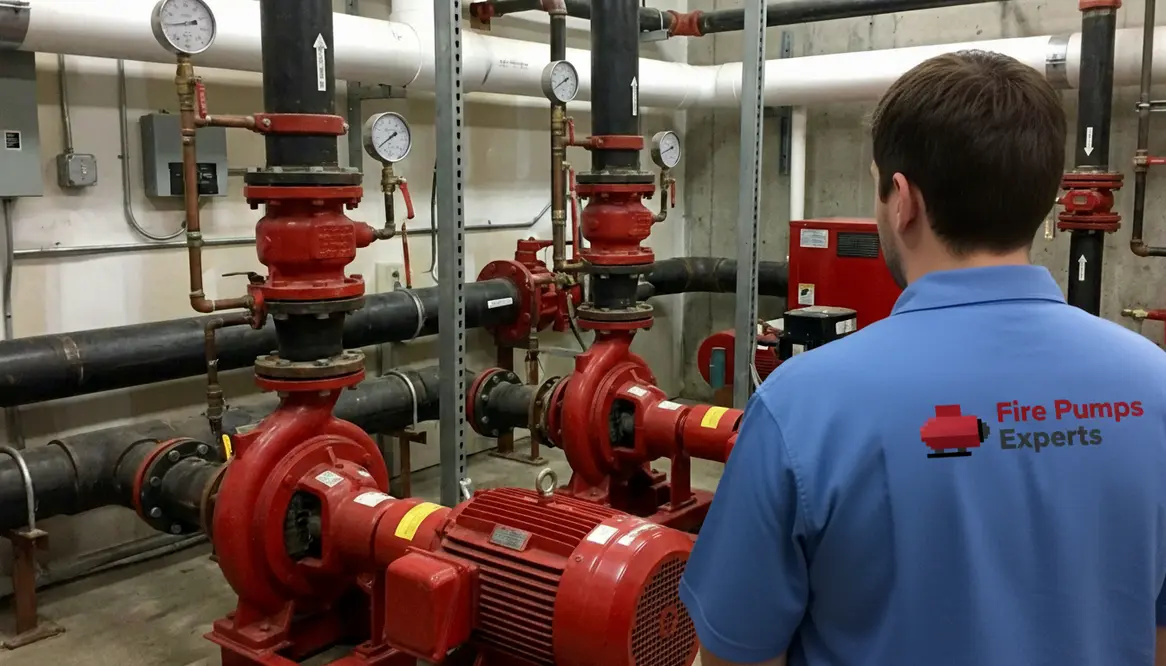
- Main fire pump for primary pressure
- Jockey pump to maintain system pressure
- Backup pump for redundancy
- Controller panels for automatic operation
Support Systems
- Reliable water storage or supply
- Emergency power sources
- Monitoring and alarm integration
- Test lines and maintenance access
When these components work in harmony, the system responds instantly. However, if even one element fails, performance drops. And in a hospital, that is not a risk anyone wants to take.
How Do I Ensure Compliance Without Overengineering?
Precision over padding the design
This is the question I hear most often, and honestly, it is a fair one. Nobody wants to overspend, but cutting corners is not an option either. So I focus on precision.
First, I align the design strictly with Australian standards and the building classification. Then, I consider real world use. For example, I account for simultaneous hydrant and sprinkler demand instead of treating them separately. Additionally, I incorporate smart monitoring systems that provide real time feedback. This way, facility managers are not left guessing if the system is ready.
And yes, I do keep efficiency in mind. A well designed system meets compliance without unnecessary extras. Think of it like ordering coffee. You want it strong and reliable, not a 12 ingredient experiment that takes ten minutes to explain.
Getting value from hospital fire pump requirements Australia
The upside is that hospital fire pump requirements Australia, when applied thoughtfully, tend to remove arguments rather than create them. Clear flow targets, starting times, power supply expectations, and redundancy criteria give you a framework to design within, instead of a guessing game driven by gut feeling and late-night emails.
Maintenance Expectations for Long Term Reliability
Even the best system will fail if it is ignored. That is why maintenance is a core part of hospital fire pump requirements Australia. Regular testing ensures the pump starts correctly, delivers the required pressure, and responds to system demands.
I always recommend routine inspections, performance testing, and detailed reporting. Moreover, healthcare facilities should maintain service logs and ensure trained personnel oversee system checks. This is not just about compliance. It is about confidence.
Over time, wear and tear will occur. Seals degrade, valves stick, and electrical components age. However, proactive maintenance catches these issues early. It is far better to fix a minor fault during a scheduled test than discover it during an emergency. That would be like finding out your parachute has a recall notice on the way down.
Typical maintenance rhythm
- Weekly start tests (automatic and manual where relevant)
- Monthly longer run tests with flow where practical
- Quarterly checks on controls, alarms, and indicators
- Annual full performance test against design criteria
- Documented servicing aligned with AS 1851
Common Pitfalls I See in Large Facilities
Despite clear standards, mistakes still happen. I have seen systems undersized for actual demand, poorly integrated controls, and inadequate backup power arrangements. Each of these issues compromises performance.
Another common oversight is failing to plan for expansion. Hospitals grow, and when they do, the fire pump system must adapt. Therefore, I always encourage forward thinking design. It saves time, money, and a lot of stress later.
Lastly, communication gaps between engineers, contractors, and facility managers can lead to mismatched expectations. A system might meet technical standards but still fall short operationally. Clear coordination solves this before it becomes a problem.
Avoiding costly rework
The most painful projects I have seen are the ones where hospital fire pump requirements Australia were treated as a box-ticking exercise during design and then rediscovered right before occupancy. Getting them embedded early in the concept stage keeps you away from late redesigns, new switchboards, and awkward meetings with budget owners.
FAQ Quick Answers
Here are some straight, practical answers to the questions that come up on almost every project.
Final Thoughts and Next Steps
When I look at fire protection in healthcare facilities, I see more than compliance. I see responsibility. If you are managing or developing a large property, now is the time to review your system, refine your design, and ensure everything performs exactly as it should. Work with specialists who understand commercial scale demands and do not leave performance to chance. Because when it comes to fire safety, preparation is everything.
If you want a deeper technical breakdown or example configurations that align with hospital fire pump requirements Australia, resources such as https://firepumps.org can be a useful reference point alongside local codes and standards. But the real progress starts when you walk your own plant room, look at your logs, and ask a simple question: “If we needed this system for real tonight, would I trust it?”