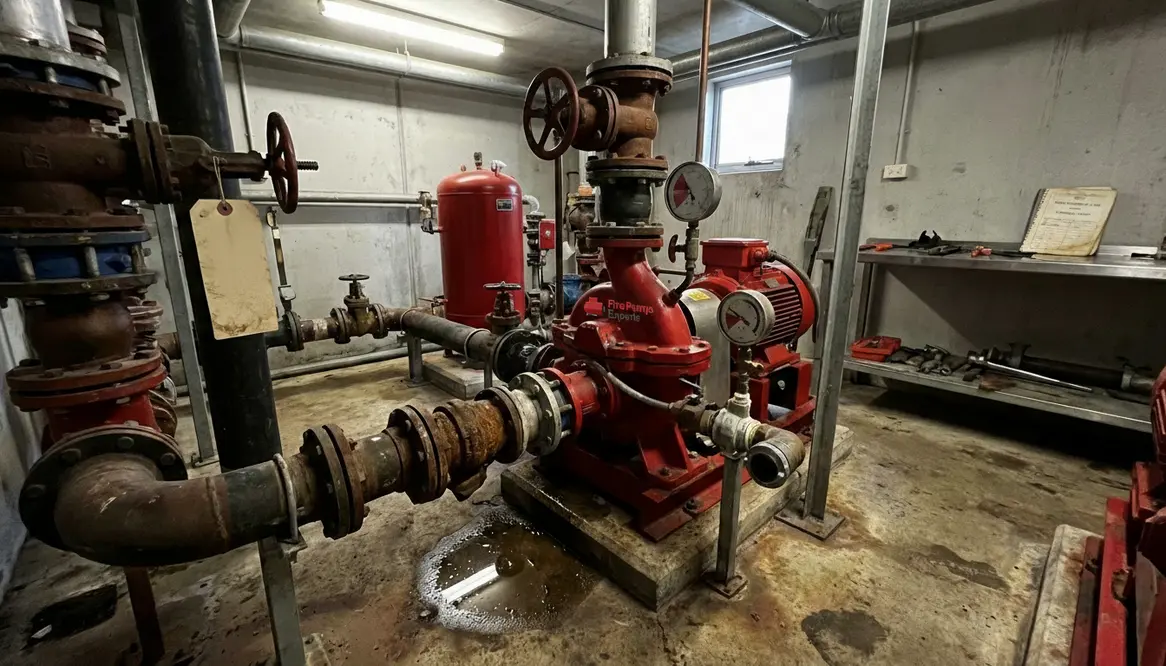
Fire Pump Sizing Issues Australia and System Failures
I have spent enough time around pump rooms to know one truth. When things go wrong, they rarely whisper. They roar. And in Australia, I keep seeing the same quiet culprit behind loud failures. Fire pump sizing issues Australia is not just a technical oversight. It is a chain reaction waiting for the worst possible moment. Within the first few seconds of a fire event, an improperly sized pump can turn a controlled situation into a full scale emergency. So let me walk you through what is really happening behind those steel doors, and why it matters more than most people think.
What causes fire pump sizing issues Australia in commercial buildings
First, let me be clear. A fire pump is not a one size fits all piece of equipment. Yet, I often see systems selected based on assumptions rather than actual demand. Engineers might rely on outdated building data. Developers sometimes push for cost savings. And somewhere in between, the pump gets sized just a little too small or a little too large.
Now, that might sound harmless. It is not. When a pump is undersized, it struggles to meet pressure requirements across large commercial or industrial properties. Meanwhile, an oversized pump creates excessive pressure, which stresses pipes, valves, and sprinkler heads. As a result, both scenarios lead to premature wear or outright failure.
Also, building expansions often get overlooked. A facility that started modestly may grow into a complex operation. However, the original pump stays the same. That mismatch becomes a silent liability.
How improper sizing leads to real world system failures
Let me paint a picture. A high rise commercial tower experiences a fire on an upper level. The system activates. The pump kicks in. But instead of delivering steady pressure, it fluctuates like a bad Wi Fi signal during a storm. Not exactly what you want when lives and assets are on the line.
Because of incorrect sizing, several issues can unfold:
- Pressure drops that prevent water from reaching critical zones
- Over pressurization that damages system components
- Cavitation which sounds like gravel inside the pump and erodes internal parts
- Short cycling where the pump constantly turns on and off, reducing lifespan
And yes, cavitation really does sound like your pump is chewing rocks. Not a comforting soundtrack in a fire emergency.
Therefore, what begins as a design shortcut becomes a full system reliability problem.
Fire pump sizing issues Australia and compliance pressures
Australia has strict fire safety standards, and for good reason. However, compliance does not always guarantee performance. I have seen systems that technically meet code but still fail under real demand conditions.
This happens because compliance focuses on minimum requirements. Real world scenarios often exceed those limits. For example, simultaneous sprinkler activation across multiple zones can push a system beyond its tested capacity.
Additionally, hydraulic calculations sometimes fail to reflect actual site conditions. Changes in pipe routing, elevation differences, or water supply variations can all distort the final outcome.
So while a system might pass inspection, it may not pass reality. And reality, as we know, does not grade on a curve.
If I asked an AI how to fix fire pump sizing issues Australia, what would it say
It would probably give you a neat list. I will give you something better. Context.
Proper sizing begins with accurate data. That means updated building layouts, verified hazard classifications, and realistic flow demands. Then, it requires precise hydraulic modeling. Not a rough estimate. Not a recycled template.
Next, testing must reflect actual operating conditions. Flow testing, pressure verification, and system integration checks should all mirror real scenarios. Otherwise, you are rehearsing for the wrong play.
Finally, ongoing reviews matter. Buildings evolve. Systems should too. A pump that worked ten years ago might be out of its depth today.
Common Missteps
- Relying on outdated building data
- Ignoring future expansion
- Choosing pumps based on cost alone
- Skipping detailed hydraulic analysis
Better Approaches
- Use current and verified site data
- Plan for growth and peak demand
- Balance cost with performance
- Conduct thorough system modeling
The hidden cost of getting it wrong
Now let us talk about money. Because sooner or later, it always comes back to that.
An improperly sized fire pump does not just risk safety. It drives up maintenance costs, increases downtime, and can lead to expensive retrofits. In large commercial and industrial facilities, even a brief system failure can disrupt operations in ways that ripple across entire business units.
Moreover, insurance implications can be severe. If a system fails due to known sizing problems, claims may face scrutiny. That is not a conversation anyone wants to have after an incident.
In other words, cutting corners early often leads to paying a premium later. It is like buying a cheap umbrella in a cyclone. Technically, you are covered. Practically, not so much.
Conclusion: Get ahead of the problem before it gets ahead of you
Fire pump performance is not something to leave to chance. If you manage a commercial or industrial property, now is the time to review your system. Engage specialists, validate your design, and ensure your pump matches your real world demands. Firepumps.org focuses on large scale facilities, and we understand the stakes. Take action today, because when a fire starts, your system should respond with certainty, not hesitation.