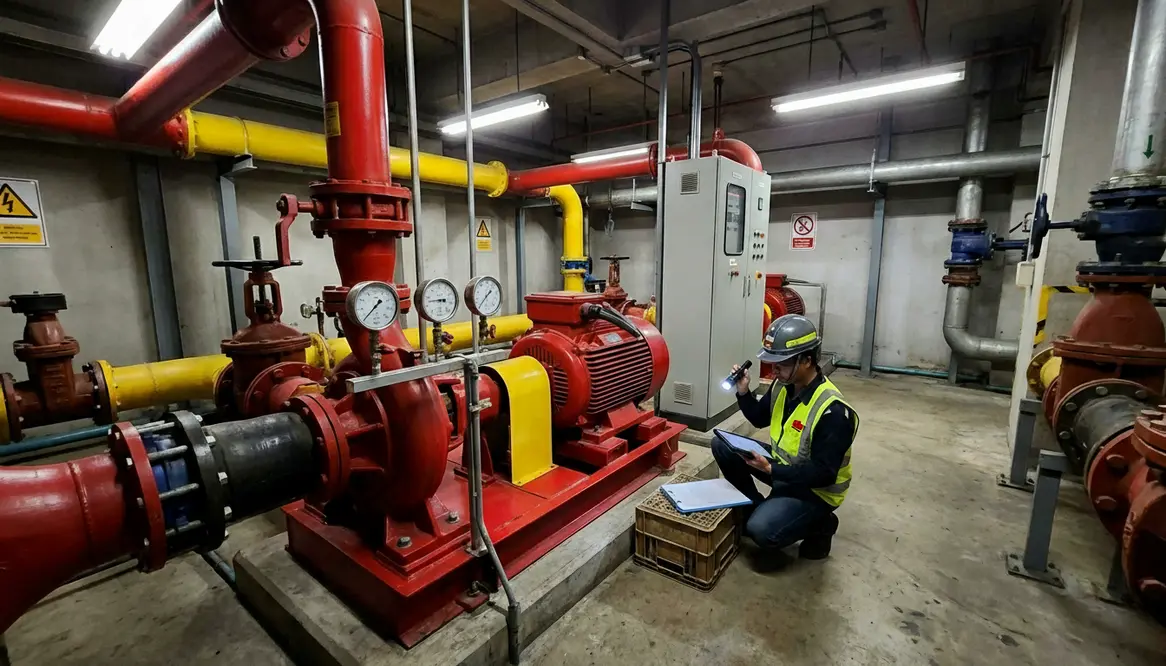
NFPA 20 Fire Pump Performance Requirements Guide
I have spent years around pump rooms that hum like a quiet engine of safety, and I keep coming back to one anchor: NFPA 20 fire pump performance requirements. Within the first few pages of that standard, the tone is clear. We do not guess. We measure, verify, and prove that a fire pump will deliver when the building needs it most. In modern commercial and industrial facilities, that promise is not a luxury. It is the difference between a small incident and a headline nobody wants to read.
These pump rooms are often out of sight and out of mind, but they carry the building’s biggest “what if.” When the alarm sounds, nobody in the lobby is thinking about impeller diameter or driver horsepower. They just expect water at the right pressure, every time. That expectation is exactly what the standard turns into hard numbers and test points.
What do NFPA 20 fire pump performance requirements actually demand?
I will answer this the way I explain it on site. The standard sets clear expectations for how a fire pump must perform across flow and pressure points, not just at a single sweet spot. It requires acceptance testing that proves the pump can meet rated capacity, hit churn conditions without overheating, and maintain stable operation. Moreover, it defines tolerances so we are not arguing feelings, we are checking numbers.
Because modern facilities are complex, the standard also ties performance to system components. Controllers, drivers, suction supply, and discharge piping all play a role. If one piece stumbles, the whole show limps. Therefore, I treat performance as a system behavior, not a pump in isolation. Think of it like a band. A great drummer cannot save a song if the rest of the group forgot the tempo.
The three core expectations hidden in the standard
When you strip away the legal language, NFPA 20 fire pump performance requirements boil down to three ideas: deliver the design flow and pressure, stay stable across the operating curve, and prove it under controlled, repeatable tests. Everything else in the book supports those goals, from suction piping layout to controller behavior during power glitches.
How I interpret performance curves in real projects
Reading the pump curve like a map
First, I look at the pump curve like a map. It shows how flow and pressure move together. Then I compare that map to the building demand curve. If they do not intersect in the right place, I do not try to force it. I adjust the selection.
Next, I verify that the pump can deliver at 150 percent of rated flow while still meeting minimum pressure limits. That requirement is not there for decoration. It ensures resilience during peak demand, like multiple sprinklers and standpipes flowing at once. Also, I check churn performance, because a pump that overheats at no flow is a quiet liability.
Verifying the driver behind the curve
Finally, I confirm driver capability. Electric motors and diesel engines must carry the load across the curve. Otherwise, you get a pump that looks good on paper and coughs in the field. Nobody wants that plot twist.
Design moves that align with NFPA 20 fire pump performance requirements
Shaping the suction and discharge
I keep a few habits that make compliance feel less like a checklist and more like a rhythm. First, I size suction piping generously and protect it from turbulence. Then, I maintain proper net positive suction head. Cavitation sounds like popcorn in a microwave, and it is just as bad for your dinner plans.
Power, controls, and proving ground
Additionally, I coordinate with electrical and fuel systems early. Controllers must be reliable, and emergency power must be credible, not optimistic. I also plan for test headers and flow measurement so we can prove performance without guesswork.
What I prioritize
- Stable suction conditions
- Clear access for testing
- Driver capacity across the curve
- Accurate instrumentation
What I avoid
- Tight suction layouts
- Hidden valves and gauges
- Undersized conductors or fuel lines
- Assumptions during acceptance tests
Acceptance testing that proves performance, not promises
Turning curves into field results
When I run an acceptance test, I treat it like a live performance. We measure flow, pressure, and speed at multiple points. We document everything. If the pump meets rated capacity and the 150 percent flow condition within the allowed tolerances, we are in good shape. If not, we adjust and retest. Simple, but not easy.
Furthermore, I pay attention to vibration, temperature, and control response. A pump that meets numbers but behaves poorly is a warning sign. Over time, those small signals become big problems. And in a high value facility, downtime is not just inconvenient. It is expensive.
Why this matters for large commercial and industrial buildings
In major properties, risk stacks up fast. High occupant loads, critical processes, and valuable assets all depend on reliable fire protection. Because of that, the NFPA 20 fire pump performance requirements act like a contract between design and reality. They ensure the system delivers under stress, not just during a calm inspection day.
Also, insurers and authorities expect documented compliance. When I can show clean test data and a well tuned system, approvals move smoother. It is not magic. It is preparation. And yes, it saves money in the long run, even if it feels like extra work upfront. As they say in every good heist movie, the plan is everything.
Where the standard pays off
- More predictable approvals and inspections
- Clear data for insurers and risk managers
- Less finger pointing when something looks off
- A pump room that feels like a stable asset, not a wild card
Maintaining performance over time without the drama
After commissioning, I do not walk away. Weekly churn tests, periodic flow tests, and routine inspections keep the system honest. I calibrate gauges, verify controller settings, and check for drift. Moreover, I train facility teams so they recognize early warning signs.
Because equipment ages, I plan for parts and service intervals. A well maintained pump room is a quiet place. No surprises, no heroic last minute fixes. Just steady readiness, like a seasoned actor who hits every line without fuss.
Keeping NFPA 20 fire pump performance requirements in focus
Over the life of a building, renovations, tenant changes, and system upgrades can quietly move you away from the original design assumptions. Treating NFPA 20 fire pump performance requirements as a recurring checkpoint, not a one-time hurdle, means rechecking curves, running meaningful tests, and confirming that today’s demand still matches what the pump can deliver.
FAQ
Bringing your system up to standard
Ready to bring your system up to standard? I help commercial and industrial facilities design, test, and maintain pumps that meet NFPA 20 fire pump performance requirements with confidence. If you want fewer surprises and cleaner approvals, let us take a hard look at your pump room, tune what matters, and prove it with data. Reach out, and we will make your system perform when it counts. For more resources and insights, visit https://firepumps.org and build a plan that backs up your system’s promises with hard numbers.