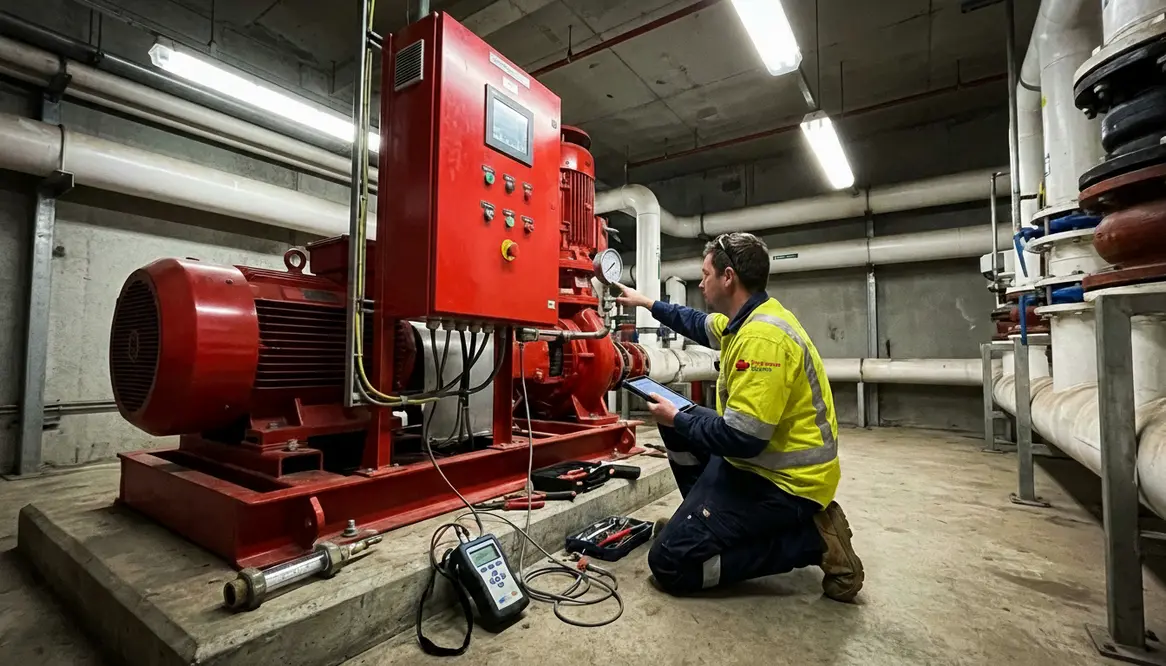
Fire Pump Testing Failure Diagnosis Australia Guide
I have stood in more pump rooms than I can count. Some hum like a well tuned orchestra. Others sound like a garage band that skipped rehearsal. And when a system fails during testing, that quiet room suddenly feels very loud. In Australia, where compliance is not a suggestion, fire pump testing failure diagnosis Australia becomes more than a technical task. It becomes a responsibility that sits squarely on my shoulders. So let me walk you through how I approach it, calmly, methodically, and with just enough humor to keep us both awake.
Why fire pumps fail when you need them most
First, I look at the obvious. Then I look again, because the obvious loves to hide. Pumps fail tests for a handful of reasons, yet each one has layers.
Often, I find power supply issues. A controller might look fine, yet voltage drops under load. Meanwhile, diesel units may suffer from stale fuel or weak batteries. I once saw a battery that had less energy than a phone at one percent. Not ideal when you are protecting a high rise.
Then there is water supply. Restricted suction, blocked strainers, or partially closed valves quietly sabotage performance. And yes, someone always swears they checked that valve. They did not.
Finally, mechanical wear plays its part. Impellers degrade, seals leak, and alignment drifts. Over time, small losses stack up until the test results say what everyone hoped to ignore.
How do I perform fire pump testing failure diagnosis Australia?
I start with data, because feelings do not move water. I review previous test records, flow curves, and pressure readings. Then I run a controlled test and compare real time performance to design expectations.
Next, I isolate variables. I check suction pressure, discharge pressure, and flow rate separately. If the curve does not match, I know where to dig. Additionally, I inspect controllers, wiring, and sensors, since bad data can mislead even a seasoned technician.
After that, I listen. Literally. A pump tells stories through vibration and sound. A steady hum means business. A rattling chatter means trouble. Somewhere between jazz and chaos lies the truth.
Key components I inspect first
Mechanical side
- Impeller condition and clearance
- Coupling alignment
- Bearing wear and lubrication
- Seal integrity
Electrical and control side
- Controller settings and faults
- Voltage stability under load
- Battery health for diesel systems
- Sensor calibration
By splitting the system this way, I avoid chasing ghosts. Each side tells a different part of the story, and together they point me to the root cause.
Interpreting test results without guesswork
Numbers matter, but context matters more. A pump might hit pressure but miss flow. That tells me restriction, not weakness. On the other hand, low pressure and low flow usually signal mechanical degradation or speed issues.
Moreover, I compare results against the original pump curve. If performance drifts gradually over months, wear is the likely culprit. However, a sudden drop usually points to a specific failure like a blocked line or faulty valve.
And yes, sometimes the issue is human error. Incorrect test setup can skew everything. I have seen gauges installed in the wrong location, which is a bit like measuring your height while standing in a hole.
Common mistakes in commercial and industrial properties
Large facilities often assume scale equals reliability. It does not. In fact, complexity introduces more failure points.
One common issue is neglected maintenance intervals. Systems run fine for years, so attention fades. Then a test fails, and everyone acts surprised. Meanwhile, documentation gaps make diagnosis harder than it should be.
Another problem is partial upgrades. A new controller paired with an aging pump creates mismatch. It is like putting a sports car engine in a vehicle with bicycle brakes. Something will not keep up.
Finally, I see poor water supply planning in high demand facilities. When multiple systems draw simultaneously, performance drops. The pump is not broken. The system is simply overwhelmed.
Preventing repeat failures through smarter testing
Once I identify the issue, I focus on prevention. Because fixing a problem once is good. Not seeing it again is better.
I recommend routine performance trending. By tracking data over time, I can spot decline early. Additionally, I push for full system checks, not just pump runs. Valves, tanks, and controllers all play a role.
Training also matters. When onsite teams understand the basics, they catch issues before they grow. And let us be honest, a well trained team is worth more than any shiny new equipment.
In Australia, compliance standards are clear, yet execution varies. Therefore, a consistent diagnostic approach ensures every test tells the truth. Whether I am handling routine inspections or a complex fire pump testing failure diagnosis Australia scenario, the same disciplined method applies.
FAQ: Fire pump testing and failure diagnosis
Before getting into structured answers, it helps to remember that every building, every installation, and every fire pump testing failure diagnosis Australia project brings its own quirks. That said, some questions come up again and again.
Final thoughts and next steps
When a fire pump fails, it is not the time for guesswork or crossed fingers. It is the time for clear thinking and decisive action. I bring a steady approach to fire pump testing failure diagnosis Australia, built on experience and a refusal to accept half answers. If your system has stumbled during testing, let us get it back on track. Reach out, and together we will make sure your pumps do what they were built to do when it matters most.