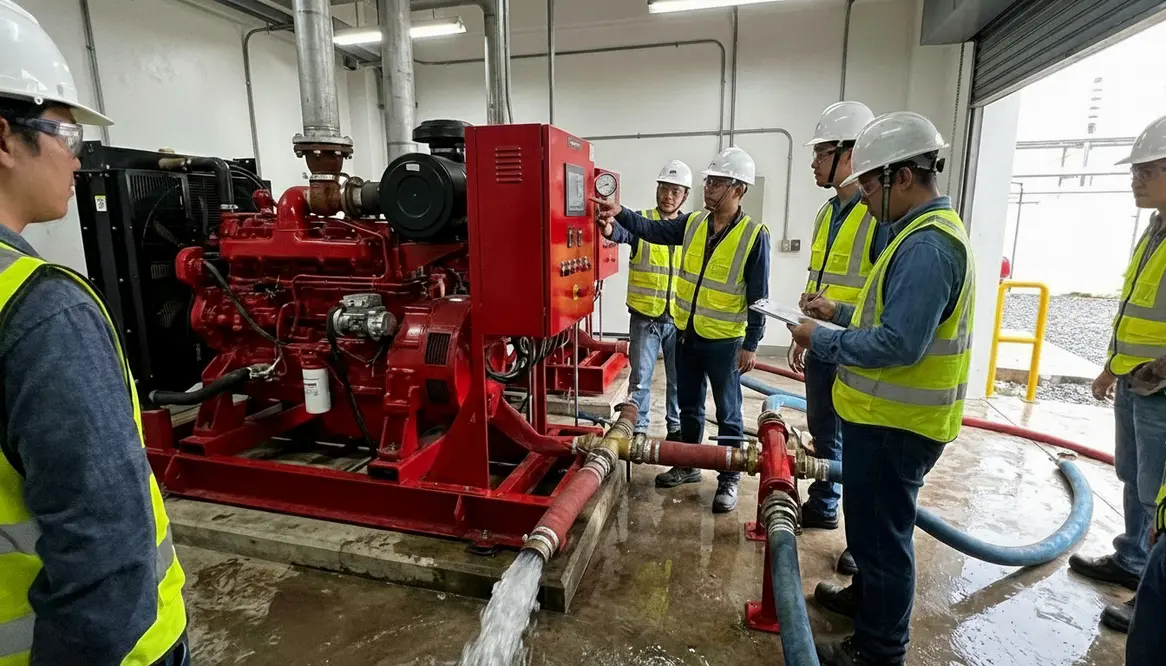
NFPA 20 Fire Pump Acceptance Testing Guide
I have spent years around fire protection systems, and if there is one moment that quietly separates theory from reality, it is NFPA 20 fire pump acceptance testing. This is where the pump proves it can actually deliver when it matters. Not in a brochure. Not in a design meeting. But in real conditions, with water moving and pressure building. And yes, it can feel a bit like a live performance where nobody wants a surprise plot twist. Let me walk you through what truly matters, without the dry textbook tone.
NFPA 20 fire pump acceptance testing is not an abstract requirement; it is the moment the system has to deliver on every promise the drawings, specifications, and meetings made. Think of it as performance review day for your fire pump, without the small talk or sugarcoating.
What NFPA 20 Fire Pump Acceptance Testing Really Verifies
At its core, this process confirms that a fire pump system performs exactly as designed. However, it is not just about turning the pump on and giving a polite nod. Instead, we measure flow, pressure, and reliability under demand.
I always explain it this way. If your building is a blockbuster movie, the fire pump is the hero who shows up in the final act. Acceptance testing makes sure that hero does not forget their lines.
More specifically, the test ensures:
- The pump meets rated flow and pressure
- The driver performs correctly under load
- The system responds automatically
- Controllers and alarms function properly
And importantly, these are not optional checkboxes. For commercial and industrial facilities, especially large properties, failure here can mean delays, costly fixes, or worse, a system that cannot protect assets or lives.
How Do I Prepare for a Fire Pump Acceptance Test?
Preparation is where most projects either glide smoothly or spiral into chaos. I have seen both, and one definitely feels a lot better.
First, I make sure all installation work is complete. That includes piping, electrical connections, and controller programming. Then, I confirm that all components have been pre tested individually. Because showing up to acceptance testing with unfinished work is like bringing raw ingredients to a cooking show and hoping the judges will wait.
Next, coordination becomes critical. Contractors, engineers, and facility stakeholders must align. Water supply must be available, and discharge paths must be safe and compliant.
Finally, documentation matters. I always have pump curves, manufacturer data, and system layouts ready. Because when questions come up, and they will, guessing is not a strategy.
The Step by Step Flow of NFPA 20 Fire Pump Acceptance Testing
Now we get into the action. The sequence is structured, deliberate, and surprisingly intense for something involving water.
Churn Test
We start with no flow. The pump runs while we verify pressure stability and check for overheating or vibration. It is calm, but it sets the baseline.
Rated Flow Test
Then, we move to 100 percent capacity. Here, I watch closely as flow and pressure align with the pump curve. If they do not, something is off, and we investigate immediately.
Overload Test
Finally, we push to 150 percent of rated flow. This is where the system proves its endurance. It is also where weak points tend to reveal themselves, like a plot twist nobody asked for.
Throughout these steps, we monitor driver performance, suction pressure, discharge pressure, and system behavior. Every reading tells a story, and I pay attention to all of them.
Key Components That Must Perform Without Excuses
Pump Assembly
It must deliver consistent flow and pressure. No hesitation. No instability.
Driver System
Whether electric or diesel, it must handle load changes smoothly. A struggling driver is a red flag.
Controller
Automatic start and proper sequencing are non negotiable.
Relief Valves
They must prevent overpressure conditions without interfering with performance.
Instrumentation
Accurate gauges and meters ensure we trust the data we collect.
Water Supply
Stable and sufficient supply is critical. Without it, the entire test becomes meaningless.
Each component plays a role. And if one underperforms, the entire system feels it. Like a band where one musician is out of tune, everyone notices.
Common Pitfalls I Watch for During Testing
Even well planned projects can stumble. However, most issues fall into familiar patterns.
One common problem is air trapped in the system. It disrupts flow readings and creates false results. Another is improper calibration of gauges. If your instruments lie, your conclusions will too.
Additionally, I often see coordination breakdowns. Someone opens or closes the wrong valve at the wrong time, and suddenly the test results look like abstract art.
And then there is the classic issue of undersized piping or unexpected friction loss. This one tends to show up during higher flow tests, right when confidence is high. Timing, as always, has a sense of humor.
Why This Matters for Large Commercial and Industrial Properties
For major facilities, the stakes are higher. These buildings rely on robust fire protection systems to safeguard operations, assets, and people. Therefore, acceptance testing is not just a requirement. It is a validation of resilience.
Moreover, insurance carriers, authorities, and internal risk teams all depend on these results. A properly tested system supports compliance and long term reliability.
In my experience, skipping details here often leads to bigger problems later. And those problems rarely show up at convenient times. NFPA 20 fire pump acceptance testing gives you a documented moment in time where the system either proves itself or shows you exactly what needs to change.
For owners and operators of complex facilities, partnering with specialists who live and breathe NFPA 20 fire pump acceptance testing can make the difference between a smooth approval and a frustrating series of callbacks.
FAQ About Fire Pump Acceptance Testing
NFPA 20 fire pump acceptance testing raises a lot of practical questions for owners, contractors, and risk managers, especially when navigating large or highly regulated projects.
Final Thoughts and Your Next Step
If you manage or own a large facility, do not treat acceptance testing as a checkbox. Treat it as your system’s proving ground. When done right, it gives you confidence that everything will work when it truly counts.
If you need guidance or want experts who take this as seriously as you do, now is the time to act. A reliable fire pump system is not luck. It is preparation meeting precision, backed by NFPA 20 fire pump acceptance testing that actually proves performance rather than assuming it.